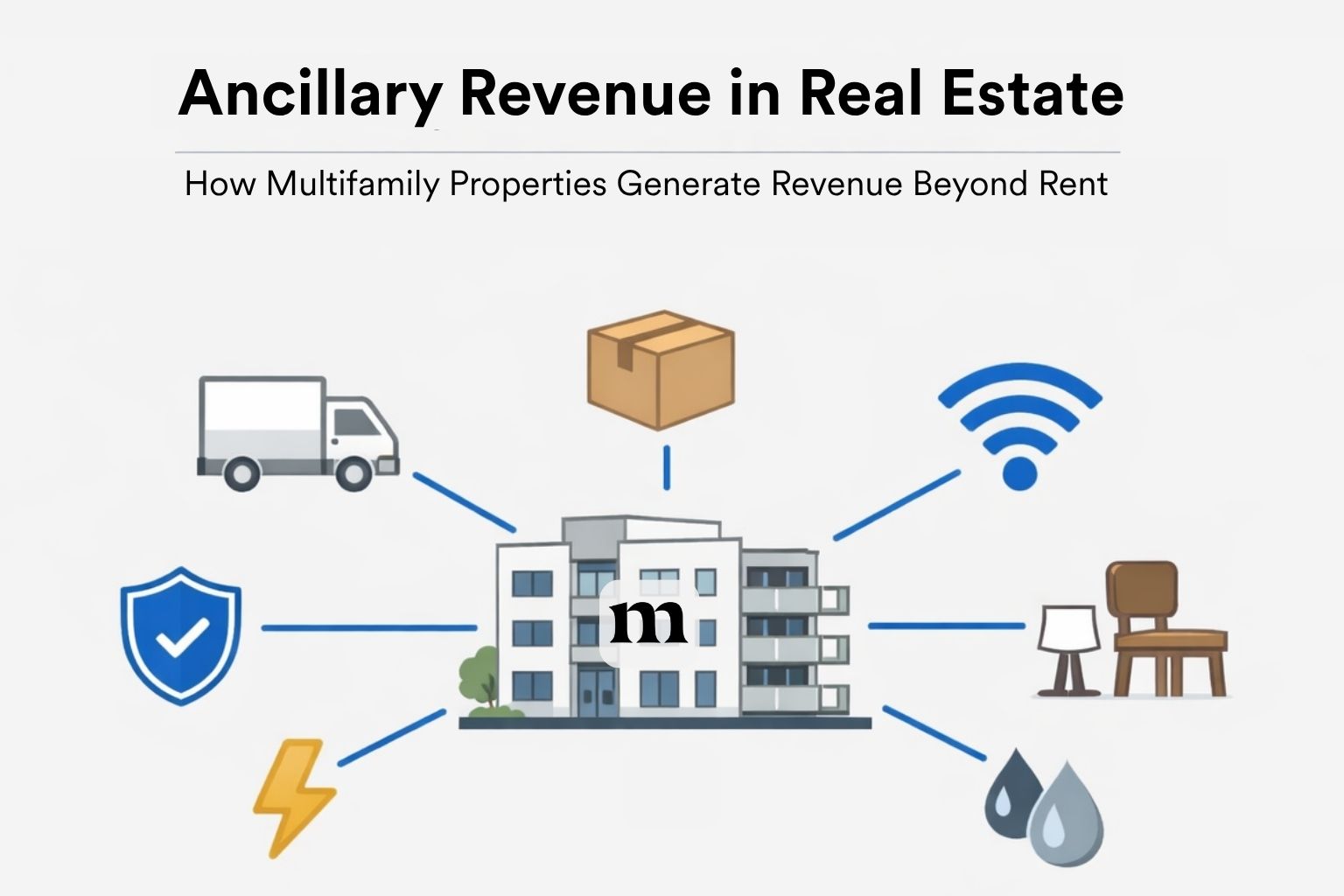
What Is Ancillary Revenue In Real Estate? (Complete Guide For Property Managers)

Multifamily housing has traditionally relied on one primary income source: rent. For decades, property financial performance has been closely tied to occupancy rates and rental pricing. While rent will always remain the core revenue driver, many property operators are now exploring new ways to improve financial performance without increasing rental costs for residents.

This shift has brought growing attention to ancillary revenue in real estate. Ancillary revenue refers to income generated from services and partnerships that support the resident experience but sit outside the base rent structure. These services often include moving assistance, renters insurance, storage, internet setup, packing services, and other solutions residents commonly need when relocating.

The importance of these additional revenue streams has grown significantly across multifamily housing. Property managers today face rising operational costs, higher staffing expenses, and increasing pressure to maintain competitive rents. At the same time, residents expect a smoother and more convenient move-in experience. These two forces are encouraging operators to rethink how their properties generate income.

Rather than relying only on rent increases, many portfolios are looking at ancillary revenue in real estate as a practical way to strengthen property income. By connecting residents with useful services at key moments in the leasing journey, properties can generate additional revenue while improving the resident experience.

Move events, in particular, create a powerful opportunity. When residents prepare to move into a new apartment, they already need services such as movers, packing supplies, storage solutions, and insurance coverage. Property operators are increasingly exploring ancillary revenue in real estate to unlock additional income through services residents already need during a move.

Modern platforms now make it easier for property teams to guide residents through these services in a structured way. Instead of relying on manual coordination, properties can provide a streamlined move experience that lets residents schedule services, verify insurance, and complete key move-related tasks in one place. Solutions that support automated Resident move-in and move-out help property managers simplify move coordination while opening the door to new revenue opportunities tied to the resident journey.

In the sections ahead, we will explore how ancillary revenue works in multifamily housing, why it is becoming an essential strategy for property managers, and how operators can activate these revenue streams across their portfolios.

What Is Ancillary Revenue In Real Estate?

Ancillary revenue in real estate is additional income generated from services, partnerships, and products offered to residents beyond base rent.

In multifamily housing, this revenue typically comes from services connected to the resident’s move and living experience, such as:

  • Professional moving services
  • Packing supplies
  • Storage solutions
  • Renters insurance
  • Internet and utility setup
  • Furniture rental
  • Property services like parking or storage lockers

Property managers generate ancillary revenue in real estate by connecting residents with trusted service providers during high-intent moments like move-ins, lease renewals, or move-outs.

This approach allows properties to increase total property income without raising rent, while also simplifying the resident experience.

What Ancillary Revenue Means in Multifamily Housing

In multifamily housing, most property income traditionally comes from one source: rent. Rent payments represent the primary revenue stream that supports property operations, maintenance, staffing, and investment returns. However, modern multifamily communities increasingly generate income from additional services connected to the resident experience. These additional sources of income are known as ancillary revenue in real estate.

Definition

Ancillary revenue in multifamily housing to additional income generated from services, partnerships, and resident-related products beyond base rent.

Rather than increasing rent prices, property operators can generate revenue by offering services that residents already need. These services often relate to everyday living needs or the moving process. When these services are offered through trusted vendors or integrated platforms, properties can create new income opportunities while simplifying the resident experience.

Rent Revenue vs Ancillary Revenue

Understanding the difference between traditional rent revenue and ancillary revenue helps clarify why this model is becoming more important for property managers.

Rent Revenue

Rent revenue comes directly from lease agreements. It is the monthly payment residents make to occupy a unit. This income is predictable but often limited by market conditions, rent regulations, and affordability considerations.

Ancillary Revenue

Ancillary revenue in real estate comes from services connected to the property or the resident lifecycle. These services are optional but valuable to residents, particularly during high-activity moments like move-ins and move-outs. Because these services address real needs, they create opportunities for additional property income without changing base rent.

Examples of Ancillary Revenue Sources

Many types of services can generate ancillary revenue within a multifamily community. Common examples include:

  • Moving services that help residents relocate efficiently
  • Packing services that provide boxes and moving supplies
  • Storage solutions for residents who need temporary space during a move
  • Renters insurance programs that help properties maintain insurance compliance
  • Internet and utility setup services for new residents
  • Parking services, such as reserved or premium parking options
  • Furniture rental for residents seeking flexible furnishing solutions
  • Smart home upgrades, such as security devices or connected appliances

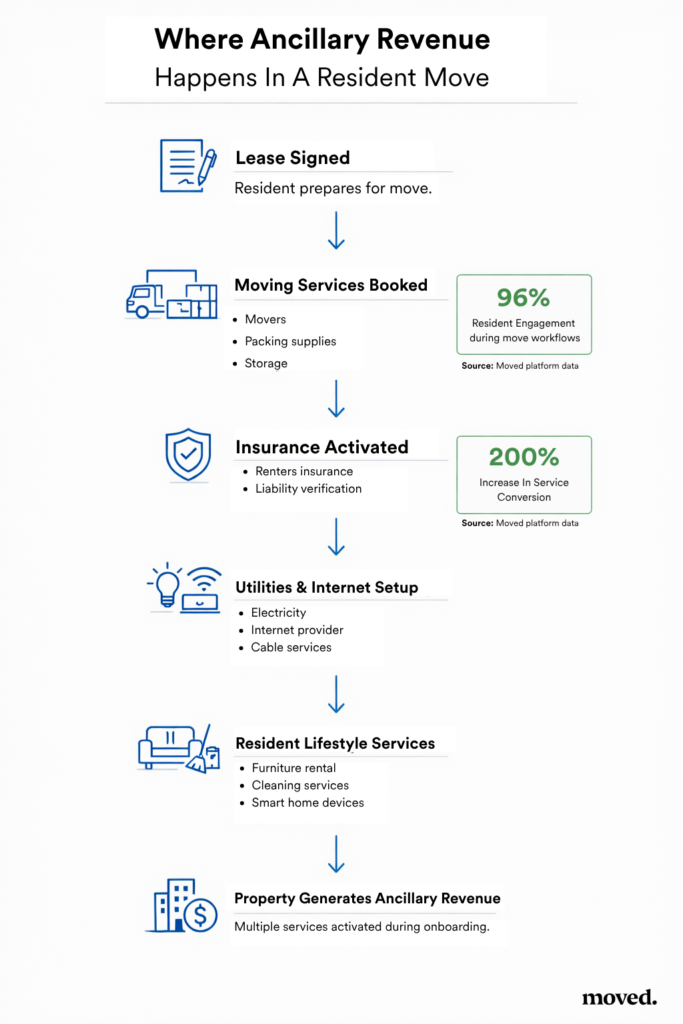
Many of these services naturally occur during the resident onboarding and offboarding process. When a lease is signed, residents typically need to organize multiple services before moving into their new home. This includes scheduling movers, setting up internet service, arranging utilities, and purchasing renters’ insurance.

These moments create natural opportunities for ancillary revenue in multifamily housing because residents are already looking for trusted service providers. When properties guide residents through these tasks during onboarding and offboarding, they simplify the move process while creating additional income opportunities tied to services residents already plan to use.

Why Ancillary Revenue In Real Estate Is Growing Across Multifamily Portfolios

Across the multifamily housing industry, property operators are placing greater focus on ancillary revenue in real estate as part of their long-term financial strategy. While rent has traditionally been the dominant revenue source, many operators now recognize that relying solely on rental income limits financial flexibility. As a result, multifamily portfolios are increasingly expanding their focus toward service-based revenue opportunities that complement rent rather than replace it.

One of the main drivers behind this shift is the steady rise in operating costs. Property expenses continue to increase across multiple categories, making it more challenging for operators to maintain margins without raising rents.

Several cost pressures contribute to this challenge:

Property taxes
Local tax rates have increased in many markets, placing additional financial pressure on property owners and management companies.

Maintenance costs
Building upkeep, repairs, and capital improvements have become more expensive due to rising material prices and aging infrastructure in many communities.

Labor costs
On-site staffing expenses have also increased, including leasing teams, maintenance staff, and property management professionals. Labor shortages in some markets have pushed wages even higher.

Because of these cost increases, operators must identify new ways to strengthen revenue without placing the full burden on rent pricing.

At the same time, rent growth is becoming more difficult to sustain in many markets. Several factors contribute to this limitation.

Market competition
New multifamily developments continue to enter many metropolitan markets. When supply increases, operators must remain competitive on pricing to attract residents.

Regulatory pressure
In certain regions, rent control policies and regulatory guidelines limit how much properties can increase rent annually.

Resident affordability
Economic conditions and rising living costs make large rent increases less practical for many renters. Property operators must balance financial performance with resident retention and affordability.

These realities are pushing multifamily operators to explore ancillary revenue in real estate as a way to diversify income streams while maintaining competitive rent pricing.

Another key factor driving this trend is the change in resident expectations. Today’s renters expect a smoother, more convenient living experience. Many residents prefer communities that simplify everyday tasks, including services connected to moving, utilities, and home setup.

As a result, multifamily housing is gradually shifting toward service-driven living environments. Properties are no longer viewed only as physical spaces to live in. They are increasingly becoming service platforms that support residents throughout their living journey.

This shift is transforming the way operators think about property management. Instead of focusing solely on leasing and rent collection, forward-thinking operators are building ecosystems of services that support residents during key lifecycle moments.

Move-in events, in particular, represent one of the most valuable opportunities. Residents preparing to relocate often need multiple services at the same time, including professional movers, packing supplies, storage, internet setup, and insurance coverage. When these services are coordinated through the property experience, they can generate ancillary revenue in real estate while improving convenience for residents.

For this reason, ancillary revenue is no longer viewed as a small add-on. Across many multifamily portfolios, it is becoming an important part of modern property strategy that strengthens revenue stability while supporting a better resident experience.

Why Move-Ins Create The Biggest Ancillary Revenue Opportunity

Among all resident lifecycle events, the move-in process creates one of the strongest opportunities to generate ancillary revenue in real estate. When a resident prepares to move into a new apartment, several important decisions must be made within a short period of time. Because these decisions involve essential services, the move-in moment becomes a high-intent opportunity for both residents and property operators.

One of the primary reasons move events convert so well is urgency. Residents typically have a fixed move-in date tied to their lease start. This deadline means services must be arranged quickly. Tasks such as hiring movers, purchasing packing supplies, and activating utilities cannot be delayed. As a result, residents are actively searching for solutions that help them complete these tasks efficiently.

Another important factor is that residents are already making service decisions during this stage. When someone relocates to a new apartment, they naturally need to coordinate several services at once. These decisions are already part of the moving process, which makes the move-in journey an ideal moment for properties to guide residents toward trusted service providers.

Property operators are uniquely positioned to support residents during this stage. Because the move-in process is connected to the leasing workflow, properties can introduce helpful services at the exact moment residents are planning their move. Instead of leaving residents to search for vendors independently, communities can simplify the process by recommending reliable service options.

Common services residents purchase during move-in include:

  • Professional movers to transport furniture and belongings
  • Packing supplies such as boxes, tape, and protective materials
  • Storage solutions for temporary space during relocation
  • Internet and connectivity setup for immediate access on move-in day
  • Renters insurance to meet property insurance requirements

When these services are introduced at the right time, they naturally align with the resident’s needs. For example, residents preparing for relocation may choose to Hire Movers directly through integrated moving service platforms rather than searching through multiple providers on their own.

This approach benefits both residents and property teams. Residents receive a smoother move experience because services are organized in one place. Property managers benefit because the move process becomes more structured and predictable.

From a financial perspective, this moment also creates stronger service adoption. Because residents are already planning their move, conversion rates for services like movers, storage, and insurance are typically much higher during this stage than at other points in the resident lifecycle.

For these reasons, move-in events represent one of the most effective ways to activate ancillary revenue in real estate. By connecting residents with services they already need, property operators can improve the move experience while unlocking new revenue opportunities tied directly to the resident onboarding and offboarding journey.

Common Types Of Ancillary Revenue In Real Estate

Multifamily properties can generate ancillary revenue in real estate through a wide range of services that support residents during their move and throughout their living experience. These services are often connected to everyday needs such as relocation, connectivity, insurance, and convenience. When these services are introduced through structured partnerships, they can generate additional income while improving the resident experience.

Below are some of the most common categories of ancillary revenue used across modern multifamily portfolios.

Moving Services

Moving services are one of the most natural and high-converting sources of ancillary revenue in real estate. Every new resident must organize a move, which typically requires professional assistance and logistical support.

Common moving-related services include:

  • Professional movers to transport furniture and household belongings
  • Packing help that provides boxes, wrapping materials, and packing assistance
  • Storage services for residents who need temporary storage during relocation
  • Junk removal for unwanted furniture or items during the moving process

These services are highly relevant because they occur at the exact moment residents are preparing to move into their new home. Rather than forcing residents to search for vendors independently, properties can simplify the process by connecting residents with trusted providers.

Properties can connect residents with pre-vetted vendors when they need to organize their relocation. By offering these services during the move-in journey, operators create a more structured process for residents while opening opportunities to generate ancillary revenue in real estate.

Insurance Services

Insurance services are another common and valuable source of ancillary revenue for multifamily communities. Most properties require residents to maintain renters’ insurance to protect both the resident and the property.

Typical insurance-related services include:

  • Renters insurance policies that cover personal belongings and liability
  • Liability coverage verification required by the property
  • Compliance documentation that confirms insurance coverage is active

When insurance services are integrated into the resident onboarding and offboarding process, properties can simplify compliance while improving documentation management.

This approach creates two important benefits:

  • Revenue share opportunities through partnerships with insurance providers
  • Reduced financial risk for the property by ensuring residents maintain active coverage

By embedding insurance services into the move process, operators strengthen both financial performance and compliance protection.

Utility And Connectivity Services

Another important category of ancillary revenue in real estate involves utility and connectivity services that residents need immediately after moving into their new apartment.

Common services in this category include:

  • Internet provider setup for high-speed connectivity
  • Electricity plans are required to activate power in the unit
  • Cable or streaming services for entertainment access

These services are essential during the move-in stage, which makes them ideal for integration into the resident onboarding and offboarding experience.

Offering these services through structured partnerships provides several benefits:

  • It simplifies the resident onboarding and offboarding process by guiding residents through required setup tasks.
  • It creates partner-based revenue opportunities through service referrals and integrations.

This combination of convenience and service coordination supports both resident satisfaction and property revenue growth.

Resident Lifestyle Services

Lifestyle services focus on making everyday living easier for residents. These services often extend beyond the moving process and continue to provide value throughout the resident’s stay at the property.

Examples include:

  • Furniture rental for residents who prefer flexible furnishing options
  • Cleaning services for move-in or recurring home cleaning
  • IT setup assistance for devices, Wi-Fi optimization, or home technology
  • Smart home devices such as connected locks, security cameras, or automation tools

These services help properties position themselves as convenience-driven communities while creating additional sources of ancillary revenue in real estate.

Property Services

Properties can also generate ancillary revenue through services directly connected to building operations and amenities.

Examples of property-based services include:

  • Reserved parking or premium parking spaces
  • Storage lockers for additional resident storage
  • Pet-related services, such as pet registration or pet amenities
  • Package management services that support secure deliveries

These services are often simple to implement because they are already connected to the property’s physical infrastructure. When structured properly, they provide recurring revenue opportunities while improving the day-to-day living experience for residents.

Together, these categories illustrate how ancillary revenue in real estate extends far beyond traditional rent payments. By thoughtfully integrating services that residents already need, multifamily operators can create a more comprehensive living experience while unlocking additional revenue streams across their portfolios.
How Does Ancillary Revenue In Real Estate Benefit Property Managers

For property managers and multifamily operators, ancillary revenue in real estate provides both financial and operational advantages. Instead of relying entirely on rent increases to improve property performance, operators can introduce services that naturally fit into the resident experience. When implemented correctly, these services generate additional income while also simplifying property operations.

Beyond revenue growth, ancillary services can also improve resident onboarding and offboarding, strengthen vendor relationships, and create scalable operational models across entire portfolios.

Increased Property Income

One of the most direct benefits of ancillary revenue in real estate is the ability to generate additional income without increasing rent. In competitive markets, raising rent may not always be possible due to affordability concerns or local regulations. Ancillary services provide an alternative path to improve property revenue while keeping rental pricing stable.

Many services connected to the resident journey already involve financial transactions. For example, residents moving into a new apartment often need movers, storage, insurance, internet service, and packing materials. When properties connect residents with trusted providers during this process, they can create revenue opportunities tied to these services.

Because these services are optional and aligned with real resident needs, they often feel less intrusive than rent increases. Instead of increasing housing costs, properties simply provide convenient access to services residents already intend to purchase.

Improved Resident Experience

Another major advantage of ancillary revenue in real estate is the improvement in the resident experience. Moving into a new apartment can be stressful, especially when residents must coordinate multiple services on their own.

Modern platforms now help simplify this process by guiding residents through the services they need during onboarding and offboarding. Solutions that support automated Resident move-in and move-out. allow residents to organize moving tasks, insurance verification, and service setup in one centralized location.

This approach reduces friction during the move-in process. Instead of searching across multiple vendors, residents can complete key tasks within a structured workflow provided by the property. As a result, onboarding and offboarding become smoother and more organized, which often leads to higher resident satisfaction.

Stronger Vendor Partnerships

Ancillary revenue models also strengthen relationships between property operators and service providers. Rather than allowing residents to search randomly for vendors, properties can build networks of pre-approved service partners that meet specific quality and reliability standards.

These partnerships create several advantages. Residents benefit from trusted providers who are familiar with the property’s requirements, while property managers gain access to consistent service partners who understand community policies and procedures.

Working with trusted providers also helps properties maintain better coordination during move events, reducing operational disruptions and improving service quality.

Portfolio-Level Scalability

Another important benefit of ancillary revenue in real estate is scalability. Once a property successfully integrates service partnerships and onboarding and offboarding workflows, the same model can often be replicated across multiple communities within a portfolio.

Standardized service integrations allow operators to implement consistent revenue strategies across properties. This creates predictable income opportunities while maintaining a uniform resident experience.

For large property management companies, this scalability can significantly increase the overall impact of ancillary services. Instead of generating revenue from isolated services at individual properties, operators can create a portfolio-wide ancillary revenue framework that grows alongside their communities.

The Operational Challenge: Why Many Properties Miss Ancillary Revenue

Although ancillary revenue in real estate presents significant opportunities, many properties struggle to capture its full potential. In many multifamily communities, services connected to moving, insurance, and utilities already exist. However, the way these services are offered is often inconsistent or unstructured. As a result, valuable revenue opportunities are frequently missed.

Several operational challenges contribute to this revenue leakage across property portfolios.

Manual Coordination

In many communities, move-related services are still coordinated manually. Leasing teams or property staff often handle requests through emails, phone calls, or informal vendor referrals. For example, when a resident asks about movers or internet providers, staff members may simply send a list of recommendations or direct the resident to external websites.

While this approach may help the resident, it does not create a structured system for tracking service activity. Without automation or integration, these services operate outside the property’s operational workflow. This means the property cannot measure engagement, manage partnerships effectively, or capture potential ancillary revenue in real estate tied to those services.

Manual coordination also places additional pressure on on-site teams. Staff members must spend time responding to repetitive questions, coordinating vendors, and following up with residents, which increases administrative workload.

Fragmented Service Providers

Another common challenge is the lack of a centralized system for managing service providers. In many properties, residents independently choose vendors for movers, internet setup, storage, and other services. While this approach provides flexibility, it also creates fragmentation.

Without a structured service ecosystem, property managers have limited visibility into the services residents are using. Vendors may not understand property policies, scheduling requirements, or building guidelines. This fragmentation can create operational friction during move-ins and move-outs.

More importantly, when service providers are disconnected from property workflows, operators lose opportunities to generate ancillary revenue in real estate through trusted partnerships.

Missed Resident Timing

Timing plays a critical role in service adoption. Residents are most likely to purchase services when they are actively preparing for their move. If services are introduced too late – after the resident has already scheduled movers or set up utilities – the opportunity to guide that decision is lost.

In many properties, services are mentioned only after the lease is signed or after residents have already begun planning their relocation. Without a structured onboarding and offboarding process, properties may miss the narrow window when residents are making important service decisions.

Compliance Gaps

Insurance compliance is another area where properties frequently encounter operational gaps. Many multifamily communities require residents to maintain renters’ insurance, but tracking and verifying coverage manually can be difficult.

When insurance verification is not centralized, properties may struggle to confirm that residents maintain valid coverage throughout their lease. This creates potential financial exposure while also eliminating opportunities tied to insurance-related ancillary revenue in real estate.

The Result: Revenue Leakage And Operational Strain

When these operational challenges occur together, the result is clear:

  • Lost revenue opportunities from services residents are already purchasing
  • Additional workload for property staff due to manual coordination
  • A fragmented resident experience that makes moving more complicated than necessary

Without structured systems to support service integration, properties often leave significant value untapped. Addressing these challenges is the key to transforming move-related services into a reliable source of ancillary revenue in real estate while improving operational efficiency and resident satisfaction.

How Technology Enables Ancillary Revenue In Real Estate

As multifamily communities grow more complex, technology is playing a key role in unlocking ancillary revenue in real estate. Modern platforms allow property operators to move beyond manual coordination and fragmented vendor relationships by creating structured systems that guide residents through the move process while activating service partnerships.

Instead of treating services like movers, insurance, and utilities as separate activities, technology brings them together into a centralized workflow. This structure helps property managers introduce relevant services at the right time, improving both service adoption and operational efficiency.

Resident Onboarding and Offboarding Portals

One of the most important innovations in this space is the use of resident onboarding and offboarding portals. These digital environments guide residents through the steps required to prepare for their move-in. Instead of relying on scattered emails or checklists, residents receive a clear sequence of tasks to complete before moving into their new apartment.

Typical onboarding and offboarding tasks may include:

  • Uploading renters’ insurance documentation
  • Scheduling elevator or loading dock access
  • Registering vehicles or pets
  • Setting up utilities and internet
  • Scheduling professional movers

By organizing these steps within a single portal, properties create a smoother onboarding and offboarding process. At the same time, this structure introduces relevant services exactly when residents are preparing to make decisions.

Embedded Service Marketplace

Many modern property platforms also include an embedded service marketplace that connects residents with vendors directly inside the onboarding and offboarding workflow. This marketplace allows residents to browse and purchase services that support their move without leaving the property’s platform.

Through these systems, residents can often:

  • Book professional movers
  • Set up renters’ insurance
  • Activate electricity or internet service
  • Arrange storage or moving supplies

For property managers, this approach creates a structured framework for generating ancillary revenue in real estate. Instead of relying on informal referrals, services are integrated directly into the resident experience.

Property managers working with multifamily communities can connect residents to trusted providers through platforms designed specifically for apartment portfolios, such as Hire Multifamily Movers. These platforms allow properties to introduce pre-vetted service providers while maintaining control over how services are presented during the resident onboarding and offboarding journey.

Because services are offered at the exact moment residents are planning their move, service adoption becomes more natural and convenient.

Automated Workflows

Automation also plays a major role in supporting ancillary revenue systems. When services are connected to automated workflows, properties can reduce manual coordination while ensuring important tasks are completed correctly.

Examples of automated workflows include:

  • Insurance verification, which confirms renters’ insurance coverage before move-in
  • Utility setup confirmation, ensuring essential services are active when residents arrive
  • Service scheduling, such as reserving elevators or coordinating moving company arrival times

These automated processes reduce administrative work for on-site teams while improving operational visibility.

Vendor Integrations

Another key component of technology-enabled ancillary revenue in real estate is vendor integration. Instead of working with disconnected service providers, properties can integrate vendor relationships directly into their operational systems.

This integration provides several advantages:

  • Centralized partnerships with trusted service providers
  • Revenue reporting, which allows operators to track service engagement and financial performance
  • Simplified operations, since vendors understand property requirements and procedures

With integrated vendor systems, property managers can maintain better oversight of services while creating consistent revenue opportunities across their communities.

Together, these technologies transform the move process into a structured experience that benefits both residents and property teams. By guiding residents through services they already need, modern platforms make it easier for properties to activate ancillary revenue in real estate while improving efficiency and resident satisfaction.

Real Examples Of Ancillary Revenue Streams In Multifamily Housing

To understand the value of ancillary revenue in real estate, it helps to look at practical examples of how multifamily communities generate income through services connected to the resident journey. These revenue streams are typically linked to the move process, resident onboarding and offboarding, or everyday living needs.

Many of these services already exist within the apartment ecosystem. The difference is that modern property strategies organize them into structured partnerships that benefit both residents and property operators.

Below are common examples of ancillary revenue streams found in multifamily housing.

Revenue StreamDescription
MoversCommission or referral revenue is generated when residents book professional moving services
Packing suppliesResidents purchase boxes, tape, and moving materials needed for relocation
Storage servicesPartner revenue share when residents reserve temporary or long-term storage
Internet plansRevenue generated through partnerships with internet service providers
Renters insuranceInsurance referral revenue when residents purchase coverage through approved providers
Furniture rentalFlexible furnishing options offered through service partners

These services may seem small individually, but together they create meaningful opportunities for ancillary revenue in real estate. The key reason is timing. Many of these services are purchased during the same stage of the resident lifecycle – when a resident is preparing to move into their new apartment.

During a typical move-in process, a resident may arrange several services at once. For example, a new resident might schedule movers, purchase packing materials, activate internet service, and obtain renters’ insurance within a short time window. Each of these actions represents a potential revenue opportunity when the services are introduced through property partnerships.

When properties provide structured access to these services, residents benefit from convenience and trusted recommendations. Instead of searching for vendors independently, residents can choose from services that are already integrated into the move process.

From a property management perspective, this approach transforms the move event into a coordinated service moment rather than a series of disconnected tasks. Because multiple services are activated during the same stage, ancillary revenue in real estate can accumulate across several transactions connected to a single resident move.

For example, one resident move may involve:

  • A moving service booking
  • Packing supply purchases
  • Renters insurance activation
  • Internet setup

When these services are connected through trusted partnerships, they collectively generate revenue opportunities tied to a single onboarding event. Across hundreds or thousands of residents moving into a portfolio each year, these small service interactions can scale into a meaningful financial contribution for property operators.

This is why many multifamily portfolios are beginning to view move-related services not just as operational tasks, but as structured opportunities to expand ancillary revenue in real estate while improving the overall resident experience.

Best Practices To Implement Ancillary Revenue In Real Estate

Successfully generating ancillary revenue in real estate requires more than simply introducing additional services. To create meaningful and sustainable results, property managers must implement a structured strategy that aligns services with the resident journey. When done correctly, ancillary services enhance the resident experience while creating consistent revenue opportunities across a portfolio.

The following best practices help property managers activate and scale ancillary revenue effectively.

Identify High-Intent Resident Moments

One of the most important steps in implementing ancillary revenue in real estate is identifying the moments when residents are most likely to need services. These moments represent the highest intent for service adoption.

Key resident lifecycle events include:

Move-In
The move-in stage is one of the most valuable opportunities for service adoption. Residents typically need movers, packing supplies, storage, internet setup, and renters’ insurance before entering their new apartment.

Move-Out
Move-outs also create opportunities for services such as storage, cleaning, junk removal, and moving assistance. Properties that guide residents through these services can simplify the move-out process while creating additional revenue opportunities.

Lease Renewal
Lease renewals can introduce services that enhance the resident’s living experience, such as upgraded internet plans, smart home features, or additional storage options.

By focusing on these high-intent moments, properties can introduce services when residents are actively making decisions.

Build Trusted Vendor Partnerships

Another critical step is building relationships with reliable service providers. Rather than leaving residents to search for vendors independently, properties should work with pre-vetted service providers that meet specific standards.

Trusted vendor partnerships offer several advantages. Service providers become familiar with property policies, building logistics, and scheduling procedures. This reduces operational friction while improving the quality and reliability of services provided to residents.

In addition, established partnerships allow property managers to create structured service offerings that support ancillary revenue in real estate.

Centralize Services In One Experience

Residents prefer convenience when completing move-related tasks. When services are scattered across multiple websites or vendors, the process becomes complicated and time-consuming.

Centralizing services within a single resident experience helps simplify the entire process. When residents can organize moving services, insurance verification, and utility setup in one place, they are more likely to complete these tasks quickly and confidently.

For property operators, centralization also provides greater visibility into service activity and improves coordination between vendors and on-site teams.

Use Automation To Scale Across Properties

Automation is essential for scaling ancillary revenue in real estate across multiple properties. Without automation, service coordination often depends on manual communication between residents, vendors, and property staff.

Automated systems can guide residents through required tasks, schedule services, verify documentation, and trigger reminders when necessary. This reduces administrative work for property teams while ensuring that services are introduced at the right time.

For large portfolios, automation also creates consistent workflows that can be replicated across multiple communities.

Track Performance And Revenue

Finally, successful ancillary revenue strategies require ongoing measurement and analysis. Property managers should track key metrics that indicate how effectively services are performing.

Important metrics include:

  • Service conversion rates, which measure how many residents adopt available services
  • Revenue per move, which tracks the financial contribution from each resident onboarding and offboarding event
  • Resident adoption rate, which shows how frequently residents engage with available services

Monitoring these metrics helps operators refine their service offerings and identify new opportunities to strengthen ancillary revenue in real estate.

When these best practices are implemented together, ancillary services become a reliable part of the property’s operational and financial strategy, supporting both revenue growth and resident satisfaction.

The Future Of Ancillary Revenue In Real Estate

The role of ancillary revenue in real estate is expected to grow significantly as multifamily housing continues to evolve. Property operators are no longer focused solely on leasing units and collecting rent. Instead, many communities are transitioning toward a broader model that combines housing with services designed to improve the resident experience.

Several emerging trends are shaping how ancillary revenue will develop across multifamily portfolios in the coming years.

Integrated Property Technology

Technology is becoming a central driver of ancillary revenue in real estate. Property management systems, resident portals, and operational platforms are increasingly connected through integrated technology environments. These systems allow property managers to coordinate resident onboarding and offboarding, vendor partnerships, and service activation in a more organized way.

With integrated technology, services such as moving assistance, insurance verification, and utility setup can be introduced automatically during the resident onboarding and offboarding process. This reduces manual coordination while making service access easier for residents.

Service Marketplaces Within Housing Platforms

Another trend gaining momentum is the introduction of service marketplaces inside housing platforms. Instead of treating services as external referrals, modern platforms allow residents to explore and select services directly within the property’s digital environment.

Through these marketplaces, residents can access services such as movers, internet providers, renters’ insurance, storage options, and other relocation-related solutions. This approach simplifies service selection while creating new opportunities for ancillary revenue in real estate.

For property operators, embedded service marketplaces create a structured environment where residents can find trusted providers without leaving the property’s ecosystem.

Portfolio-Wide Revenue Systems

Large multifamily operators are also beginning to implement portfolio-wide revenue strategies. Instead of managing services separately at each property, companies are developing standardized systems that operate across multiple communities.

This approach allows operators to establish consistent vendor partnerships, service offerings, and onboarding and offboarding processes throughout their portfolio. When services are standardized across properties, ancillary revenue can scale more effectively.

As portfolios grow, even small service transactions associated with each move event can accumulate into meaningful financial contributions.

Resident-Centric Service Ecosystems

Perhaps the most important shift in multifamily housing is the move toward resident-centric service ecosystems. Residents increasingly expect convenience, transparency, and support during key moments of their housing journey.

Move-ins, move-outs, and everyday living needs are all opportunities for properties to deliver value through services. By organizing these services into a cohesive experience, operators can strengthen resident satisfaction while expanding ancillary revenue in real estate.

Ultimately, the multifamily industry is moving toward experience-driven operations. Housing is no longer just about providing a physical space – it is also about delivering services that simplify everyday living. As technology and service partnerships continue to evolve, ancillary revenue will likely become an essential component of modern property management strategies.

How Property Managers Can Start Generating Ancillary Revenue Today

For many multifamily operators, the opportunity to generate ancillary revenue in real estate already exists within their communities. Residents regularly purchase services connected to moving, utilities, and everyday living. The key is organizing these services into a structured system that supports both resident needs and property operations.

Property managers looking to activate ancillary revenue can start with a few practical steps.

Identify Current Service Gaps

The first step is evaluating the services residents already use during the move process. Many communities discover that residents independently arrange movers, insurance, internet, and storage services without any involvement from the property.

By identifying these gaps, operators can determine where service partnerships could be introduced to support residents while creating new ancillary revenue in real estate opportunities.

Map The Move-In Workflow

Next, property teams should examine the move-in journey from the resident’s perspective. Important tasks such as insurance verification, elevator reservations, utility setup, and vendor coordination typically occur before the resident arrives.

Mapping these steps helps property managers identify the moments when services should be introduced. Move-in is often the most valuable moment because residents are already making service decisions.

Add Service Partnerships

Once the move workflow is clear, the next step is forming partnerships with trusted service providers. These may include movers, insurance providers, internet companies, storage vendors, or cleaning services.

Working with pre-approved partners allows properties to guide residents toward reliable services while supporting a structured approach to ancillary revenue in real estate.

Implement A Centralized Platform

To manage services efficiently, many operators introduce centralized platforms that organize the entire move process. These systems allow residents to complete onboarding and offboarding tasks, select services, and verify documentation within a single experience.

Centralization reduces manual coordination for property staff while improving visibility into service activity.

Track Revenue Opportunities

Finally, property managers should monitor how services perform over time. Tracking service conversions, revenue generated per move, and resident engagement helps operators understand which services create the most value.

Data insights allow property teams to refine their service offerings and improve adoption rates across their communities.

For operators interested in exploring structured move workflows, platforms designed for multifamily housing can demonstrate how service integration works in practice. Property operators exploring new revenue opportunities can book a demo to understand how automated move infrastructure supports ancillary revenue in real estate while simplifying the resident move experience.

Key Takeaways: Ancillary Revenue In Real Estate

For property managers and multifamily operators, ancillary revenue in real estate has become an important strategy for improving property performance without increasing rent prices.

Here are the most important insights:

  • Ancillary revenue is income generated from services beyond rent.
  • The move-in process is the highest-converting moment for service adoption.
  • Common revenue streams include movers, insurance, utilities, storage, and lifestyle services.
  • Technology platforms help properties structure service offerings and automate onboarding and offboarding workflows.
  • When implemented across a portfolio, small service transactions can scale into meaningful revenue growth.

As multifamily housing becomes more experience-driven, services connected to moving, connectivity, and resident convenience will continue to play a larger role in property operations.

For property operators, implementing ancillary revenue in real estate is no longer just an additional opportunity – it is becoming an important part of modern multifamily management strategy.

FAQs About Ancillary Revenue In Real Estate

What Is Ancillary Revenue In Real Estate?

Ancillary revenue in real estate refers to additional income generated from services and partnerships beyond base rent. These services often include moving assistance, renters insurance, internet setup, storage solutions, and other offerings connected to the resident experience.

For multifamily properties, ancillary revenue in real estate creates new financial opportunities without increasing rent prices. By introducing services residents already need during key moments such as move-ins or lease renewals, properties can generate additional income while simplifying the resident journey.

Why Is Ancillary Revenue Important For Property Managers?

Ancillary revenue helps property managers improve financial performance without relying entirely on rent increases. Rising operating costs, competitive markets, and affordability concerns often limit how much rent can be adjusted.

By implementing ancillary revenue in real estate, property managers can introduce valuable services that residents already purchase during the moving process. These services create additional income while improving convenience for residents and reducing operational friction during move events.

What Services Generate Ancillary Revenue?

Several types of services can generate ancillary revenue in real estate within multifamily communities. Common examples include:

  • Professional moving services
  • Packing supplies and moving materials
  • Temporary storage solutions
  • Renters insurance programs
  • Internet and utility setup
  • Furniture rental services
  • Cleaning or maintenance services

These services often align with moments when residents are preparing to move or settling into their new home.

How Can Multifamily Properties Increase Ancillary Revenue?

Multifamily properties can increase ancillary revenue in real estate by introducing services at the right moments in the resident lifecycle. Move-in and move-out periods are especially valuable because residents must arrange multiple services at once.

Properties can strengthen ancillary revenue by building vendor partnerships, centralizing service access, and integrating services into the resident onboarding and offboarding workflow. When services are presented in a structured way, residents are more likely to adopt them.

Does Ancillary Revenue Improve Resident Experience?

Yes, when implemented thoughtfully, ancillary revenue in real estate can improve the overall resident experience. Instead of searching for vendors independently, residents can access trusted service providers through the property’s onboarding and offboarding process.

This convenience reduces the stress associated with moving and helps residents complete essential tasks more efficiently. By guiding residents through services they already need, properties create a smoother move experience while strengthening resident satisfaction.
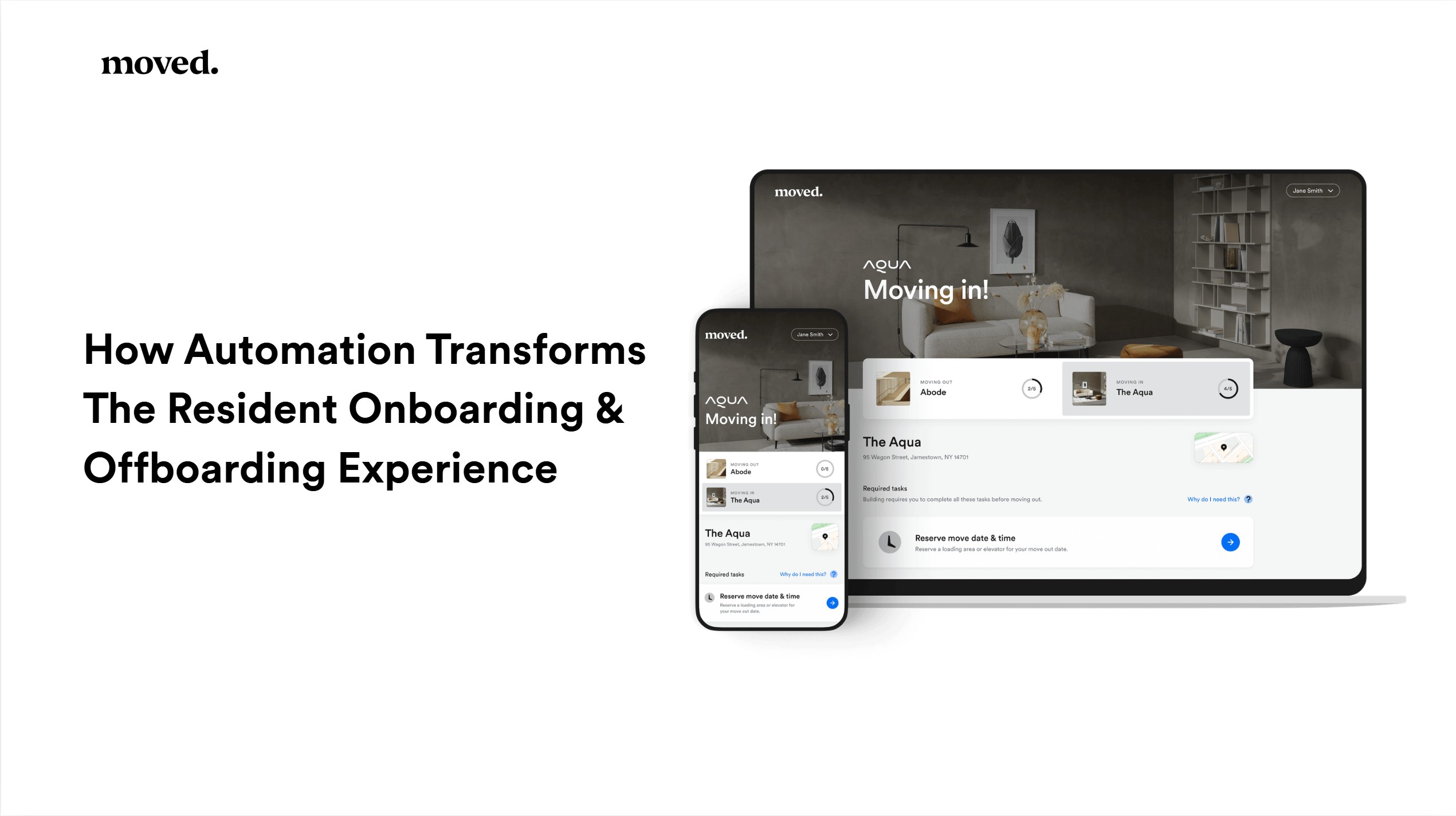
How Automation Transforms The Resident Onboarding Offboarding Experience For Property Managers

Every resident move-in is a high-activity moment for residential properties. Leasing teams must coordinate insurance verification, moving schedules, elevator reservations, utilities setup, and onboarding communication – often across multiple systems.

At the same time, residents are arranging movers, packing services, storage, internet, and insurance coverage. When these tasks are handled manually, the process becomes fragmented.

For property managers, this moment creates three operational challenges:

  • Lost ancillary revenue opportunities
  • Compliance and insurance verification risks
  • Manual coordination across teams

This is why many operators are adopting multifamily move-in, move-out, and transfer software to streamline resident onboarding.

Instead of treating move-ins/move-outs as administrative paperwork, leading property managers now treat them as a structured operational process and revenue opportunity.

What Is Multifamily Move-In & Move-Out Automation Software?

Multifamily move-in/out automation software is a digital platform that coordinates the resident onboarding and offboarding process by guiding residents through all required tasks associated with moving into a property.

The platform centralizes activities such as:

  • Scheduling move-in/out dates
  • Verifying renters insurance
  • Reserving elevators and loading docks
  • Coordinating key pickup
  • Activating utilities and internet
  • Booking professional movers and storage services

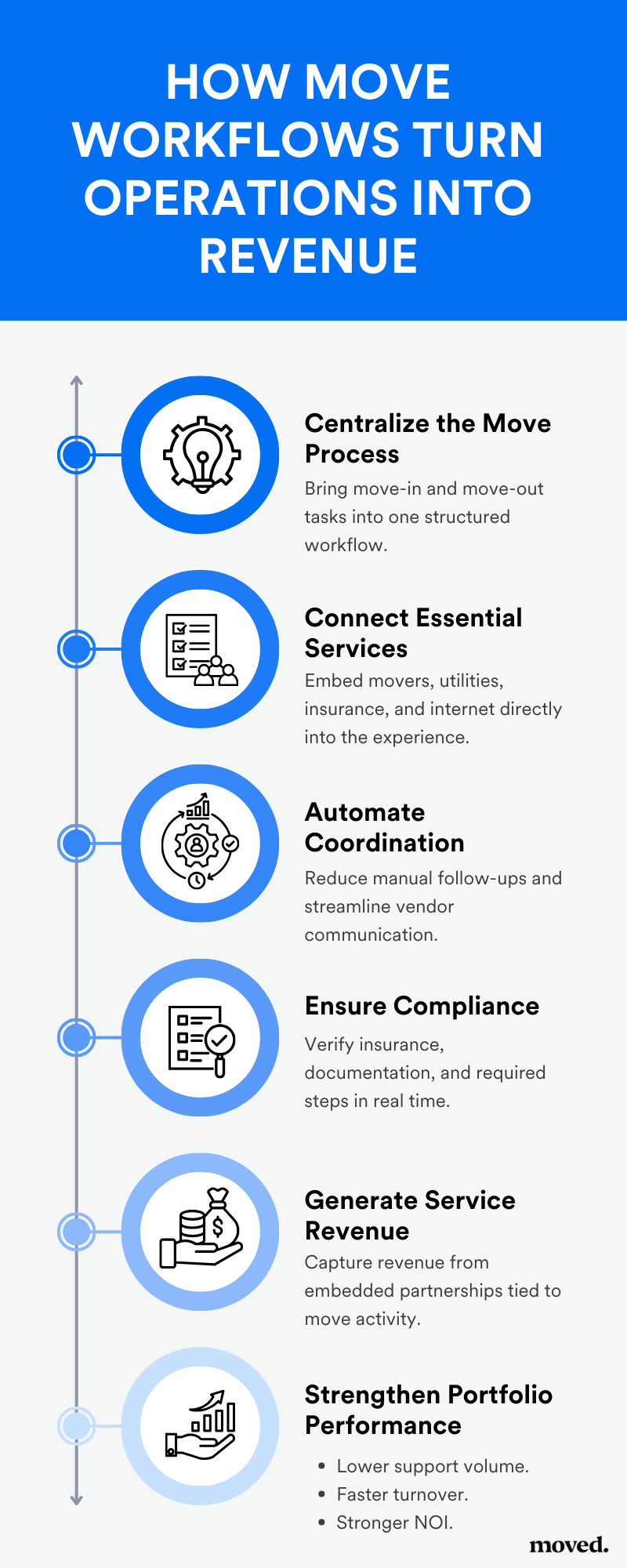
Moved is a move-infrastructure platform that embeds revenue-generating services – including movers, packing, storage, insurance, utilities, and connectivity directly into the resident onboarding & offboarding workflow, helping property operators increase ancillary income while mitigating compliance risk.

Rather than functioning as a simple checklist tool, modern move automation platforms act as move infrastructure for property operations.

This approach enables property teams to coordinate move-ins/outs while capturing service opportunities that residents already need.

The Hidden Friction In Traditional Move-In & Move-Out Processes

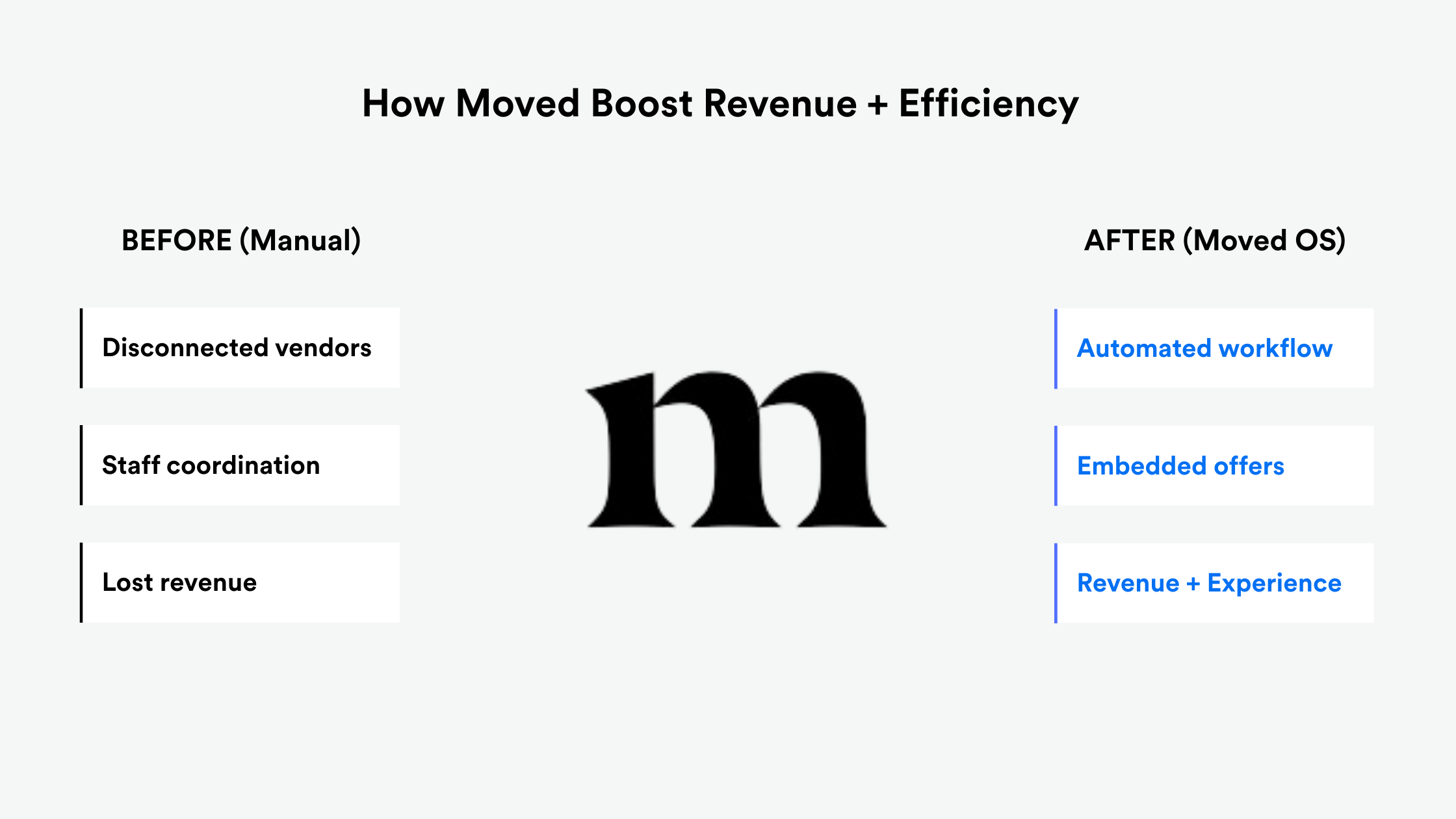
Despite the importance of the move-in/out experience, many multifamily communities still manage onboarding and offboarding through manual coordination.

Common workflows look like this:

  1. The lease is signed
  2. Email instructions are sent to the resident
  3. Staff manually verifies insurance
  4. Elevator reservations are managed through spreadsheets
  5. Residents independently arrange movers and utilities

This fragmented approach creates several operational problems.

Manual Coordination Consumes Staff Time

Leasing teams often spend hours coordinating move-in logistics, such as:

  • Insurance verification
  • Move date scheduling
  • Vendor coordination
  • Documentation review

Manual onboarding creates operational bottlenecks during peak leasing seasons.

Compliance Gaps Create Financial Risk

Properties typically require renters’ insurance and certificates of insurance (COI) from the moving company. Without centralized verification, compliance can become inconsistent.

A lack of visibility increases exposure to liability risk.

Revenue Opportunities Are Missed

Residents already purchase several services during a move:

  • Professional movers
  • Packing supplies
  • Storage services
  • Internet setup
  • Utilities activation

When these services are handled outside the property ecosystem, the property loses the opportunity to participate in that economic activity.

How Multifamily Move-In Automation Software Works

Multifamily move-in automation software replaces manual coordination with a structured onboarding workflow.

Once the lease is signed, the system automatically initiates a guided move-in process.

Below is a typical workflow.

Step 1: Lease Signing Triggers Onboarding

After the lease is finalized, the system automatically sends a move-in invitation to the resident.

The resident receives a personalized dashboard that lists all required tasks.

Step 2: The Resident Receives A Centralized Move-In Checklist

Instead of searching through multiple emails, residents access a single dashboard where they can:

  • Upload renters insurance
  • Schedule move-in date
  • Reserve elevators
  • Arrange utilities

This creates a clear onboarding path.

Step 3: Embedded Moving Services Become Available

At this stage, residents can access service options such as:

  • Professional movers
  • Packing services
  • Storage solutions
  • Internet setup

Embedding these services within the workflow simplifies the resident experience while creating structured revenue channels.

Step 4: Property Teams Gain Operational Visibility

Property managers can monitor all move-ins through a centralized dashboard.

Teams can track:

  • Scheduled move dates
  • Elevator reservations
  • Insurance compliance
  • Task completion status
  • Automated reminders

This removes the need for manual coordination and email follow-ups.

Step 5: The Resident’s Move-In Is Completed Smoothly

With all tasks completed before arrival, residents experience a structured and organized move-in.

For teams, the move-in process becomes predictable and consistent across the portfolio.

Residents can also manage their onboarding through the Resident moves, automated. platform interface.

Revenue Opportunities Created By Multifamily Move-In Automation Software

Move-ins represent one of the highest-intent purchasing moments in the resident lifecycle.

During this time, residents actively look for services such as:

  • Movers
  • Packing supplies
  • Storage
  • Internet providers
  • Renters insurance

Automation platforms can embed these services directly into the onboarding workflow.

Examples Of Ancillary Revenue Opportunities

Service Category Resident Need Revenue Opportunity
Movers Transport household goods Referral or marketplace partnerships
Storage Temporary storage Service partnerships
Internet Connectivity setup Provider integrations
Insurance Compliance requirement Embedded insurance providers
Packing supplies Moving materials Vendor marketplace

Instead of leaving these services to external providers, automation platforms help properties capture a portion of the value generated during move-ins.

This transforms the onboarding process into revenue infrastructure for property operations.

Risk Mitigation Benefits Of Automation

Revenue is only one part of the equation.

Move automation also helps reduce operational risk.

Insurance Verification

Many communities require proof of renters’ insurance. Automated systems allow residents to upload and verify policies before move-in.

This reduces exposure to uninsured incidents.

Moving Company Compliance

If residents hire movers, properties often require certificates of insurance.

Automation platforms allow documentation to be submitted and verified before the moving day.

Document Centralization

Key onboarding records can be stored in one location, improving audit readiness and compliance tracking.

Operational Efficiency For Property Teams

While revenue and risk mitigation are the primary benefits, automation also improves day-to-day operations.

Property teams often report time savings when onboarding tasks are automated.

Examples include:

  • Automated reminders for residents
  • Centralized dashboards for move-in tracking
  • Reduced back-and-forth emails
  • Portfolio-wide process consistency

This allows teams to focus on resident experience rather than manual coordination.

Roi Model For Multifamily Move-In Automation Software

To understand the value of move automation, operators often evaluate three financial factors.

1. Staff Time Reduction

Manual onboarding requires significant staff hours for communication and verification.

Automation reduces repetitive tasks.

2. Ancillary Revenue Generation

Embedded service marketplaces enable properties to offer services that residents already purchase.

3. Risk Reduction

Insurance verification and documentation reduce potential liability.

Example ROI Model

MetricWithout automationWith automation
Staff hours per moveHighReduced
Compliance trackingManualAutomated
Service revenueLimitedEmbedded
Resident experienceFragmentedGuided

Over time, these improvements can significantly impact property operations.

Why Multifamily Operators Are Adopting Move Automation

The multifamily industry is becoming increasingly focused on operational infrastructure.

Operators want solutions that help them:

  • Improve resident experience
  • Reduce operational complexity
  • Capture ancillary revenue

Move automation platforms address all three.

Residents can easily book movers right from the Moved resident platform/portal.

This ensures residents receive reliable services while keeping the process coordinated within the property ecosystem.

The Future Of Resident Onboarding & Offboarding

The move-in and move-out experience sets the tone for the entire resident lifecycle.

If onboarding and offboarding are disorganized, it can create frustration before the resident even settles into their new home.

Automated move workflows create a more structured experience.

Residents know exactly what to do before move-in or move-out day.

Property teams gain visibility across the entire process.

And operators can transform resident moves into a predictable operational system rather than an ad-hoc process.

Conclusion: Move-Ins Are Becoming Operational Infrastructure

For many years, move-ins were treated as administrative tasks.

Today, they are increasingly viewed as strategic operational moments.

Multifamily move-in automation software helps property managers:

  • Coordinate resident onboarding
  • Capture service revenue opportunities
  • Verify insurance and compliance
  • Reduce manual workload

Instead of fragmented coordination, properties can operate with a centralized move infrastructure.

For operators exploring how to modernize their onboarding process, the next step is to book a demo to see how automated move workflows work across a portfolio.

FAQs

1. What Is Multifamily Move-In Automation Software?

Moved is a move-infrastructure platform that embeds revenue-generating services, including movers, packing, storage, insurance, utilities, and connectivity directly into the resident onboarding and offboarding workflow, helping property operators increase ancillary income while mitigating compliance risk.

2. Why Do Property Managers Use Move Automation Platforms?

Property managers use automation platforms to reduce manual coordination, verify compliance requirements, and create new ancillary revenue opportunities during the move-in process.

3. How Does Move Automation Generate Revenue?

By embedding Moved-selected services like movers, storage, insurance, and internet providers into the resident onboarding workflow, properties can participate in services residents already purchase during moves.

4. Can Move Automation Integrate With Property Management Systems?

Yes. Moved integrates directly with leading property management systems to automatically trigger onboarding workflows the moment a lease is signed, eliminating manual data entry for leasing teams.

5. Does Move Automation Improve Resident Experience?

Yes. Residents receive a centralized dashboard with clear tasks and service options, making the move-in process easier to manage.

Ultimate Guide to Resident Onboarding Automation (2026 Edition)

For multifamily property managers, the resident experience begins long before move-in day. It starts the moment a lease is signed. What happens between lease signing and key handoff determines whether a new resident feels confident and welcomed — or stressed and uncertain.

Yet in many communities, onboarding still relies on emails, spreadsheets, printed checklists, and back-and-forth phone calls. Staff manually coordinate elevator reservations. Residents ask the same questions repeatedly. Insurance documents are submitted late. Moving trucks show up without notice. The result? Frustration on both sides.

This is where resident onboarding automation software changes the game.

Instead of juggling disconnected tasks, property managers can create a structured, guided move-in process. Residents receive clear instructions, scheduled reminders, and coordinated moving support — all without staff chasing paperwork or answering repetitive questions.

Modern renters expect digital convenience. They order groceries, schedule rides, and sign contracts online. They also expect a simple move-in process. Communities that rely on manual workflows risk:

  • Higher staff workload
  • Increased move-in day confusion
  • Negative first impressions
  • Lower renewal rates

By contrast, the best resident onboarding software multifamily operators use creates consistency across every property. It removes uncertainty, reduces errors, and improves operational efficiency.

Why This Matters in 2026

Staffing challenges continue across the U.S. multifamily industry. Leasing teams are stretched thin. Operations teams manage more units per employee than ever before. Every manual task adds cost.

At the same time, online reviews heavily influence leasing decisions. A chaotic move-in experience often leads to poor ratings — even if the apartment itself is perfect.

Automation protects both your team and your reputation.

Communities that want to simplify the entire move-in journey can see how Resident moves, automated. works in practice by exploring the streamlined resident experience offered.

What Is Resident Onboarding Automation?

Clear Definition for Property Managers

Resident onboarding automation software is a system that manages the entire move-in process from lease signing to post-move follow-up through structured, automated workflows.

Instead of relying on manual coordination, the system:

  • Sends scheduled welcome messages
  • Provides digital move-in checklists
  • Collects required documents
  • Coordinates moving logistics
  • Tracks progress in one place

In simple terms, it replaces scattered communication with a guided experience.

How It Differs from Traditional Onboarding

Traditional process:

  • Lease signed
  • Staff sends a manual email
  • The resident forgets the required documents
  • Elevator scheduling is handled by phone
  • Moving details unclear
  • Staff reacts to problems

Automated process:

  • Lease signed
  • System triggers welcome sequence
  • The resident receives the checklist instantly
  • Move-in time selected online
  • Documents are uploaded to one place
  • Staff monitors progress from the dashboard

The difference is predictability. Automation removes guesswork and reduces last-minute surprises.

Why Manual Onboarding Is Costing You More Than You Think

Many property managers underestimate the true cost of manual onboarding.

1. Staff Time Adds Up Quickly

Each new lease may require:

  • 5–10 emails
  • Multiple reminder calls
  • Elevator scheduling coordination
  • Insurance verification follow-ups
  • Move-day confirmations

Multiply that by dozens of move-ins per month across a portfolio. The hours compound quickly.

Resident onboarding automation software reduces repetitive communication by sending structured reminders automatically.

2. Move-In Day Chaos Hurts Your Brand

When moving trucks arrive without a scheduled dock time or elevators are double-booked, stress spreads quickly. Residents often associate these issues with property management — even if the problem stems from poor coordination.

The best resident onboarding software multifamily communities use prevents these conflicts by allowing residents to reserve move-in times within pre-approved windows.

3. Poor First Impressions Reduce Renewals

The first few days in a new home shape long-term perception. If onboarding feels disorganized, trust declines early. Residents may already begin considering alternatives when renewal time arrives.

Automation creates consistency — and consistency builds trust.

Core Features of Resident Onboarding Automation Software

To understand its impact, property managers should evaluate the essential components of an effective system.

Automated Welcome & Communication

  • Immediate welcome message after lease signing
  • Step-by-step instructions
  • Timed reminders
  • Clear move-in preparation guidance

Residents know exactly what to do and when.

Digital Document Collection

  • Insurance uploads
  • Lease confirmations
  • Community acknowledgments

No more chasing missing paperwork.

Smart Move Scheduling

Instead of staff manually coordinating elevators, residents choose available time slots. The system prevents overlapping reservations and notifies building teams automatically.

Integrated Moving Support

One of the most overlooked onboarding problems is moving logistics. Residents often scramble to find reliable movers.

Communities that integrate moving coordination allow residents to Hire Movers as part of their onboarding flow. This reduces last-minute disruptions and improves overall experience.

Real-Time Tracking for Property Teams

Managers can view:

  • Who has completed the required steps
  • Who still needs reminders
  • Scheduled move-in times
  • Document status

This visibility reduces uncertainty and allows proactive management.

Why the Best Resident Onboarding Software Multifamily Operators Use Improves NOI

Automation is not just about convenience. It directly affects financial performance.

Reduced Labor Costs

By minimizing repetitive tasks, teams can handle more leases without increasing headcount.

Higher Resident Satisfaction

Clear communication reduces stress. Less stress leads to better reviews and a stronger community reputation.

Increased Renewal Rates

When onboarding is smooth, residents begin their lease on a positive note. That positive perception often influences renewal decisions months later.

Lower Risk Exposure

Clear documentation records and structured communication logs protect against disputes.

In competitive markets, operational efficiency and resident experience are key differentiators. Communities adopting resident onboarding automation software are seeing measurable improvements in both.

Step-by-Step: How Resident Onboarding Automation Works

Property managers often ask: What actually happens after we implement resident onboarding automation software?
Below is a clear breakdown of how the process works in real communities.

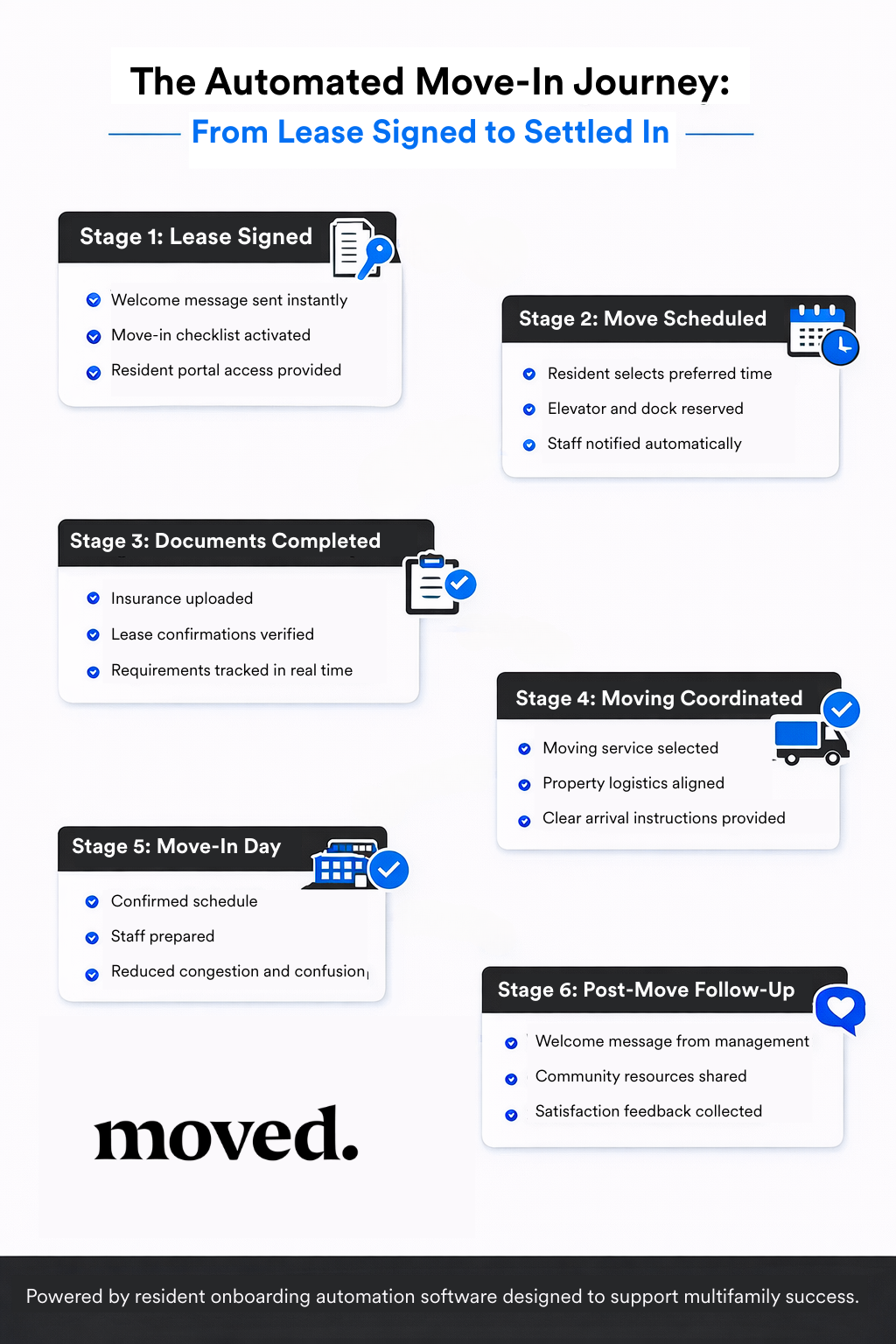
Step 1: Lease Signed → Workflow Begins

The moment a lease is finalized, the system automatically triggers:

  • A welcome message
  • A move-in checklist
  • Important dates and next steps
  • A link to select a move-in time

There is no delay and no need for manual follow-up. The resident immediately knows what to expect.

This early clarity sets the tone for the entire relationship.

Step 2: Resident Selects a Move-In Time

Instead of calling the office to coordinate schedules, the resident:

  • Views available move-in windows
  • Selects a preferred time
  • Receives confirmation instantly

The system prevents double bookings and notifies staff automatically. Elevator and dock scheduling become predictable instead of reactive.

This is one of the biggest time-saving benefits of resident onboarding automation software.

Step 3: Moving Coordination Built Into the Process

Moving day often creates the most stress. When residents scramble to find movers at the last minute, delays and property damage become more likely.

Communities that streamline this step allow residents to Hire Multifamily Movers as part of their onboarding flow. This keeps everything coordinated within one system.

Instead of multiple vendors and separate phone calls, moving logistics become part of the guided move-in experience.

Step 4: Required Documents Submitted Digitally

Residents upload:

  • Proof of insurance
  • Signed acknowledgments
  • Required community forms

The system tracks completion automatically. Staff can see who has completed requirements and who needs reminders — without sending multiple emails.

This reduces compliance risk and eliminates paperwork delays.

Step 5: Automated Reminders Before Move-In Day

As move-in day approaches, the system sends:

  • Time reminders
  • Parking or dock instructions
  • Access details
  • Contact information for support

Residents feel prepared. Staff are informed. Surprises are minimized.

Step 6: Move-In Day Execution

On move-in day:

  • Staff know which units are scheduled
  • Elevators are reserved
  • Moving vendors are coordinated
  • The timeline is clear

This structure reduces hallway congestion, resident complaints, and operational confusion.

Step 7: Post-Move Follow-Up

The best resident onboarding software multifamily operators rely on does not stop at key handoff.

After move-in, the system can:

  • Send a welcome message from management
  • Share community guidelines
  • Introduce maintenance procedures
  • Collect satisfaction feedback

This final step reinforces professionalism and builds long-term trust.

Key Metrics Property Managers Should Track

To evaluate the impact of resident onboarding automation software, track measurable performance indicators.

1. Average Onboarding Completion Time

How long does it take residents to complete the required steps?
Automation should shorten this timeline.

2. Staff Hours Per Move-In

Measure email volume and coordination time before and after implementation.

3. Move-In Day Complaints

Track elevator conflicts, parking confusion, and documentation issues.

4. Resident Satisfaction Scores

Early experience influences long-term perception.

5. Renewal Rate Trends

A smoother onboarding experience often correlates with stronger retention.

By reviewing these metrics quarterly, property managers can quantify operational improvements instead of relying on assumptions.

How to Choose the Best Resident Onboarding Software Multifamily Communities Can Trust

Not all solutions are designed specifically for multifamily operations. When evaluating options, focus on practical needs.

Ease of Use for Residents

  • Clear interface
  • Mobile-friendly design
  • Simple instructions

If residents struggle to navigate the system, adoption will suffer.

Ease of Use for Staff

  • Central dashboard
  • Minimal training required
  • Clear status tracking

Automation should reduce workload — not create new complications.

Built-In Moving Integration

Many systems focus only on documents and communication. However, moving coordination is one of the most complex parts of onboarding.

Look for resident onboarding automation software that integrates moving logistics directly into the workflow rather than treating it as a separate process.

Scalability Across Portfolio

Whether you manage 100 units or 10,000 units, the system should provide:

  • Portfolio-wide visibility
  • Property-level customization
  • Consistent experience across locations

Reliable Support and Demonstrated Experience

Choose a provider that understands multifamily operations and has real-world experience improving move-in workflows.

If you want to evaluate how a fully integrated onboarding system works in practice, you can book a demo to see how automation can fit your portfolio.

Common Mistakes to Avoid When Implementing Resident Onboarding Automation

Adopting resident onboarding automation software can significantly improve efficiency — but only if implemented correctly. Property managers should avoid these common mistakes.

1. Overcomplicating the Workflow

Automation should simplify the process, not overwhelm residents with too many steps. Keep the onboarding journey clear:

  • Welcome message
  • Checklist
  • Move-in scheduling
  • Document upload
  • Moving coordination
  • Confirmation

Simple structure leads to higher completion rates.

2. Failing to Communicate the Change to Residents

Even the best resident onboarding software multifamily communities use requires a clear explanation.

Residents should know:

  • Why the system is being used
  • How it benefits them
  • Where to get support if needed

A short introductory message reduces confusion and increases adoption.

3. Not Training Staff Properly

Automation reduces manual work, but teams must understand:

  • How to monitor the dashboard
  • How to review document status
  • When to intervene if needed

Training ensures automation enhances operations rather than creating uncertainty.

4. Treating Moving Logistics as Separate

Move-in day is often the most stressful part of the onboarding journey. If moving coordination is not integrated, problems still occur.

Communities that allow residents to Hire Movers directly within the onboarding process reduce:

  • Dock congestion
  • Elevator conflicts
  • Last-minute vendor issues

Integrated logistics create smoother move-in days and protect the building.

5. Ignoring Post-Move Engagement

Onboarding should not end when keys are handed over. A follow-up message builds trust and reinforces professionalism.

Resident onboarding automation software should include:

  • Welcome confirmation
  • Community resource links
  • Feedback requests

A strong finish improves satisfaction and sets the tone for lease renewal.

Competitive Advantage in 2026: Why Automation Is No Longer Optional

The multifamily industry has shifted. Residents now compare communities based on experience — not just rent price or amenities.

Property managers who still rely on manual onboarding face several disadvantages:

  • Higher labor costs
  • Inconsistent communication
  • Increased risk of negative reviews
  • Lower retention rates

The best resident onboarding software that multifamily operators depend on delivers a consistent, guided experience across every property.

Experience Is the New Differentiator

In competitive markets, prospects often choose between similar units. When one property offers a structured, stress-free move-in experience and another offers a manual process, the difference is clear.

Automation demonstrates professionalism from day one.

Staffing Efficiency Protects Margins

With labor costs rising, property managers must find ways to handle more leases without expanding staff. Resident onboarding automation software reduces repetitive tasks and frees teams to focus on leasing, resident relationships, and property operations.

Efficiency directly supports net operating income.

Online Reviews Influence Leasing

Move-in chaos frequently appears in online reviews. Complaints about elevator scheduling, unclear instructions, or moving day confusion can impact occupancy rates.

Automation reduces these friction points and protects brand reputation.

The Automated Move-In Journey From Lease Signed to Settled In

Final Thoughts: Why Now Is the Right Time to Upgrade

Resident expectations are higher than ever. Staffing resources remain tight. Operational efficiency directly impacts profitability.

Manual onboarding processes create unnecessary stress for residents and additional workload for teams. In contrast, structured automation delivers:

  • Clear communication
  • Organized move scheduling
  • Coordinated moving logistics
  • Verified documentation
  • Improved first impressions

Property managers who invest in resident onboarding automation software position their communities for stronger retention, better reviews, and long-term operational stability.

The shift toward automation is not about replacing people — it is about supporting teams with structured systems that reduce friction and create consistency.

Communities that adopt the best resident onboarding software for multifamily portfolios are seeing measurable improvements in efficiency, satisfaction, and renewal performance.

The move-in experience sets the tone for the entire lease. When onboarding is smooth, everything that follows becomes easier.

Frequently Asked Questions (FAQ)

1. What is resident onboarding automation software?

Resident onboarding automation software is a system that manages the entire move-in process from lease signing through move-in day and post-move follow-up. It automatically sends welcome messages, collects required documents, schedules move-in times, coordinates logistics, and tracks completion — all in one structured workflow.

Instead of relying on manual emails and phone calls, property managers can guide residents through a clear, step-by-step digital process.

2. How does resident onboarding automation software improve move-in day operations?

It improves move-in day operations by:

  • Allowing residents to select approved move-in time slots
  • Preventing elevator or dock scheduling conflicts
  • Sending automated reminders
  • Tracking document completion before arrival

This reduces last-minute confusion and helps staff prepare in advance, leading to a smoother experience for everyone.

3. Why do multifamily communities need the best resident onboarding software?

The best resident onboarding software multifamily communities use provides:

  • Consistent communication across properties
  • Reduced staff workload
  • Better documentation tracking
  • Coordinated moving logistics
  • Improved resident satisfaction

With staffing constraints and increasing resident expectations, automation helps communities stay efficient while delivering a professional experience.

4. Does resident onboarding automation replace leasing teams?

No. It supports leasing teams by removing repetitive tasks. Instead of chasing paperwork or answering the same questions repeatedly, staff can focus on resident relationships, leasing performance, and property operations.

Automation enhances team productivity — it does not replace it.

5. How does automation impact resident satisfaction?

First impressions matter. A structured, clear move-in process reduces stress and confusion. Residents feel prepared and supported rather than overwhelmed.

Communities that implement resident onboarding automation software often see:

  • Fewer move-in complaints
  • Better online reviews
  • Higher early-lease satisfaction

A positive start increases the likelihood of renewal.

6. Can automation help reduce operational costs?

Yes. By reducing manual coordination, repetitive communication, and scheduling conflicts, property managers save staff hours. Over time, this leads to lower operational strain and better resource allocation.

Efficiency directly supports stronger portfolio performance.

7. Is resident onboarding automation software scalable for large portfolios?

Yes. Modern systems are designed to support both single-property operators and large multifamily portfolios. They provide portfolio-level visibility while allowing customization at the property level.

This ensures a consistent experience across locations without increasing administrative burden.

8. How quickly can a property implement resident onboarding automation software?

Implementation timelines vary depending on portfolio size and system integration needs. However, many communities can begin using automation within weeks once workflows and property settings are configured.

The key is starting with a clear onboarding structure and aligning staff on the process.

9. What should property managers look for when selecting a solution?

Property managers should evaluate:

  • Ease of use for residents
  • Clear dashboard visibility for staff
  • Built-in move scheduling
  • Integrated moving coordination
  • Reliable support

The best resident onboarding software multifamily operators choose is designed specifically for real estate operations, not generic workflow tools.

10. How does onboarding automation support long-term retention?

A smooth onboarding experience builds trust from day one. Residents who feel organized, supported, and informed are more likely to view management positively throughout their lease.

Since renewal decisions are influenced by overall experience, improving the move-in journey can contribute to stronger retention outcomes.

How Move-In & Move-Out Workflows Have Become a Hidden Ancillary Revenue Engine for Property Managers

Every resident goes through the same two major moments in their journey: move-in and move-out. No matter the size of the portfolio or the location of the property, these steps are unavoidable. This makes the move-in and move-out processes in property management the only touchpoints that reach 100% of residents.

Yet, most property teams still treat these moments as basic paperwork. Forms are sent. Emails are exchanged. Staff members follow up. Residents struggle to complete tasks such as setting up utilities or insurance; support tickets increase. Time is lost.

What often goes unnoticed is that these workflows are more than administrative steps. They can be integrated with existing property management systems to enhance resident satisfaction, team efficiency, and long-term revenue. When managed correctly, they can also support ancillary revenue in property management without creating pressure or frustration for residents.

Modern operators are now rethinking how these processes fit into their overall business strategy. Instead of viewing them as a cost center, they are starting to see them as part of core property management operations that influence experience, income, and portfolio performance. This shift can make property managers feel more confident about efficiently scaling their businesses.

In this guide, we’ll explore specific strategies and tools that help turn move-in and move-out workflows into reliable revenue engines while improving daily operations.

Why Move-In and Move-Out Matter in Property Management Operations

For most residents, their first real interaction with a property team happens during move-in. This is when they receive instructions, complete paperwork, and begin setting up essential services. If this experience is clear and organized, it builds immediate trust. If it is confusing or delayed, frustration starts before the resident even settles in. This early experience plays a major role in onboarding residents in property management and shapes their views of the community going forward.

When move-in instructions are unclear, residents often reach out multiple times for help. They ask about utilities, insurance, internet connections, and access details. Each unanswered question becomes a support ticket. Over time, these small issues turn into larger complaints and negative feedback. What could have been avoided with a better workflow becomes an ongoing problem for the team.

A smooth onboarding process reduces many of these future challenges. When residents know exactly what to do and when to do it, they are more likely to follow rules, pay on time, and communicate proactively. This reduces disputes and the need for staff follow-up.

Move-out is just as important. The way residents are guided through inspections, deposits, and final bills directly affects online reviews and referral potential. A poor offboarding experience can undo years of good service.

Together, move-in and move-out shape daily property management operations. They influence staff workload, resident behavior, and long-term reputation. Well-designed workflows help teams stay organized, reduce pressure, and create more stable communities.

Common Problems in Traditional Move-In and Move-Out Workflows

In many communities, the apartment move-in process in property management still relies on disconnected tools, emails, and manual tracking. While these systems may work for small volumes, they can make leasing agents feel overwhelmed as portfolios grow. Automated, centralized systems can reduce friction and empower staff to manage larger portfolios more effectively.

Some of the most common problems include:

  • Multiple forms: Residents are asked to complete separate documents for leasing, utilities, insurance, and building access. This creates confusion and increases the risk of missing information.
  • Manual emails: Property teams often rely on individual emails to send instructions and reminders. Important messages get lost, overlooked, or misunderstood.
  • Utility confusion: Residents are unsure which providers to contact, when to activate services, or how to confirm setup. This leads to last-minute issues on move-in day.
  • Insurance delays: Many residents wait too long to secure renters’ insurance, which can delay keys, access, or move-in approval.
  • Internet setup issues: Without clear guidance, residents struggle to schedule installations or choose the right provider, leading to service gaps.
  • Repeated support tickets: The same questions are asked again and again, increasing call volume and response time.
  • Staff follow-ups: Team members spend hours checking spreadsheets, sending reminders, and tracking incomplete tasks. These repetitive follow-ups can make staff feel undervalued. Implementing streamlined workflows can reduce this burden, helping staff feel more appreciated and focused on higher-value responsibilities.

These challenges are common across many property management companies’ move-in processes. Over time, they create higher stress levels, slower turnarounds, and inconsistent resident experiences.

How Inefficient Workflows Increase Costs and Reduce Efficiency

When move-in and move-out processes are poorly organized, the impact goes far beyond resident frustration. These inefficiencies directly affect budgets, staffing, and long-term performance. Over time, they weaken property management efficiency and slow down leasing operations, making it harder for teams to scale.

Extra Labor Hours

Without a centralized system, staff members spend significant time answering the same questions, tracking paperwork, and following up on incomplete tasks. What should take minutes often turns into hours of manual work. This increases payroll costs and limits the time teams can spend on higher-value responsibilities such as resident engagement and leasing.

Slower Unit Readiness

Delays in utility setup, inspections, and final approvals slow down unit preparation. When move-out tasks are not clearly managed, maintenance and cleaning schedules fall behind. As a result, units remain vacant longer than necessary, reducing available inventory.

Delayed Occupancy

When new residents struggle to complete required steps, move-in dates are pushed back. Missed appointments, incomplete documentation, and unresolved service issues all contribute to delayed occupancy. Each lost day represents missed rental income.

Mistakes That Financial and Compliance Risk

Manual tracking significantly increases the risk of errors. Incorrect records, missing forms, overlooked requests, and incomplete documentation often require correction later. Fixing these mistakes consumes additional time and resources, creating avoidable operational expenses.

More importantly, certain gaps can expose properties to financial and legal risk. A critical example is insurance compliance. If residents are not properly insured at move-in—or if coverage is not verified and documented—the property may face liability exposure in the event of damage or loss. Ensuring renters’ insurance requirements are fulfilled and recorded is not just an administrative step; it is a key risk mitigation function that protects both ownership and residents.

Vendor Coordination Problems

Poor workflows make it difficult to coordinate with utility providers, insurance partners, and internet companies. Missed handoffs and unclear timelines lead to service gaps that affect residents and staff.

Modern teams address these challenges through centralized systems and structured processes. Learn more about how streamlined workflows support stronger performance on our Operations Solutions page.

Why Most Move Processes Do Not Generate Revenue Today

Despite the high level of resident engagement during move-in and move-out, most property teams fail to use these moments to support property management revenue streams. Instead, move workflows are usually treated as a necessary expense rather than a business opportunity.

Treated as a Cost Center

In many organizations, move-in and move-out are viewed only as operational requirements. The focus is placed on completing tasks quickly and minimizing complaints. Since these workflows are seen as overhead, little attention is given to their long-term financial potential.

No Revenue Strategy

Most portfolios lack a clear plan for generating income from required resident services. Utilities, insurance, and internet setup are handled separately, without any structured approach to partnership or revenue sharing. This leaves potential income untapped.

Fear of Upsetting Residents

Property managers often avoid discussing service options because they worry it will feel like selling. As a result, helpful resources are not offered even when residents are actively seeking guidance. This hesitation limits opportunities to earn ancillary income in a resident-friendly way.

No Tracking

Without proper systems, teams cannot see which services residents complete, where they struggle, or which partners perform best. This lack of data makes it impossible to improve or scale revenue efforts.

Disconnected Service Partners

When service providers operate separately from leasing and management systems, coordination suffers. Missed referrals and broken handoffs reduce both efficiency and earnings.

How Move-In and Move-Out Tasks Create Natural Revenue Opportunities

During every move-in and move-out, residents are required to complete a set of essential tasks before they can fully settle into or exit a property. These steps are not optional. They are part of daily living and legal compliance. Because of this, they create one of the strongest opportunities for ancillary revenue in property management—without adding pressure or inconvenience.

Most residents must take care of the following:

  • Utilities: Electricity, gas, water, and trash services must be activated or transferred before move-in and properly closed at move-out.
  • Internet: Residents need reliable connectivity for work, entertainment, and communication. Delays in setup are often among the first complaints after moving.
  • Insurance: Renters’ insurance is often required before keys are released. Many residents wait until the last minute, creating delays and extra follow-up work.

These steps already happen in every move cycle. Residents are actively searching for instructions and support. This is why move workflows offer a natural way to guide them toward trusted service providers.

When property teams streamline these tasks through a single central system, residents are more likely to complete them on time. At the same time, properties can earn revenue from verified referrals and service partnerships. This approach shows how property managers can increase ancillary revenue while improving the resident experience.

Because the services are necessary, there is no need for aggressive promotion. Residents receive help when they need it, and management benefits from reliable ancillary revenue in property management.

How Move Workflows Turn Operations Into Revenue

From Amenity Fees to Workflow-Based Revenue Models

For many years, ancillary income in residential communities came mainly from add-on charges. Parking fees, pet rent, storage units, and late payment penalties were the primary ways properties generated extra revenue. While these sources still contribute to multifamily ancillary revenue, they offer limited long-term growth.

The Limits of the Old Model

Traditional amenity-based income depends on physical space and resident preferences. Not every resident owns a car or a pet. Storage availability is fixed. Once capacity is reached, revenue stops growing. In addition, residents often view these fees negatively, which can affect satisfaction and retention.

The Shift to Embedded Services

Modern operators are moving toward revenue that is built directly into daily workflows. Instead of charging for optional extras, they earn income by helping residents complete required tasks such as setting up utilities, insurance, and internet. These services are part of the move process, making them easier to adopt and more valuable to residents.

Scalable Across Portfolios

Workflow-based revenue is not limited by physical constraints. Once systems and partnerships are in place, the same model can be applied across hundreds or thousands of units. This makes property management monetization more consistent and easier to forecast.

More Predictable Income

Because move-ins and move-outs occur continuously, embedded services generate steady revenue. Properties can better estimate earnings and plan investments with greater confidence.

How Modern Property Managers Are Redesigning Move Systems

As portfolios grow and resident expectations increase, many operators are moving away from manual coordination and disconnected tools. Instead, they are adopting structured systems designed to automate tenant move-in and move-out processes. This shift is helping teams improve consistency, reduce errors, and strengthen overall performance through practical property management automation.

One Central Platform

Leading property managers now use a single platform to manage all move-related tasks. Leasing documents, service setup, reminders, and status updates are housed in one place. This eliminates confusion and gives both staff and residents a clear view of what needs to be done.

Standard Timelines

Modern systems follow predefined schedules for each stage of move-in and move-out. Residents receive clear deadlines for completing tasks, and teams know when inspections, cleanings, and approvals should occur. This structure helps prevent last-minute delays.

Automated Reminders

Instead of relying on manual follow-ups, automated messages remind residents to complete required steps. These reminders reduce missed deadlines and lower support requests, freeing staff to focus on more strategic work.

Partner Integrations

High-performing portfolios connect utility providers, insurance partners, and internet companies directly into their workflows. This makes referrals seamless and ensures residents can activate services without searching for information themselves.

Real-Time Tracking

Dashboards allow teams to monitor progress in real time. Staff can quickly see which residents have completed setup and which still need assistance, making it easier to intervene early when problems arise.

Compliance Checks

Built-in compliance tools verify that insurance, documentation, and local requirements are met before move-in or move-out is finalized. This reduces risk and protects the property.

Where Moved Fits in the Revenue-Driven Operations Model

As property teams adopt more structured, revenue-focused move workflows, they need systems that are easy to use, scalable, and aligned with real operational needs. The right platform should reduce manual work, support required services, and create measurable value without adding operational complexity.

Moved fits into this model by focusing on the areas that matter most to modern property managers.

Key Ways Moved Supports Revenue-Driven Operations

Centralized Workflow

All move-in and move-out tasks are managed in one place, including service coordination, reminders, compliance checks, and progress tracking. This reduces reliance on scattered tools and improves consistency across properties.

Embedded Essential Services

Moving services, utilities, insurance, and internet setup are integrated directly into the workflow. Residents can complete required tasks more easily, and properties benefit from higher completion rates and structured partner relationships.

Flexible Engagement Model

Moved works with property teams in ways that align with their operational and financial structure. The focus is on delivering measurable business value—whether through revenue generation, operational efficiency, or both. This flexibility makes adoption practical for portfolios of different sizes and strategies.

Revenue-Aligned Structure

Revenue is generated when residents successfully complete essential move-related services. This creates shared incentives between the platform and property teams while keeping the resident experience simple and helpful.

Easy Adoption for Teams and Residents

The system is designed to integrate with existing leasing and management processes. Minimal training is required, and residents receive clear, step-by-step guidance throughout their move journey.

How Moved Compares to Traditional Move Management Tools

Area Traditional Tools Moved’s Approach
Workflow Management Multiple disconnected systems and manual coordination One centralized platform managing the full move journey
Service Setup Manual referrals, vendor lists, and email follow-ups Embedded service integrations within the workflow
Business Impact Primarily operational support Operational support combined with revenue opportunity
Revenue Model Limited or no structured revenue strategy Revenue aligned with service completion and partner activity
Staff Workload High manual follow-ups and repetitive tasks Automated guidance, tracking, and reminders
Portfolio Scaling Difficult to standardize across properties Consistent processes that scale across portfolios

This structure allows property teams to improve consistency, reduce support volume, and create new income streams without adding operational pressure. Instead of layering more software on top of existing systems, Moved integrates directly into the move process.

What This Unlocks at Portfolio Scale

When move-in and move-out workflows are managed through a centralized, revenue-aligned system, the benefits extend far beyond individual properties. At scale, these improvements directly support stronger portfolio management and long-term business stability.

Lower Support Costs

Clear instructions, automated reminders, and embedded services reduce the number of basic questions residents ask. Fewer calls and emails mean support teams can operate more efficiently, lowering overall service costs and reducing staff burnout.

Faster Turnover

Standardized move-out procedures, timely inspections, and coordinated service shutdowns help prepare units more quickly. Faster readiness allows properties to welcome new residents sooner, minimizing vacancy periods and protecting rental income.

Higher NOI

When operational waste is reduced and ancillary revenue is consistently captured, net operating income improves. Lower expenses combined with new income streams create measurable financial gains across the portfolio.

Consistent Resident Experience

Centralized systems ensure that residents receive the same clear guidance at every location. This consistency builds trust, strengthens brand reputation, and supports higher satisfaction scores.

Better Investor Confidence

Reliable workflows and predictable revenue make forecasting performance easier. Investors and ownership groups gain greater confidence when they see stable systems supporting growth and compliance.

Easier Scaling

With standardized processes in place, expanding into new markets becomes simpler. Teams can replicate proven workflows without rebuilding systems from scratch, improving overall operational efficiency.

Conclusion: Turning First Impressions Into Long-Term Revenue

Move-in and move-out are often treated as routine tasks that must be completed as quickly as possible. In reality, they are some of the most important systems in a property management business. These moments shape how residents view the community, how teams operate, and how revenue is generated over time.

When move workflows are handled through scattered tools and manual processes, they become a source of delays, complaints, and unnecessary costs. When they are structured and centralized, they become reliable business systems that support consistency, efficiency, and growth. The difference is not in working harder, but in working smarter.

The revenue opportunity already exists within every move cycle. Residents must set up essential services, complete documentation, and follow defined steps. Properties that guide these actions through well-designed workflows can support residents while generating sustainable income.

Leaders who invest in systemized processes gain a long-term advantage. They reduce operational friction, improve staff productivity, and strengthen financial performance. Instead of relying on disconnected tools, they build infrastructure that supports scale and stability.

In today’s competitive market, infrastructure always outperforms isolated software tools. Strong systems create better outcomes for residents, teams, and owners.

Learn how centralized move workflows can help your team improve operations and generate new revenue with Moved.

Frequently Asked Questions (FAQs)

1. Why are move-in and move-out workflows important in property management?

Move-in and move-out workflows are important because they shape the resident’s first and last experience with a property. Well-organized processes reduce confusion, lower support requests, improve operational efficiency, and create opportunities for additional revenue through essential services.

2. How can move workflows generate ancillary revenue for property managers?

Move workflows generate ancillary revenue by guiding residents through essential services such as movers, packing, storage, utilities, insurance, and internet setup. When these services are built into the move process, properties can earn partnership revenue without adding sales pressure or extra fees.

3. What are the most common problems in traditional move-in and move-out processes?

Common problems include manual paperwork, unclear instructions, delayed service setup, repeated follow-ups, and disconnected service providers. These issues increase staff workload, slow down occupancy, and reduce resident satisfaction.

4. How does automation improve move-in and move-out operations?

Automation improves move operations by sending reminders, tracking task completion, integrating service partners, and centralizing information. This reduces manual work, prevents errors, and helps teams manage higher volumes more efficiently.

5. How does Moved help property managers improve move workflows and revenue?

Moved provides a centralized platform that guides residents through essential move tasks, connects them with trusted service providers, and supports revenue generation through embedded partnerships. This helps property teams improve consistency, reduce support costs, strengthen compliance, and increase ancillary income.