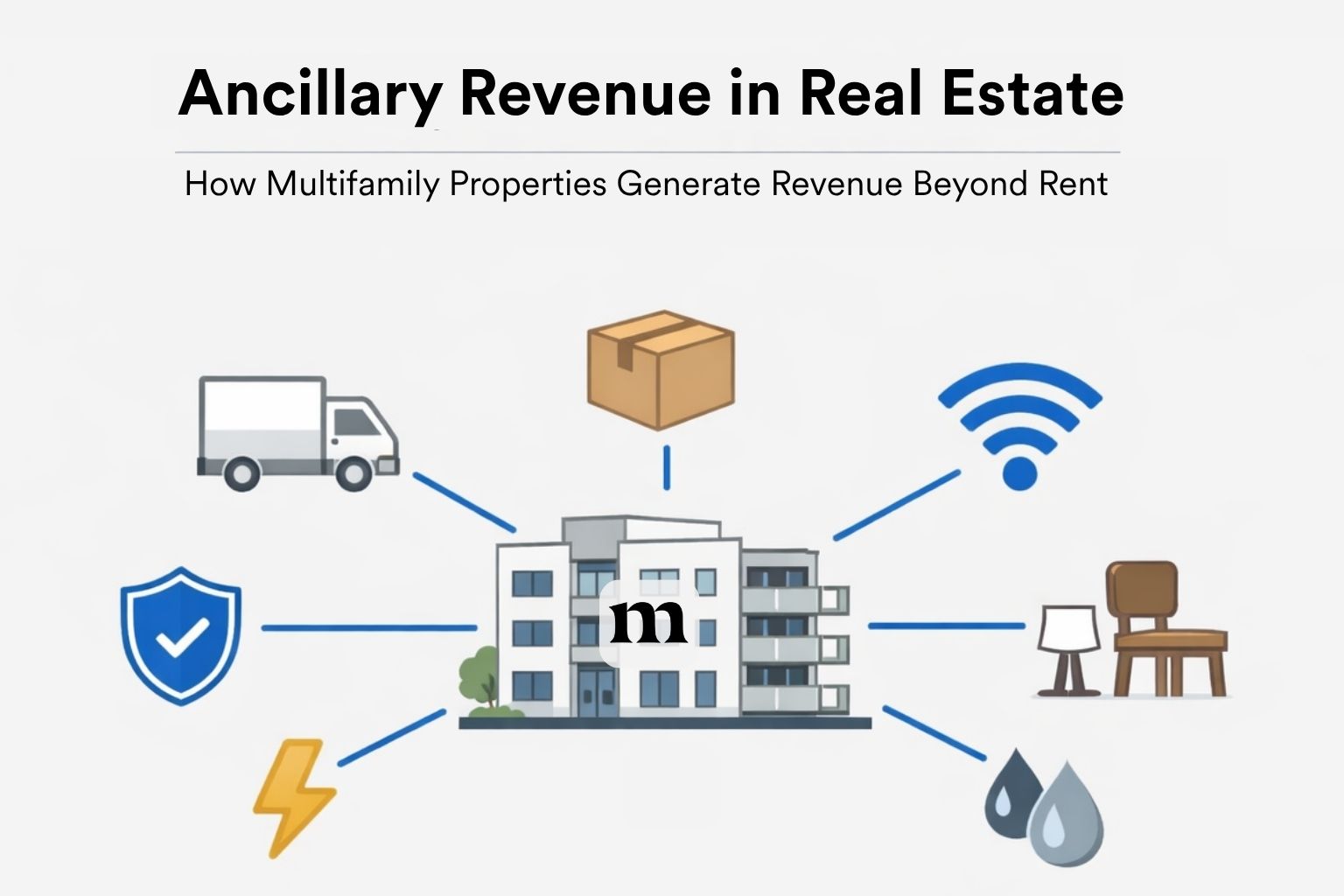
Multifamily housing has traditionally relied on one primary income source: rent. For decades, property financial performance has been closely tied to occupancy rates and rental pricing. While rent will always remain the core revenue driver, many property operators are now exploring new ways to improve financial performance without increasing rental costs for residents.
This shift has brought growing attention to ancillary revenue in real estate. Ancillary revenue refers to income generated from services and partnerships that support the resident experience but sit outside the base rent structure. These services often include moving assistance, renters insurance, storage, internet setup, packing services, and other solutions residents commonly need when relocating.
The importance of these additional revenue streams has grown significantly across multifamily housing. Property managers today face rising operational costs, higher staffing expenses, and increasing pressure to maintain competitive rents. At the same time, residents expect a smoother and more convenient move-in experience. These two forces are encouraging operators to rethink how their properties generate income.
Rather than relying only on rent increases, many portfolios are looking at ancillary revenue in real estate as a practical way to strengthen property income. By connecting residents with useful services at key moments in the leasing journey, properties can generate additional revenue while improving the resident experience.
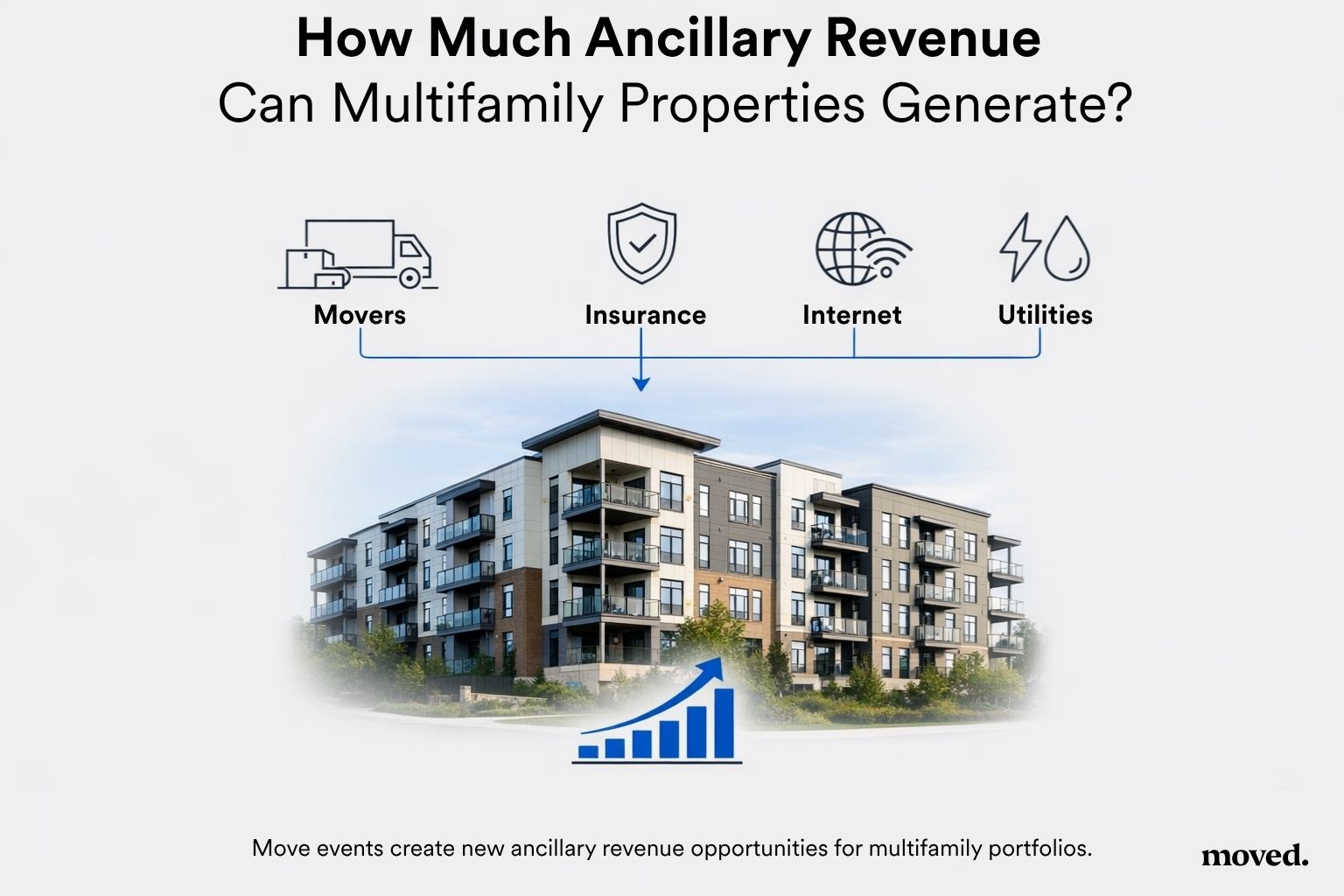
Move events, in particular, create a powerful opportunity. When residents prepare to move into a new apartment, they already need services such as movers, packing supplies, storage solutions, and insurance coverage. Property operators are increasingly exploring ancillary revenue in real estate to unlock additional income through services residents already need during a move.
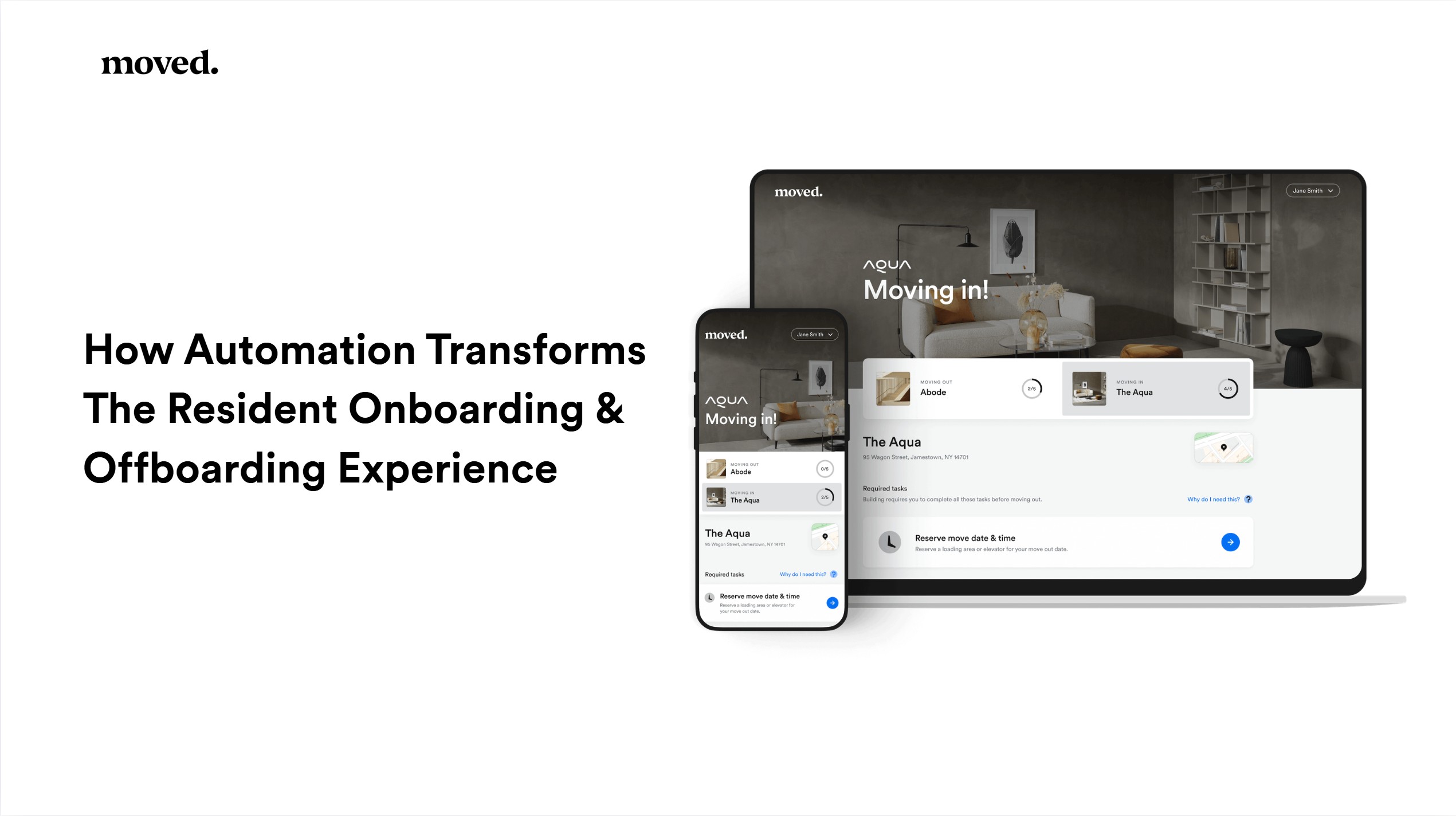
Modern platforms now make it easier for property teams to guide residents through these services in a structured way. Instead of relying on manual coordination, properties can provide a streamlined move experience that lets residents schedule services, verify insurance, and complete key move-related tasks in one place. Solutions that support Resident moves, automated. help property managers simplify move coordination while opening the door to new revenue opportunities tied to the resident journey.
In the sections ahead, we will explore how ancillary revenue works in multifamily housing, why it is becoming an essential strategy for property managers, and how operators can activate these revenue streams across their portfolios.
What Is Ancillary Revenue In Real Estate?
Ancillary revenue in real estate is additional income generated from services, partnerships, and products offered to residents beyond base rent.
In multifamily housing, this revenue typically comes from services connected to the resident’s move and living experience, such as:
- Professional moving services
- Packing supplies
- Storage solutions
- Renters insurance
- Internet and utility setup
- Furniture rental
- Property services like parking or storage lockers
Property managers generate ancillary revenue in real estate by connecting residents with trusted service providers during high-intent moments like move-ins, lease renewals, or move-outs.
This approach allows properties to increase total property income without raising rent, while also simplifying the resident experience.
What Ancillary Revenue Means in Multifamily Housing
In multifamily housing, most property income traditionally comes from one source: rent. Rent payments represent the primary revenue stream that supports property operations, maintenance, staffing, and investment returns. However, modern multifamily communities increasingly generate income from additional services connected to the resident experience. These additional sources of income are known as ancillary revenue in real estate.
Definition
Ancillary revenue in multifamily housing to additional income generated from services, partnerships, and resident-related products beyond base rent.
Rather than increasing rent prices, property operators can generate revenue by offering services that residents already need. These services often relate to everyday living needs or the moving process. When these services are offered through trusted vendors or integrated platforms, properties can create new income opportunities while simplifying the resident experience.
Rent Revenue vs Ancillary Revenue
Understanding the difference between traditional rent revenue and ancillary revenue helps clarify why this model is becoming more important for property managers.
Rent Revenue
Rent revenue comes directly from lease agreements. It is the monthly payment residents make to occupy a unit. This income is predictable but often limited by market conditions, rent regulations, and affordability considerations.
Ancillary Revenue
Ancillary revenue in real estate comes from services connected to the property or the resident lifecycle. These services are optional but valuable to residents, particularly during high-activity moments like move-ins and move-outs. Because these services address real needs, they create opportunities for additional property income without changing base rent.
Examples of Ancillary Revenue Sources
Many types of services can generate ancillary revenue within a multifamily community. Common examples include:
- Moving services that help residents relocate efficiently
- Packing services that provide boxes and moving supplies
- Storage solutions for residents who need temporary space during a move
- Renters insurance programs that help properties maintain insurance compliance
- Internet and utility setup services for new residents
- Parking services, such as reserved or premium parking options
- Furniture rental for residents seeking flexible furnishing solutions
- Smart home upgrades, such as security devices or connected appliances
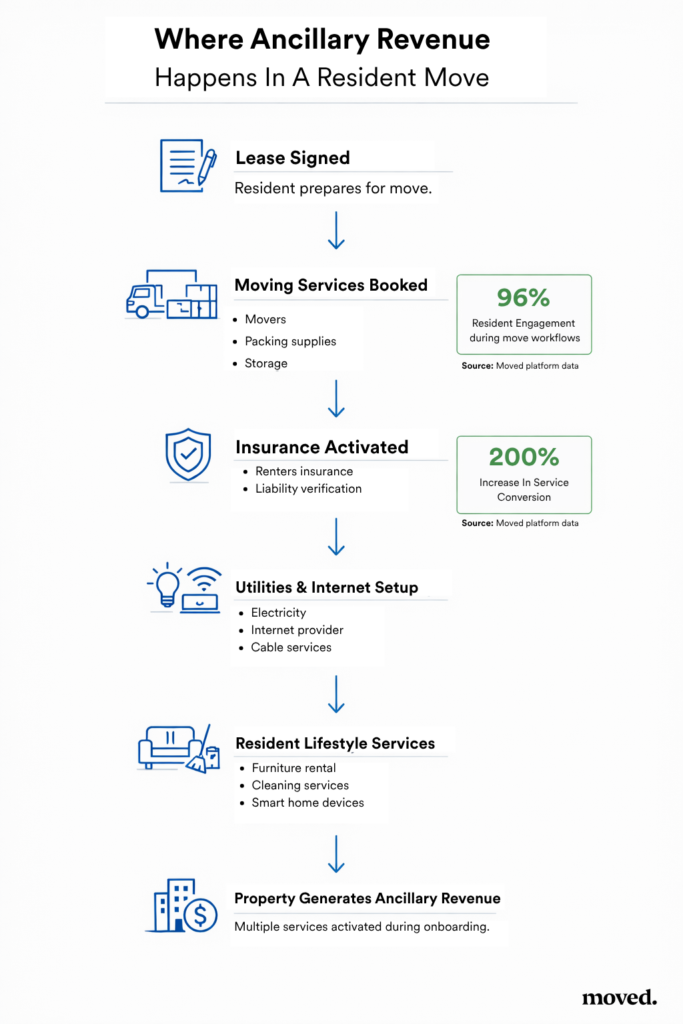
Many of these services naturally occur during the resident onboarding and offboarding process. When a lease is signed, residents typically need to organize multiple services before moving into their new home. This includes scheduling movers, setting up internet service, arranging utilities, and purchasing renters’ insurance.
These moments create natural opportunities for ancillary revenue in multifamily housing because residents are already looking for trusted service providers. When properties guide residents through these tasks during onboarding and offboarding, they simplify the move process while creating additional income opportunities tied to services residents already plan to use.
Why Ancillary Revenue In Real Estate Is Growing Across Multifamily Portfolios
Across the multifamily housing industry, property operators are placing greater focus on ancillary revenue in real estate as part of their long-term financial strategy. While rent has traditionally been the dominant revenue source, many operators now recognize that relying solely on rental income limits financial flexibility. As a result, multifamily portfolios are increasingly expanding their focus toward service-based revenue opportunities that complement rent rather than replace it.
One of the main drivers behind this shift is the steady rise in operating costs. Property expenses continue to increase across multiple categories, making it more challenging for operators to maintain margins without raising rents.
Several cost pressures contribute to this challenge:
Property taxes
Local tax rates have increased in many markets, placing additional financial pressure on property owners and management companies.
Maintenance costs
Building upkeep, repairs, and capital improvements have become more expensive due to rising material prices and aging infrastructure in many communities.
Labor costs
On-site staffing expenses have also increased, including leasing teams, maintenance staff, and property management professionals. Labor shortages in some markets have pushed wages even higher.
Because of these cost increases, operators must identify new ways to strengthen revenue without placing the full burden on rent pricing.
At the same time, rent growth is becoming more difficult to sustain in many markets. Several factors contribute to this limitation.
Market competition
New multifamily developments continue to enter many metropolitan markets. When supply increases, operators must remain competitive on pricing to attract residents.
Regulatory pressure
In certain regions, rent control policies and regulatory guidelines limit how much properties can increase rent annually.
Resident affordability
Economic conditions and rising living costs make large rent increases less practical for many renters. Property operators must balance financial performance with resident retention and affordability.
These realities are pushing multifamily operators to explore ancillary revenue in real estate as a way to diversify income streams while maintaining competitive rent pricing.
Another key factor driving this trend is the change in resident expectations. Today’s renters expect a smoother, more convenient living experience. Many residents prefer communities that simplify everyday tasks, including services connected to moving, utilities, and home setup.
As a result, multifamily housing is gradually shifting toward service-driven living environments. Properties are no longer viewed only as physical spaces to live in. They are increasingly becoming service platforms that support residents throughout their living journey.
This shift is transforming the way operators think about property management. Instead of focusing solely on leasing and rent collection, forward-thinking operators are building ecosystems of services that support residents during key lifecycle moments.
Move-in events, in particular, represent one of the most valuable opportunities. Residents preparing to relocate often need multiple services at the same time, including professional movers, packing supplies, storage, internet setup, and insurance coverage. When these services are coordinated through the property experience, they can generate ancillary revenue in real estate while improving convenience for residents.
For this reason, ancillary revenue is no longer viewed as a small add-on. Across many multifamily portfolios, it is becoming an important part of modern property strategy that strengthens revenue stability while supporting a better resident experience.
Why Move-Ins Create The Biggest Ancillary Revenue Opportunity
Among all resident lifecycle events, the move-in process creates one of the strongest opportunities to generate ancillary revenue in real estate. When a resident prepares to move into a new apartment, several important decisions must be made within a short period of time. Because these decisions involve essential services, the move-in moment becomes a high-intent opportunity for both residents and property operators.
One of the primary reasons move events convert so well is urgency. Residents typically have a fixed move-in date tied to their lease start. This deadline means services must be arranged quickly. Tasks such as hiring movers, purchasing packing supplies, and activating utilities cannot be delayed. As a result, residents are actively searching for solutions that help them complete these tasks efficiently.
Another important factor is that residents are already making service decisions during this stage. When someone relocates to a new apartment, they naturally need to coordinate several services at once. These decisions are already part of the moving process, which makes the move-in journey an ideal moment for properties to guide residents toward trusted service providers.
Property operators are uniquely positioned to support residents during this stage. Because the move-in process is connected to the leasing workflow, properties can introduce helpful services at the exact moment residents are planning their move. Instead of leaving residents to search for vendors independently, communities can simplify the process by recommending reliable service options.
Common services residents purchase during move-in include:
- Professional movers to transport furniture and belongings
- Packing supplies such as boxes, tape, and protective materials
- Storage solutions for temporary space during relocation
- Internet and connectivity setup for immediate access on move-in day
- Renters insurance to meet property insurance requirements
When these services are introduced at the right time, they naturally align with the resident’s needs. For example, residents preparing for relocation may choose to Hire Movers directly through integrated moving service platforms rather than searching through multiple providers on their own.
This approach benefits both residents and property teams. Residents receive a smoother move experience because services are organized in one place. Property managers benefit because the move process becomes more structured and predictable.
From a financial perspective, this moment also creates stronger service adoption. Because residents are already planning their move, conversion rates for services like movers, storage, and insurance are typically much higher during this stage than at other points in the resident lifecycle.
For these reasons, move-in events represent one of the most effective ways to activate ancillary revenue in real estate. By connecting residents with services they already need, property operators can improve the move experience while unlocking new revenue opportunities tied directly to the resident onboarding and offboarding journey.
Common Types Of Ancillary Revenue In Real Estate
Multifamily properties can generate ancillary revenue in real estate through a wide range of services that support residents during their move and throughout their living experience. These services are often connected to everyday needs such as relocation, connectivity, insurance, and convenience. When these services are introduced through structured partnerships, they can generate additional income while improving the resident experience.
Below are some of the most common categories of ancillary revenue used across modern multifamily portfolios.
Moving Services
Moving services are one of the most natural and high-converting sources of ancillary revenue in real estate. Every new resident must organize a move, which typically requires professional assistance and logistical support.
Common moving-related services include:
- Professional movers to transport furniture and household belongings
- Packing help that provides boxes, wrapping materials, and packing assistance
- Storage services for residents who need temporary storage during relocation
- Junk removal for unwanted furniture or items during the moving process
These services are highly relevant because they occur at the exact moment residents are preparing to move into their new home. Rather than forcing residents to search for vendors independently, properties can simplify the process by connecting residents with trusted providers.
Properties can connect residents with pre-vetted vendors when they need to organize their relocation. By offering these services during the move-in journey, operators create a more structured process for residents while opening opportunities to generate ancillary revenue in real estate.
Insurance Services
Insurance services are another common and valuable source of ancillary revenue for multifamily communities. Most properties require residents to maintain renters’ insurance to protect both the resident and the property.
Typical insurance-related services include:
- Renters insurance policies that cover personal belongings and liability
- Liability coverage verification required by the property
- Compliance documentation that confirms insurance coverage is active
When insurance services are integrated into the resident onboarding and offboarding process, properties can simplify compliance while improving documentation management.
This approach creates two important benefits:
- Revenue share opportunities through partnerships with insurance providers
- Reduced financial risk for the property by ensuring residents maintain active coverage
By embedding insurance services into the move process, operators strengthen both financial performance and compliance protection.
Utility And Connectivity Services
Another important category of ancillary revenue in real estate involves utility and connectivity services that residents need immediately after moving into their new apartment.
Common services in this category include:
- Internet provider setup for high-speed connectivity
- Electricity plans are required to activate power in the unit
- Cable or streaming services for entertainment access
These services are essential during the move-in stage, which makes them ideal for integration into the resident onboarding and offboarding experience.
Offering these services through structured partnerships provides several benefits:
- It simplifies the resident onboarding and offboarding process by guiding residents through required setup tasks.
- It creates partner-based revenue opportunities through service referrals and integrations.
This combination of convenience and service coordination supports both resident satisfaction and property revenue growth.
Resident Lifestyle Services
Lifestyle services focus on making everyday living easier for residents. These services often extend beyond the moving process and continue to provide value throughout the resident’s stay at the property.
Examples include:
- Furniture rental for residents who prefer flexible furnishing options
- Cleaning services for move-in or recurring home cleaning
- IT setup assistance for devices, Wi-Fi optimization, or home technology
- Smart home devices such as connected locks, security cameras, or automation tools
These services help properties position themselves as convenience-driven communities while creating additional sources of ancillary revenue in real estate.
Property Services
Properties can also generate ancillary revenue through services directly connected to building operations and amenities.
Examples of property-based services include:
- Reserved parking or premium parking spaces
- Storage lockers for additional resident storage
- Pet-related services, such as pet registration or pet amenities
- Package management services that support secure deliveries
These services are often simple to implement because they are already connected to the property’s physical infrastructure. When structured properly, they provide recurring revenue opportunities while improving the day-to-day living experience for residents.
Together, these categories illustrate how ancillary revenue in real estate extends far beyond traditional rent payments. By thoughtfully integrating services that residents already need, multifamily operators can create a more comprehensive living experience while unlocking additional revenue streams across their portfolios.
How Does Ancillary Revenue In Real Estate Benefit Property Managers
For property managers and multifamily operators, ancillary revenue in real estate provides both financial and operational advantages. Instead of relying entirely on rent increases to improve property performance, operators can introduce services that naturally fit into the resident experience. When implemented correctly, these services generate additional income while also simplifying property operations.
Beyond revenue growth, ancillary services can also improve resident onboarding and offboarding, strengthen vendor relationships, and create scalable operational models across entire portfolios.
Increased Property Income
One of the most direct benefits of ancillary revenue in real estate is the ability to generate additional income without increasing rent. In competitive markets, raising rent may not always be possible due to affordability concerns or local regulations. Ancillary services provide an alternative path to improve property revenue while keeping rental pricing stable.
Many services connected to the resident journey already involve financial transactions. For example, residents moving into a new apartment often need movers, storage, insurance, internet service, and packing materials. When properties connect residents with trusted providers during this process, they can create revenue opportunities tied to these services.
Because these services are optional and aligned with real resident needs, they often feel less intrusive than rent increases. Instead of increasing housing costs, properties simply provide convenient access to services residents already intend to purchase.
Improved Resident Experience
Another major advantage of ancillary revenue in real estate is the improvement in the resident experience. Moving into a new apartment can be stressful, especially when residents must coordinate multiple services on their own.
Modern platforms now help simplify this process by guiding residents through the services they need during onboarding and offboarding. Solutions that support Resident moves, automated. allow residents to organize moving tasks, insurance verification, and service setup in one centralized location.
This approach reduces friction during the move-in process. Instead of searching across multiple vendors, residents can complete key tasks within a structured workflow provided by the property. As a result, onboarding and offboarding become smoother and more organized, which often leads to higher resident satisfaction.
Stronger Vendor Partnerships
Ancillary revenue models also strengthen relationships between property operators and service providers. Rather than allowing residents to search randomly for vendors, properties can build networks of pre-approved service partners that meet specific quality and reliability standards.
These partnerships create several advantages. Residents benefit from trusted providers who are familiar with the property’s requirements, while property managers gain access to consistent service partners who understand community policies and procedures.
Working with trusted providers also helps properties maintain better coordination during move events, reducing operational disruptions and improving service quality.
Portfolio-Level Scalability
Another important benefit of ancillary revenue in real estate is scalability. Once a property successfully integrates service partnerships and onboarding and offboarding workflows, the same model can often be replicated across multiple communities within a portfolio.
Standardized service integrations allow operators to implement consistent revenue strategies across properties. This creates predictable income opportunities while maintaining a uniform resident experience.
For large property management companies, this scalability can significantly increase the overall impact of ancillary services. Instead of generating revenue from isolated services at individual properties, operators can create a portfolio-wide ancillary revenue framework that grows alongside their communities.
The Operational Challenge: Why Many Properties Miss Ancillary Revenue
Although ancillary revenue in real estate presents significant opportunities, many properties struggle to capture its full potential. In many multifamily communities, services connected to moving, insurance, and utilities already exist. However, the way these services are offered is often inconsistent or unstructured. As a result, valuable revenue opportunities are frequently missed.
Several operational challenges contribute to this revenue leakage across property portfolios.
Manual Coordination
In many communities, move-related services are still coordinated manually. Leasing teams or property staff often handle requests through emails, phone calls, or informal vendor referrals. For example, when a resident asks about movers or internet providers, staff members may simply send a list of recommendations or direct the resident to external websites.
While this approach may help the resident, it does not create a structured system for tracking service activity. Without automation or integration, these services operate outside the property’s operational workflow. This means the property cannot measure engagement, manage partnerships effectively, or capture potential ancillary revenue in real estate tied to those services.
Manual coordination also places additional pressure on on-site teams. Staff members must spend time responding to repetitive questions, coordinating vendors, and following up with residents, which increases administrative workload.
Fragmented Service Providers
Another common challenge is the lack of a centralized system for managing service providers. In many properties, residents independently choose vendors for movers, internet setup, storage, and other services. While this approach provides flexibility, it also creates fragmentation.
Without a structured service ecosystem, property managers have limited visibility into the services residents are using. Vendors may not understand property policies, scheduling requirements, or building guidelines. This fragmentation can create operational friction during move-ins and move-outs.
More importantly, when service providers are disconnected from property workflows, operators lose opportunities to generate ancillary revenue in real estate through trusted partnerships.
Missed Resident Timing
Timing plays a critical role in service adoption. Residents are most likely to purchase services when they are actively preparing for their move. If services are introduced too late – after the resident has already scheduled movers or set up utilities – the opportunity to guide that decision is lost.
In many properties, services are mentioned only after the lease is signed or after residents have already begun planning their relocation. Without a structured onboarding and offboarding process, properties may miss the narrow window when residents are making important service decisions.
Compliance Gaps
Insurance compliance is another area where properties frequently encounter operational gaps. Many multifamily communities require residents to maintain renters’ insurance, but tracking and verifying coverage manually can be difficult.
When insurance verification is not centralized, properties may struggle to confirm that residents maintain valid coverage throughout their lease. This creates potential financial exposure while also eliminating opportunities tied to insurance-related ancillary revenue in real estate.
The Result: Revenue Leakage And Operational Strain
When these operational challenges occur together, the result is clear:
- Lost revenue opportunities from services residents are already purchasing
- Additional workload for property staff due to manual coordination
- A fragmented resident experience that makes moving more complicated than necessary
Without structured systems to support service integration, properties often leave significant value untapped. Addressing these challenges is the key to transforming move-related services into a reliable source of ancillary revenue in real estate while improving operational efficiency and resident satisfaction.
How Technology Enables Ancillary Revenue In Real Estate
As multifamily communities grow more complex, technology is playing a key role in unlocking ancillary revenue in real estate. Modern platforms allow property operators to move beyond manual coordination and fragmented vendor relationships by creating structured systems that guide residents through the move process while activating service partnerships.
Instead of treating services like movers, insurance, and utilities as separate activities, technology brings them together into a centralized workflow. This structure helps property managers introduce relevant services at the right time, improving both service adoption and operational efficiency.
Resident Onboarding and Offboarding Portals
One of the most important innovations in this space is the use of resident onboarding and offboarding portals. These digital environments guide residents through the steps required to prepare for their move-in. Instead of relying on scattered emails or checklists, residents receive a clear sequence of tasks to complete before moving into their new apartment.
Typical onboarding and offboarding tasks may include:
- Uploading renters’ insurance documentation
- Scheduling elevator or loading dock access
- Registering vehicles or pets
- Setting up utilities and internet
- Scheduling professional movers
By organizing these steps within a single portal, properties create a smoother onboarding and offboarding process. At the same time, this structure introduces relevant services exactly when residents are preparing to make decisions.
Embedded Service Marketplace
Many modern property platforms also include an embedded service marketplace that connects residents with vendors directly inside the onboarding and offboarding workflow. This marketplace allows residents to browse and purchase services that support their move without leaving the property’s platform.
Through these systems, residents can often:
- Book professional movers
- Set up renters’ insurance
- Activate electricity or internet service
- Arrange storage or moving supplies
For property managers, this approach creates a structured framework for generating ancillary revenue in real estate. Instead of relying on informal referrals, services are integrated directly into the resident experience.
Property managers working with multifamily communities can connect residents to trusted providers through platforms designed specifically for apartment portfolios, such as Hire Multifamily Movers. These platforms allow properties to introduce pre-vetted service providers while maintaining control over how services are presented during the resident onboarding and offboarding journey.
Because services are offered at the exact moment residents are planning their move, service adoption becomes more natural and convenient.
Automated Workflows
Automation also plays a major role in supporting ancillary revenue systems. When services are connected to automated workflows, properties can reduce manual coordination while ensuring important tasks are completed correctly.
Examples of automated workflows include:
- Insurance verification, which confirms renters’ insurance coverage before move-in
- Utility setup confirmation, ensuring essential services are active when residents arrive
- Service scheduling, such as reserving elevators or coordinating moving company arrival times
These automated processes reduce administrative work for on-site teams while improving operational visibility.
Vendor Integrations
Another key component of technology-enabled ancillary revenue in real estate is vendor integration. Instead of working with disconnected service providers, properties can integrate vendor relationships directly into their operational systems.
This integration provides several advantages:
- Centralized partnerships with trusted service providers
- Revenue reporting, which allows operators to track service engagement and financial performance
- Simplified operations, since vendors understand property requirements and procedures
With integrated vendor systems, property managers can maintain better oversight of services while creating consistent revenue opportunities across their communities.
Together, these technologies transform the move process into a structured experience that benefits both residents and property teams. By guiding residents through services they already need, modern platforms make it easier for properties to activate ancillary revenue in real estate while improving efficiency and resident satisfaction.
Real Examples Of Ancillary Revenue Streams In Multifamily Housing
To understand the value of ancillary revenue in real estate, it helps to look at practical examples of how multifamily communities generate income through services connected to the resident journey. These revenue streams are typically linked to the move process, resident onboarding and offboarding, or everyday living needs.
Many of these services already exist within the apartment ecosystem. The difference is that modern property strategies organize them into structured partnerships that benefit both residents and property operators.
Below are common examples of ancillary revenue streams found in multifamily housing.
| Revenue Stream | Description |
| Movers | Commission or referral revenue is generated when residents book professional moving services |
| Packing supplies | Residents purchase boxes, tape, and moving materials needed for relocation |
| Storage services | Partner revenue share when residents reserve temporary or long-term storage |
| Internet plans | Revenue generated through partnerships with internet service providers |
| Renters insurance | Insurance referral revenue when residents purchase coverage through approved providers |
| Furniture rental | Flexible furnishing options offered through service partners |
These services may seem small individually, but together they create meaningful opportunities for ancillary revenue in real estate. The key reason is timing. Many of these services are purchased during the same stage of the resident lifecycle – when a resident is preparing to move into their new apartment.
During a typical move-in process, a resident may arrange several services at once. For example, a new resident might schedule movers, purchase packing materials, activate internet service, and obtain renters’ insurance within a short time window. Each of these actions represents a potential revenue opportunity when the services are introduced through property partnerships.
When properties provide structured access to these services, residents benefit from convenience and trusted recommendations. Instead of searching for vendors independently, residents can choose from services that are already integrated into the move process.
From a property management perspective, this approach transforms the move event into a coordinated service moment rather than a series of disconnected tasks. Because multiple services are activated during the same stage, ancillary revenue in real estate can accumulate across several transactions connected to a single resident move.
For example, one resident move may involve:
- A moving service booking
- Packing supply purchases
- Renters insurance activation
- Internet setup
When these services are connected through trusted partnerships, they collectively generate revenue opportunities tied to a single onboarding event. Across hundreds or thousands of residents moving into a portfolio each year, these small service interactions can scale into a meaningful financial contribution for property operators.
This is why many multifamily portfolios are beginning to view move-related services not just as operational tasks, but as structured opportunities to expand ancillary revenue in real estate while improving the overall resident experience.
Best Practices To Implement Ancillary Revenue In Real Estate
Successfully generating ancillary revenue in real estate requires more than simply introducing additional services. To create meaningful and sustainable results, property managers must implement a structured strategy that aligns services with the resident journey. When done correctly, ancillary services enhance the resident experience while creating consistent revenue opportunities across a portfolio.
The following best practices help property managers activate and scale ancillary revenue effectively.
Identify High-Intent Resident Moments
One of the most important steps in implementing ancillary revenue in real estate is identifying the moments when residents are most likely to need services. These moments represent the highest intent for service adoption.
Key resident lifecycle events include:
Move-In
The move-in stage is one of the most valuable opportunities for service adoption. Residents typically need movers, packing supplies, storage, internet setup, and renters’ insurance before entering their new apartment.
Move-Out
Move-outs also create opportunities for services such as storage, cleaning, junk removal, and moving assistance. Properties that guide residents through these services can simplify the move-out process while creating additional revenue opportunities.
Lease Renewal
Lease renewals can introduce services that enhance the resident’s living experience, such as upgraded internet plans, smart home features, or additional storage options.
By focusing on these high-intent moments, properties can introduce services when residents are actively making decisions.
Build Trusted Vendor Partnerships
Another critical step is building relationships with reliable service providers. Rather than leaving residents to search for vendors independently, properties should work with pre-vetted service providers that meet specific standards.
Trusted vendor partnerships offer several advantages. Service providers become familiar with property policies, building logistics, and scheduling procedures. This reduces operational friction while improving the quality and reliability of services provided to residents.
In addition, established partnerships allow property managers to create structured service offerings that support ancillary revenue in real estate.
Centralize Services In One Experience
Residents prefer convenience when completing move-related tasks. When services are scattered across multiple websites or vendors, the process becomes complicated and time-consuming.
Centralizing services within a single resident experience helps simplify the entire process. When residents can organize moving services, insurance verification, and utility setup in one place, they are more likely to complete these tasks quickly and confidently.
For property operators, centralization also provides greater visibility into service activity and improves coordination between vendors and on-site teams.
Use Automation To Scale Across Properties
Automation is essential for scaling ancillary revenue in real estate across multiple properties. Without automation, service coordination often depends on manual communication between residents, vendors, and property staff.
Automated systems can guide residents through required tasks, schedule services, verify documentation, and trigger reminders when necessary. This reduces administrative work for property teams while ensuring that services are introduced at the right time.
For large portfolios, automation also creates consistent workflows that can be replicated across multiple communities.
Track Performance And Revenue
Finally, successful ancillary revenue strategies require ongoing measurement and analysis. Property managers should track key metrics that indicate how effectively services are performing.
Important metrics include:
- Service conversion rates, which measure how many residents adopt available services
- Revenue per move, which tracks the financial contribution from each resident onboarding and offboarding event
- Resident adoption rate, which shows how frequently residents engage with available services
Monitoring these metrics helps operators refine their service offerings and identify new opportunities to strengthen ancillary revenue in real estate.
When these best practices are implemented together, ancillary services become a reliable part of the property’s operational and financial strategy, supporting both revenue growth and resident satisfaction.
The Future Of Ancillary Revenue In Real Estate
The role of ancillary revenue in real estate is expected to grow significantly as multifamily housing continues to evolve. Property operators are no longer focused solely on leasing units and collecting rent. Instead, many communities are transitioning toward a broader model that combines housing with services designed to improve the resident experience.
Several emerging trends are shaping how ancillary revenue will develop across multifamily portfolios in the coming years.
Integrated Property Technology
Technology is becoming a central driver of ancillary revenue in real estate. Property management systems, resident portals, and operational platforms are increasingly connected through integrated technology environments. These systems allow property managers to coordinate resident onboarding and offboarding, vendor partnerships, and service activation in a more organized way.
With integrated technology, services such as moving assistance, insurance verification, and utility setup can be introduced automatically during the resident onboarding and offboarding process. This reduces manual coordination while making service access easier for residents.
Service Marketplaces Within Housing Platforms
Another trend gaining momentum is the introduction of service marketplaces inside housing platforms. Instead of treating services as external referrals, modern platforms allow residents to explore and select services directly within the property’s digital environment.
Through these marketplaces, residents can access services such as movers, internet providers, renters’ insurance, storage options, and other relocation-related solutions. This approach simplifies service selection while creating new opportunities for ancillary revenue in real estate.
For property operators, embedded service marketplaces create a structured environment where residents can find trusted providers without leaving the property’s ecosystem.
Portfolio-Wide Revenue Systems
Large multifamily operators are also beginning to implement portfolio-wide revenue strategies. Instead of managing services separately at each property, companies are developing standardized systems that operate across multiple communities.
This approach allows operators to establish consistent vendor partnerships, service offerings, and onboarding and offboarding processes throughout their portfolio. When services are standardized across properties, ancillary revenue can scale more effectively.
As portfolios grow, even small service transactions associated with each move event can accumulate into meaningful financial contributions.
Resident-Centric Service Ecosystems
Perhaps the most important shift in multifamily housing is the move toward resident-centric service ecosystems. Residents increasingly expect convenience, transparency, and support during key moments of their housing journey.
Move-ins, move-outs, and everyday living needs are all opportunities for properties to deliver value through services. By organizing these services into a cohesive experience, operators can strengthen resident satisfaction while expanding ancillary revenue in real estate.
Ultimately, the multifamily industry is moving toward experience-driven operations. Housing is no longer just about providing a physical space – it is also about delivering services that simplify everyday living. As technology and service partnerships continue to evolve, ancillary revenue will likely become an essential component of modern property management strategies.
How Property Managers Can Start Generating Ancillary Revenue Today
For many multifamily operators, the opportunity to generate ancillary revenue in real estate already exists within their communities. Residents regularly purchase services connected to moving, utilities, and everyday living. The key is organizing these services into a structured system that supports both resident needs and property operations.
Property managers looking to activate ancillary revenue can start with a few practical steps.
Identify Current Service Gaps
The first step is evaluating the services residents already use during the move process. Many communities discover that residents independently arrange movers, insurance, internet, and storage services without any involvement from the property.
By identifying these gaps, operators can determine where service partnerships could be introduced to support residents while creating new ancillary revenue in real estate opportunities.
Map The Move-In Workflow
Next, property teams should examine the move-in journey from the resident’s perspective. Important tasks such as insurance verification, elevator reservations, utility setup, and vendor coordination typically occur before the resident arrives.
Mapping these steps helps property managers identify the moments when services should be introduced. Move-in is often the most valuable moment because residents are already making service decisions.
Add Service Partnerships
Once the move workflow is clear, the next step is forming partnerships with trusted service providers. These may include movers, insurance providers, internet companies, storage vendors, or cleaning services.
Working with pre-approved partners allows properties to guide residents toward reliable services while supporting a structured approach to ancillary revenue in real estate.
Implement A Centralized Platform
To manage services efficiently, many operators introduce centralized platforms that organize the entire move process. These systems allow residents to complete onboarding and offboarding tasks, select services, and verify documentation within a single experience.
Centralization reduces manual coordination for property staff while improving visibility into service activity.
Track Revenue Opportunities
Finally, property managers should monitor how services perform over time. Tracking service conversions, revenue generated per move, and resident engagement helps operators understand which services create the most value.
Data insights allow property teams to refine their service offerings and improve adoption rates across their communities.
For operators interested in exploring structured move workflows, platforms designed for multifamily housing can demonstrate how service integration works in practice. Property operators exploring new revenue opportunities can book a demo to understand how automated move infrastructure supports ancillary revenue in real estate while simplifying the resident move experience.
Key Takeaways: Ancillary Revenue In Real Estate
For property managers and multifamily operators, ancillary revenue in real estate has become an important strategy for improving property performance without increasing rent prices.
Here are the most important insights:
- Ancillary revenue is income generated from services beyond rent.
- The move-in process is the highest-converting moment for service adoption.
- Common revenue streams include movers, insurance, utilities, storage, and lifestyle services.
- Technology platforms help properties structure service offerings and automate onboarding and offboarding workflows.
- When implemented across a portfolio, small service transactions can scale into meaningful revenue growth.
As multifamily housing becomes more experience-driven, services connected to moving, connectivity, and resident convenience will continue to play a larger role in property operations.
For property operators, implementing ancillary revenue in real estate is no longer just an additional opportunity – it is becoming an important part of modern multifamily management strategy.
FAQs About Ancillary Revenue In Real Estate
What Is Ancillary Revenue In Real Estate?
Ancillary revenue in real estate refers to additional income generated from services and partnerships beyond base rent. These services often include moving assistance, renters insurance, internet setup, storage solutions, and other offerings connected to the resident experience.
For multifamily properties, ancillary revenue in real estate creates new financial opportunities without increasing rent prices. By introducing services residents already need during key moments such as move-ins or lease renewals, properties can generate additional income while simplifying the resident journey.
Why Is Ancillary Revenue Important For Property Managers?
Ancillary revenue helps property managers improve financial performance without relying entirely on rent increases. Rising operating costs, competitive markets, and affordability concerns often limit how much rent can be adjusted.
By implementing ancillary revenue in real estate, property managers can introduce valuable services that residents already purchase during the moving process. These services create additional income while improving convenience for residents and reducing operational friction during move events.
What Services Generate Ancillary Revenue?
Several types of services can generate ancillary revenue in real estate within multifamily communities. Common examples include:
- Professional moving services
- Packing supplies and moving materials
- Temporary storage solutions
- Renters insurance programs
- Internet and utility setup
- Furniture rental services
- Cleaning or maintenance services
These services often align with moments when residents are preparing to move or settling into their new home.
How Can Multifamily Properties Increase Ancillary Revenue?
Multifamily properties can increase ancillary revenue in real estate by introducing services at the right moments in the resident lifecycle. Move-in and move-out periods are especially valuable because residents must arrange multiple services at once.
Properties can strengthen ancillary revenue by building vendor partnerships, centralizing service access, and integrating services into the resident onboarding and offboarding workflow. When services are presented in a structured way, residents are more likely to adopt them.
Does Ancillary Revenue Improve Resident Experience?
Yes, when implemented thoughtfully, ancillary revenue in real estate can improve the overall resident experience. Instead of searching for vendors independently, residents can access trusted service providers through the property’s onboarding and offboarding process.
This convenience reduces the stress associated with moving and helps residents complete essential tasks more efficiently. By guiding residents through services they already need, properties create a smoother move experience while strengthening resident satisfaction.