Multifamily operators have traditionally relied on rent as the primary source of property income. While rent will always remain the foundation of property revenue, many executives today are exploring additional income opportunities that support long-term portfolio performance. One of the fastest-growing strategies involves ancillary revenue multifamily programs that generate income from services connected to the resident experience.
For property managers and asset managers, the key question is simple: how much additional revenue can these services actually generate? Understanding the financial potential is important before introducing new service partnerships or operational systems. Many leaders want to know whether ancillary services create meaningful returns or if they only produce small incremental income.
The answer often depends on how services are structured within the resident journey. Multifamily communities interact with residents at several important moments, but one moment stands out above the rest – the move. When residents prepare to move into a new apartment, they must organize multiple services such as movers, renters’ insurance, internet setup, and storage. Because these services are already part of the relocation process, they create a natural opportunity to introduce structured service partnerships.
When these services are integrated into the move workflow, they can become a predictable source of ancillary revenue that multifamily operators can generate across a portfolio. Move events often produce the highest service adoption rates because residents are actively making decisions during this stage.
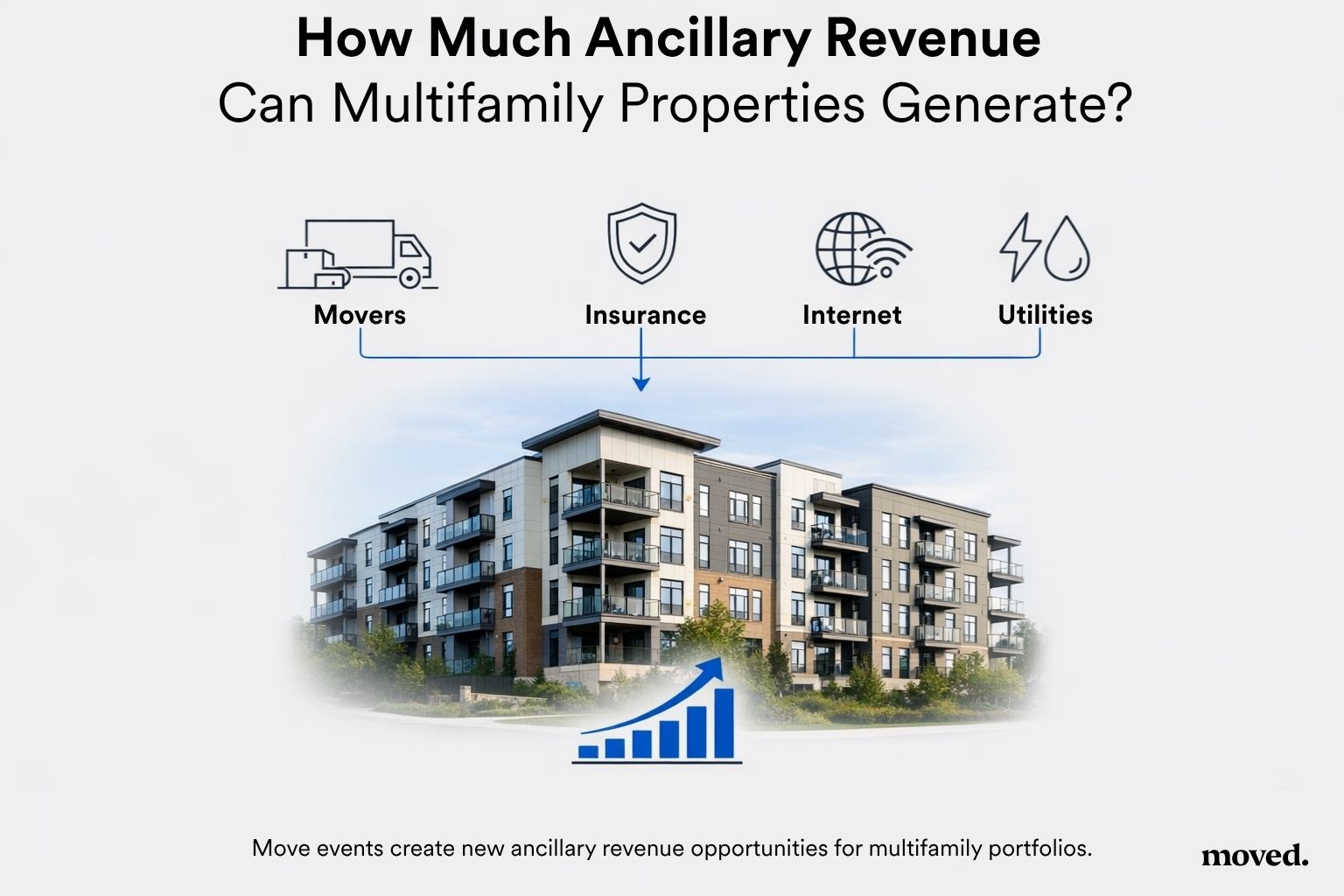
Property managers evaluating new revenue strategies often analyze ancillary revenue multifamily statistics to understand how much additional income services such as movers, insurance, and utilities can generate across a portfolio. In the sections ahead, we will explore the data behind ancillary revenue and examine how these services can contribute measurable financial value for multifamily properties.
What Is Ancillary Revenue In Multifamily Housing?
In multifamily housing, ancillary revenue refers to income generated from services offered to residents beyond base rent. While rent remains the primary source of property income, ancillary revenue comes from services that support the resident experience before, during, or after a move.
These services are typically connected to everyday living needs or the relocation process. Instead of relying only on rental payments, property operators can introduce services that residents already plan to purchase.
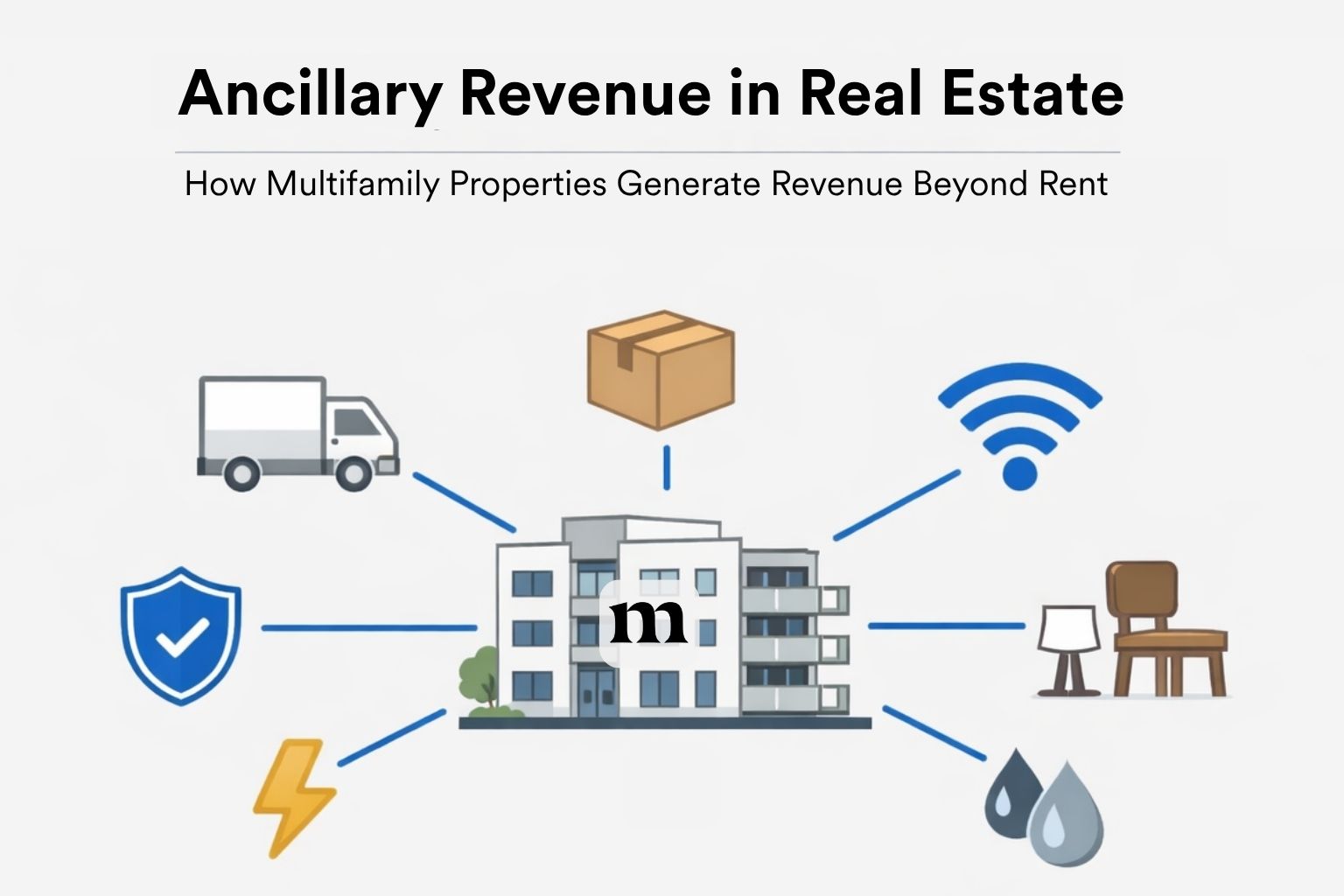
Common examples of services that contribute to ancillary revenue in multifamily include:
- Moving services that help residents relocate to their new apartment
- Packing supplies such as boxes and moving materials
- Renters’ insurance is required for property compliance
- Internet and utility setup needed before move-in day
- Storage services for residents needing temporary space during relocation
- Furniture rental for flexible furnishing options
- Property services such as parking, storage lockers, or package handling
Many of these services occur during the resident onboarding process, particularly when a lease has been signed and the move-in date approaches. At this stage, residents must organize several tasks in a short period of time.
Because residents are actively making service decisions during relocation, move-ins naturally create one of the strongest opportunities for ancillary revenue multifamily programs. When properties introduce helpful services during onboarding, they simplify the move experience while opening new revenue opportunities connected to the resident journey.
Why Property Executives Are Tracking Ancillary Revenue Multifamily Statistics
Property executives today are under growing pressure to improve financial performance while maintaining competitive rents. Across the multifamily industry, operating costs continue to rise while rent growth becomes more difficult to sustain. Because of these pressures, many leadership teams are evaluating new income opportunities tied to the resident experience.
Several factors are driving this shift toward ancillary revenue multifamily strategies.
First, operating costs are increasing. Property taxes, maintenance expenses, and staffing costs have steadily climbed in many markets. These rising costs reduce operating margins and make it more challenging for properties to maintain profitability through rent alone.
Second, rent growth has limitations. Market competition and affordability concerns often prevent large rent increases. In some regions, regulatory pressures also restrict how quickly rents can rise. As a result, operators must look for other ways to improve revenue performance.
Third, investors expect stronger financial results. Ownership groups and institutional investors increasingly evaluate portfolios based on net operating income (NOI). To strengthen NOI without raising rent, operators are exploring service-based income opportunities.
This is why many executives closely monitor ancillary revenue multifamily statistics. These metrics help operators understand how services contribute to property revenue.
Common metrics tracked by multifamily operators include:
- Revenue per unit, which measures how much additional income each apartment generates annually
- Revenue per move, which evaluates service income tied to resident relocation events
- Service adoption rate, which shows how many residents purchase available services
- Portfolio-level service engagement, which tracks how consistently services perform across multiple properties
Modern operators increasingly view these services as more than simple add-ons. Instead, they are treated as a revenue layer connected to the resident lifecycle. When services are introduced during high-intent moments such as move-ins, they can generate measurable income while improving the resident experience.
Average Ancillary Revenue Per Unit In Multifamily Housing
One of the most common ways operators evaluate ancillary revenue multifamily performance is by measuring how much additional income each unit generates over time. This metric helps property executives understand the financial impact of services across their portfolio and determine whether service programs are contributing meaningful value.
In most multifamily portfolios, ancillary income is tracked using the metric ancillary revenue per unit per year. This approach calculates the total income generated from resident-related services and divides it by the number of apartment units within the property or portfolio.
By using this method, operators can clearly see how services contribute to property revenue beyond rent.
Several categories commonly contribute to ancillary revenue multifamily income.
| Service Category | Revenue Opportunity |
| Movers | Commission from bookings |
| Renters Insurance | Insurance referral revenue |
| Internet Providers | Partner referral revenue |
| Storage Services | Vendor revenue share |
| Furniture Rental | Service partner revenue |
Each of these services represents a small revenue opportunity on its own. However, when these services are introduced during the resident move process, they can generate multiple transactions tied to a single move event.
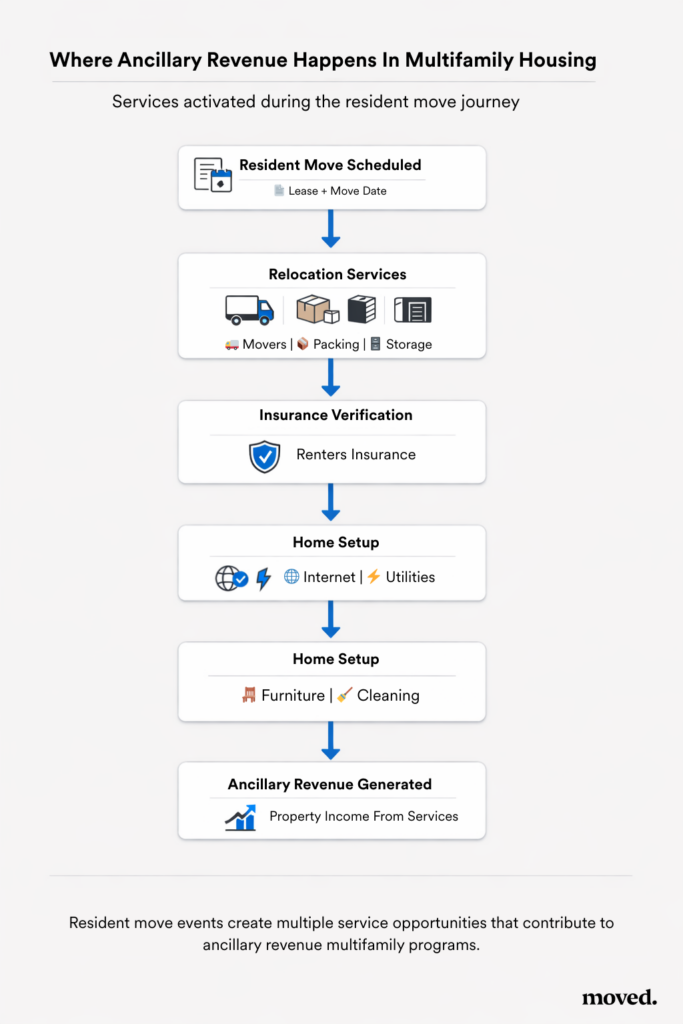
For example, a resident moving into a new apartment may schedule moving services, activate renters’ insurance, and arrange internet connectivity at the same time. Each of these service selections can contribute to ancillary revenue in multifamily income for the property.
The financial impact becomes more significant when these services scale across a portfolio. A property with several hundred units may experience dozens or even hundreds of resident moves each year. In larger portfolios with thousands of units, the number of move events increases dramatically.
When service partnerships are activated consistently across these moves, ancillary revenue multifamily models scale naturally with portfolio size. Even modest service conversions can generate meaningful income when multiplied across many residents and multiple communities.
Revenue Generated Per Resident Move Event
Resident move events are among the most valuable opportunities to generate ancillary revenue in multifamily housing. When a resident prepares to move into a new apartment, several decisions must be made within a short time period. Because many services are required before move-in day, this moment creates a high level of engagement and service adoption.
Unlike other stages of the resident lifecycle, relocation requires coordination across multiple services. Residents are not only preparing to move their belongings but also setting up essential services needed for their new home. This creates a natural environment where several service purchases happen simultaneously.
Typical services purchased during a move include:
- Professional movers to transport furniture and personal belongings
- Packing supplies such as boxes and moving materials
- Renters’ insurance is required by many apartment communities
- Internet and connectivity setup for immediate access after moving in
- Storage services for residents needing temporary storage during relocation
Because these services are already part of the moving process, properties that introduce trusted service options at the right moment can support residents while creating new revenue opportunities.
For example, residents preparing to relocate can easily Hire Movers through integrated service platforms that simplify the moving process. Instead of searching through multiple vendors, residents can organize relocation services in one place while preparing for their move-in date.
This high-intent moment is why many operators evaluate ancillary revenue multifamily performance using revenue per move event rather than measuring each service individually. During a single move, residents may activate multiple services – such as movers, insurance, and internet setup – which collectively contribute to the property’s ancillary income.
By focusing on move events as the central point of service engagement, multifamily operators can better understand how services combine to generate predictable revenue during one of the most active moments in the resident lifecycle.
Examples Of Service Revenue In Multifamily Properties
Many services connected to the resident journey can generate ancillary revenue in multifamily housing when introduced at the right moment. These services typically support relocation, home setup, or everyday living needs. Because residents already plan to purchase many of these services during a move, they create natural revenue opportunities when properties organize them through structured partnerships.
Below are common examples of services that contribute to ancillary revenue in multifamily housing programs.
Moving Services
Moving services are one of the most direct revenue opportunities tied to resident relocation. When residents schedule professional movers through trusted service providers, properties may receive referral or commission-based revenue from those bookings.
Because every resident must coordinate transportation of furniture and belongings, moving services often generate strong engagement during the move-in process.
Insurance Programs
Renters insurance is another important service commonly connected to ancillary revenue. Many multifamily communities require residents to maintain insurance coverage as part of lease compliance.
Through insurance partnerships, residents can easily obtain coverage that meets property requirements. These partnerships can also generate referral income while helping properties maintain proper documentation and liability protection.
Utility Partnerships
Utility services represent another major category within ancillary revenue multifamily programs. Residents typically activate electricity, internet, and connectivity services before their move-in date.
When properties partner with service providers, they can guide residents toward reliable utility options while generating referral-based revenue from those service activations.
Storage Services
Storage solutions are often needed during the relocation process. Some residents require temporary storage while transitioning between homes, while others may need long-term storage for seasonal items or additional belongings.
Partnering with storage providers allows properties to offer convenient options while capturing revenue tied to those services.
Furniture Rental
Furniture rental services provide flexibility for residents who prefer temporary or adaptable furnishing solutions. These services can be especially valuable for residents relocating for work or those who prefer not to purchase large furniture items immediately.
Many of these services naturally align with resident onboarding workflows. When introduced during the move process, they become part of the structured experience residents follow when preparing for their new apartment.
Modern systems that support Resident moves are automated. help property managers introduce these services during the move-in journey, allowing residents to organize relocation tasks while activating services that contribute to ancillary revenue and multifamily income.
Benchmark Metrics Operators Should Track
For multifamily operators, measuring the success of ancillary revenue multifamily programs requires clear performance metrics. These metrics help property executives understand how effectively services are generating income and whether service partnerships are contributing to overall portfolio performance.
Tracking the right data allows operators to evaluate both financial impact and resident engagement. Most multifamily portfolios monitor several core metrics to understand how services perform during the resident lifecycle.
Service Conversion Rate
Service conversion rate measures how many residents purchase or activate available services during the move process. This metric shows how effectively service offerings are presented to residents and how relevant those services are to their needs.
A higher conversion rate usually indicates that services are introduced at the right moment, such as during move-in preparation.
Revenue Per Move
Revenue per move measures the total service income generated during a single resident relocation event. Because residents often activate several services at the same time – such as movers, insurance, and internet setup – this metric provides a clear view of the financial value tied to each move.
For operators evaluating ancillary revenue multifamily programs, revenue per move is one of the most important indicators of program performance.
Revenue Per Unit
Revenue per unit tracks the annual ancillary income generated for each apartment unit within a property or portfolio. This metric helps executives compare service performance across multiple communities and determine how effectively ancillary programs scale.
Resident Adoption Rate
Resident adoption rate measures the percentage of residents who engage with available services during the onboarding process. This metric reflects how well services are integrated into the resident experience.
Together, these metrics provide a complete view of ancillary revenue multifamily performance. By monitoring service conversion, move-based revenue, and resident engagement, operators can evaluate the financial impact of service partnerships and identify opportunities to improve adoption across their portfolios.
How Technology Helps Capture Ancillary Revenue
Technology plays a critical role in helping multifamily operators capture ancillary revenue multifamily opportunities more consistently. In many properties, services such as movers, insurance, and utilities already exist, but they are often introduced informally or managed through manual communication. When services are not structured within the resident workflow, properties may miss revenue opportunities and lose visibility into service activity.
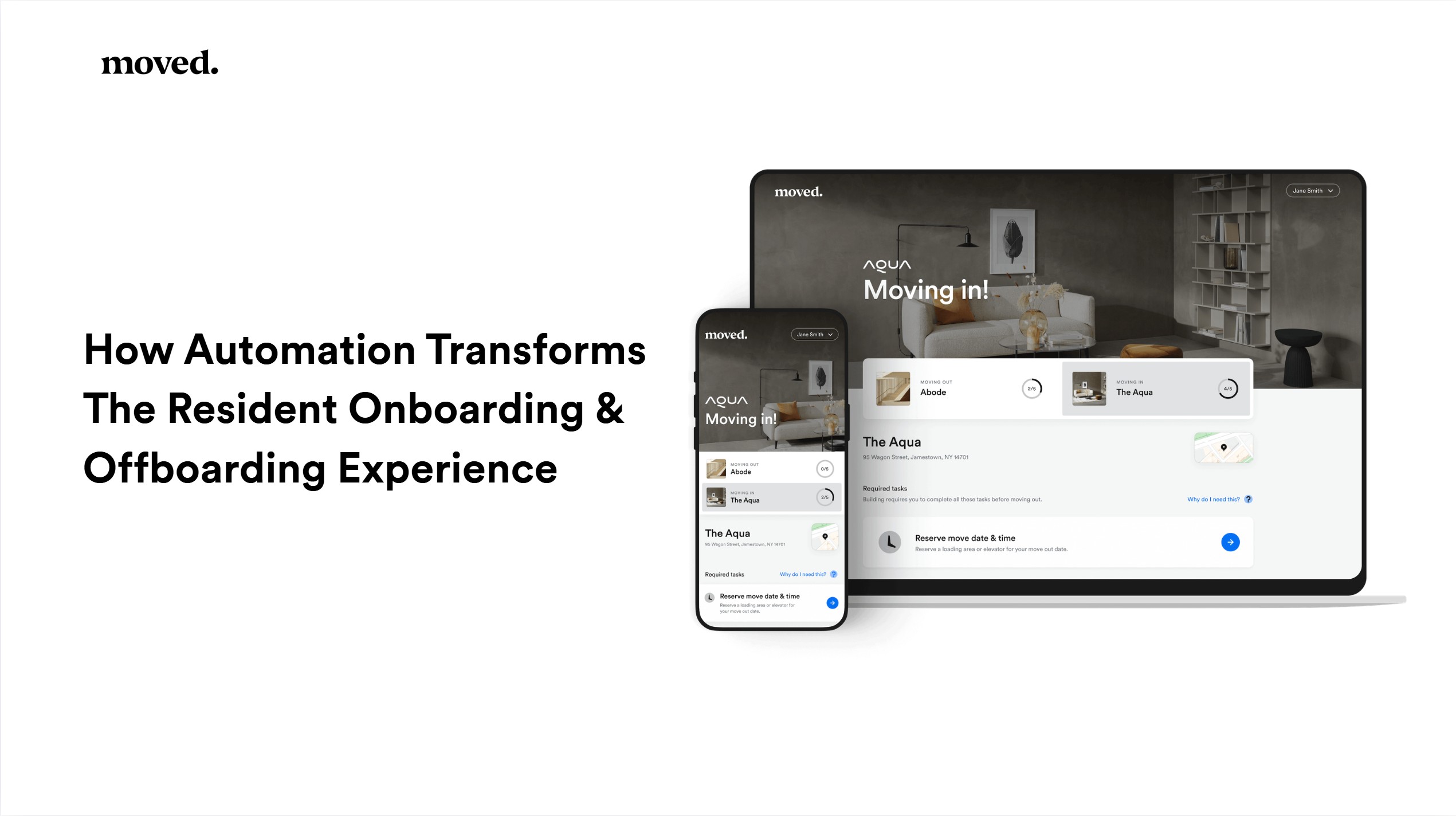
Modern property platforms solve this problem by organizing services into a structured onboarding experience. These platforms guide residents through key steps before move-in while introducing helpful services at the right moment.
Most systems designed to support ancillary revenue multifamily programs typically provide several core capabilities:
- Resident onboarding portals that guide residents through move-related tasks
- Vendor marketplaces that connect residents with trusted service providers
- Automated service workflows that schedule and verify services during the move process
- Service reporting dashboards that track engagement and revenue performance
By integrating these tools into the resident journey, properties can introduce services at the exact moment residents are making decisions.
For example, property managers managing large apartment portfolios often rely on platforms that help them Hire Multifamily Movers and coordinate relocation services through structured systems designed for multifamily operations.
This structured approach creates several operational advantages. First, services become centralized within one resident experience, making it easier for residents to complete move-related tasks. Second, the visibility provided by digital platforms improves service adoption rates, since residents can see available services during onboarding.
Finally, technology allows operators to track performance more accurately. With service reporting tools, property managers can monitor engagement, measure service conversions, and evaluate how ancillary revenue multifamily programs contribute to overall property income.
How Property Managers Can Increase Ancillary Revenue in Multifamily Income
For many multifamily communities, the opportunity to generate ancillary revenue multifamily income already exists within everyday resident activities. The key is organizing services into a structured process that supports residents during important moments such as move-ins and onboarding.
Property managers looking to strengthen ancillary revenue programs can begin with several practical steps.
Identify Services Residents Already Purchase
Start by evaluating the services residents commonly arrange during a move. Many residents independently organize movers, internet service, renters insurance, or storage. Identifying these existing behaviors helps properties understand where service partnerships could support residents while creating new revenue opportunities.
Introduce Services During Move Workflows
Move events are one of the highest engagement moments in the resident lifecycle. Introducing services during the move process ensures residents see relevant options while preparing for relocation.
Partner With Trusted Vendors
Working with reliable service providers improves both resident convenience and service quality. Pre-approved vendors also understand property procedures, which simplifies coordination during move-ins.
Automate Onboarding Tasks
Automation helps ensure services are introduced consistently. Digital onboarding systems can guide residents through key steps such as scheduling movers, activating utilities, or verifying renters’ insurance.
Track Service Revenue Metrics
Monitoring service engagement and revenue performance allows operators to evaluate how effectively ancillary revenue multifamily programs contribute to property income.
Property operators exploring new revenue opportunities can book a demo to understand how automated move infrastructure supports ancillary revenue multifamily programs while simplifying the resident move experience.
FAQs About Ancillary Revenue Multifamily Statistics
What Is Ancillary Revenue In Multifamily Housing?
Ancillary revenue in multifamily housing refers to income generated from services offered to residents beyond base rent. These services support the resident experience during key moments such as move-ins, onboarding, or everyday living.
Examples include moving services, renters insurance programs, internet and utility setup, storage options, and furniture rental. When these services are introduced through structured partnerships, they contribute to ancillary revenue in multifamily income while helping residents complete important tasks during relocation.
How Much Ancillary Revenue Can Apartments Generate?
The amount of ancillary revenue multifamily properties generate depends on several factors, including portfolio size, resident turnover, and service adoption rates. Larger communities typically experience more move events each year, which increases opportunities for service activation.
Even modest service conversions can create meaningful income when multiplied across hundreds or thousands of residents. This is why many operators evaluate revenue based on metrics such as revenue per unit or revenue per move event.
What Services Create Ancillary Revenue For Property Managers?
Several services commonly generate ancillary revenue for multifamily income. These services are usually connected to relocation or home setup needs.
Common examples include:
- Professional moving services
- Packing supplies and moving materials
- Renters insurance programs
- Internet and utility activation
- Storage services
- Furniture rental options
These services align naturally with the resident move process, which makes them easier to introduce during onboarding.
How Do Move-In Services Increase Multifamily Revenue?
Move-in services increase ancillary revenue and multifamily income because residents often activate multiple services at the same time when relocating. During this period, residents must coordinate moving logistics, insurance, and utilities before moving into their new home.
When properties guide residents through these services during the move process, adoption rates tend to be higher. Each service activation contributes to additional property income while simplifying the relocation experience for residents.