Yardi is one of the most widely deployed property management systems in the US multifamily, with more than 450 active interface partners in its ecosystem. For thousands of operators, Yardi is the system of record, and it is the platform most often cited when product or operations teams ask the question this article answers: how do you integrate move-in and move-out automation into a Yardi environment without disrupting Voyager, RentCafe, or the leasing workflows already in production?
The short version is that Yardi has built the integration architecture. The Standard Interface Partnership Program (SIPP) and Yardi Web Services give certified partners API-level access to leases, residents, units, and lifecycle events. The longer version — what the integration looks like step by step, where Yardi TenantShield ends, and embedded revenue begins, and how a Yardi-customer operator should think about Entrata Homebody and AppFolio Stack as competitive context — is what the rest of this article covers.
| WHO THIS IS FOR: Yardi customer product, IT, and operations leaders are evaluating an embedded layer for move-in and move-out automation. Also, Yardi’s own platform team is thinking about where the partner ecosystem should expand. Not optimized for residents — see Moved’s resident-experience pages for that audience. |
The fragmented workflow problem — and what PMS integration must solve
Inside most Yardi shops today, the resident move-in and move-out lifecycle is a multi-tool, multi-team process. Voyager records the lease and the ledger. RentCafe handles the resident portal and (with the ResidentShield bundle) parts of the move-in checklist. Site teams use email, phone, and shared spreadsheets to coordinate movers, utility activation, internet, insurance verification, COI tracking, vendor dispatch, deposit accounting, and inspection. The data lives in seven different places. The resident lives in none of them.
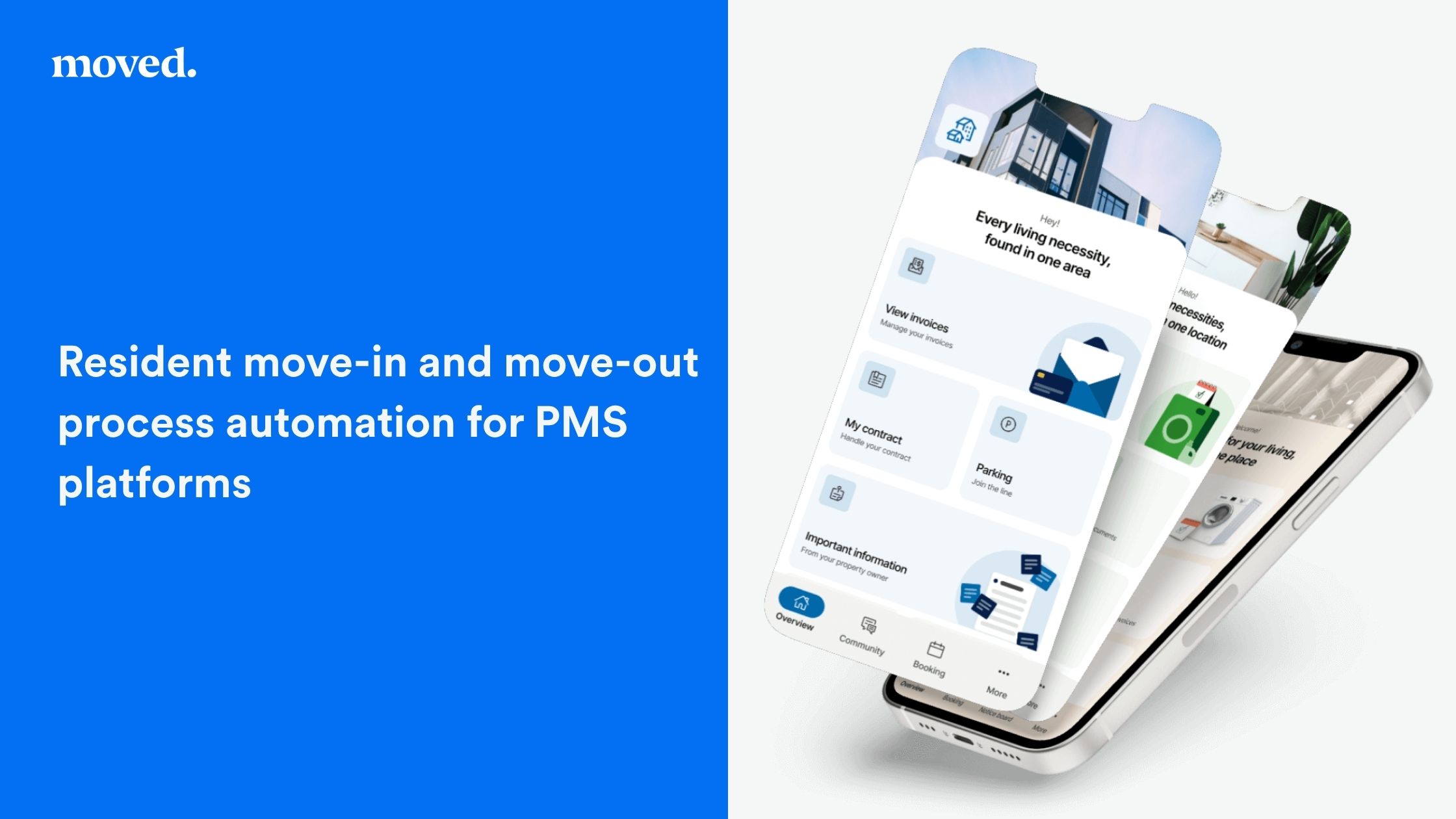
PMS integration, in this article, means closing that loop. A bidirectional API connection between Yardi and the move-in and move-out automation layer means resident, lease, unit, and event data flow continuously, lifecycle events trigger the right workflows, and every action the resident takes is written back into Voyager. RentCafe remains the resident-facing portal, where it is the right surface; the move-in and move-out automation layer becomes the workflow engine for everything RentCafe does not natively orchestrate. For the cross-PMS view of the same workflow pattern, see Resident move-in and move-out process automation for PMS platforms.
How can Yardi integrate move-in and move-out automation into its existing PMS workflow?
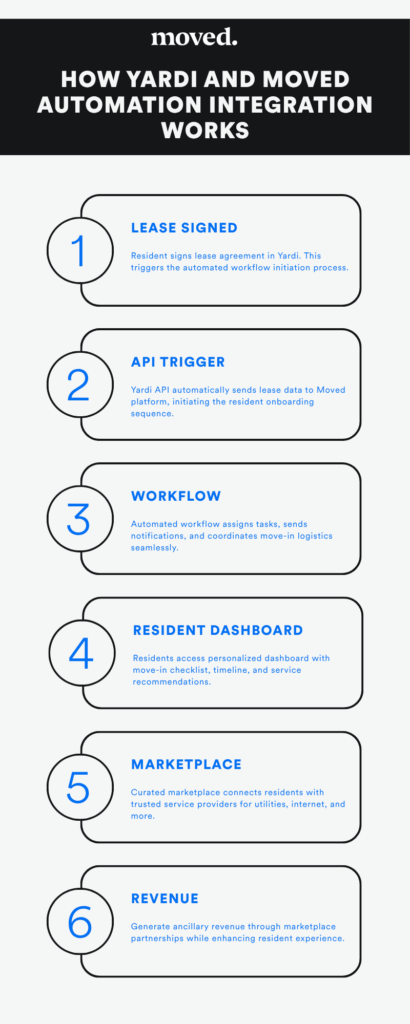
The integration is a five-step sequence. Each step builds on the previous one, and each corresponds to a real artifact within Yardi’s documented architecture.
Step 1 — PMS integration via the Standard Interface Partnership Program
Yardi exposes its core data through the Standard Interface Partnership Program. To qualify, a partner must be at least two years old and have at least three active Voyager clients. Once admitted, the partner gains access to Voyager Web Services for resident, lease, unit, and balance data, as well as additional endpoints for work orders, inspections, and document transfer.
The move-in and move-out automation layer connects through SIPP. The connection is bidirectional — the layer reads lifecycle events from Yardi and writes resident actions back into Voyager — and it operates in real time rather than nightly batch.
Step 2 — Event-triggered workflow activation
With the integration live, lifecycle events become the triggers:
- Lease signed in Voyager → onboarding workflow activates in the move-in and move-out layer; the resident is invited to the property-branded dashboard.
- Application status changes from Applicant to Future → resident profile is created, and the move-in checklist is sequenced.
- Move-out notice submitted in Voyager → offboarding workflow activates, automatically triggering inspection prep, deposit accounting, and vendor dispatch sequence.
- When a renter’s insurance policy expires or fails verification, the compliance workflow re-engages the resident before the gap appears.
Every trigger fires inside the same Yardi event model that the operator is already using. There is no parallel database to maintain, and there is no sync delay between systems.
Step 3 — Resident experience layer
The resident lands on a property-branded dashboard that consolidates every required task in one place. Pet registration, COI submission, utility setup, internet activation, mover scheduling, packing service selection, elevator reservation — all sequenced, all stateful, all visible to the property team in real time. RentCafe remains the resident’s general portal; the move-in and move-out dashboard is the focused surface for that specific lifecycle moment.
Step 4 — Embedded service marketplace activation
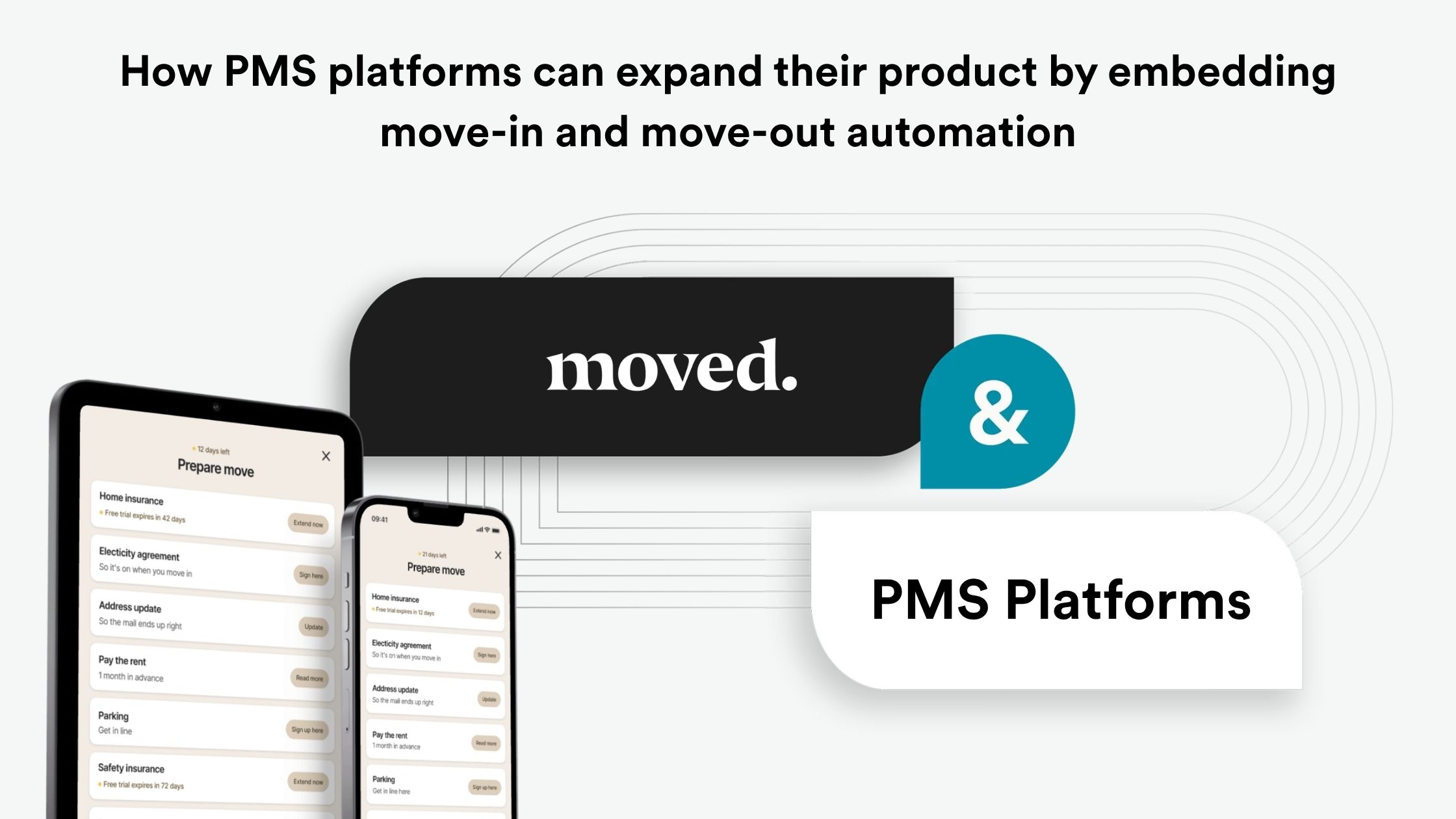
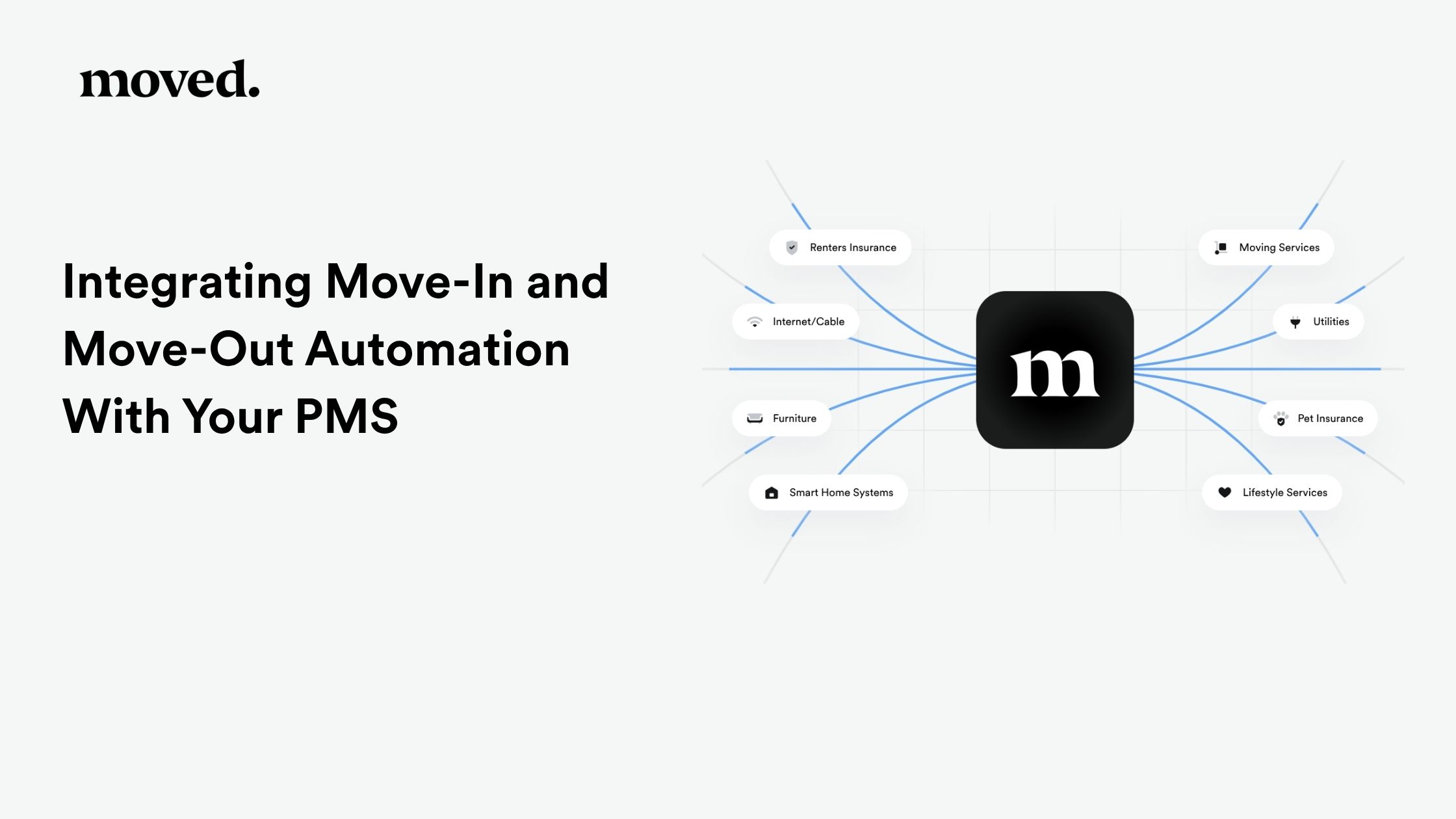
Within the workflow, the resident is presented with services at the time those decisions are made. Movers, when they pick the move date. Internet when they confirm the address. Renters insurance when the COI step opens. Storage and packing when the truck date is set. Each transaction completes inside the workflow, the operator earns a share of the revenue, and the partner provides the service. This is where the 4.4% ancillary benchmark turns from a portfolio-level statistic into a per-move outcome. For the strategic frame on partner vs in-house marketplace builds, see How PMS platforms can expand their product by embedding move-in and move-out automation.
Step 5 — Data sync back into Yardi
Every completed action writes back to Voyager. Insurance policy details auto-populate the compliance record. Utility confirmations auto-populate the resident profile. Inspection results push into the move-out workflow. Vendor invoices tie back to the unit and the date. The closed loop means the property team manages exceptions inside Yardi rather than reconciling spreadsheets across tools, and the audit trail is complete by default.
How do PMS platforms like Yardi and RealPage trigger automated workflows when lease events occur?
Both Yardi and RealPage expose lifecycle events through their public APIs. Yardi customers use SIPP and Web Services; RealPage customers integrate through OneSite and the Property Management API. In both cases, the event model is the same: a state change on the platform triggers a webhook or an API call, and the receiving system can subscribe.
The move-in and move-out automation layer subscribes to the events that matter for the lifecycle: lease signed, application approved, move-in date confirmed, move-out notice received, inspection scheduled, and deposit posted. Each subscription kicks off a workflow whose steps are documented inside the automation layer and whose outcomes write back to the source system. The pattern is identical across platforms; only the specific endpoint names and authentication flow change.
Can Yardi automatically verify renters’ insurance and COIs at move-in without staff intervention?
Where Yardi TenantShield ends, and embedded revenue begins
Yardi TenantShield is the native compliance solution. It verifies COIs, tracks expiry, and integrates with Voyager for compliance reporting. For pure compliance — confirming the policy exists and meets requirements — TenantShield does the job.
What TenantShield is not designed to do is convert the compliance moment into a revenue moment. A resident without a policy is a resident shopping for one. A resident with an expiring policy is a resident about to renew. Embedded move-in and move-out automation surfaces a renters insurance offer at exactly those moments, inside the same workflow that does the COI verification. The compliance outcome is unchanged. The revenue outcome — partner commission on the bound policy — is added.
This is the consistent pattern across Yardi-environment add-ons: the native platform handles compliance; the embedded automation layer handles compliance and revenue. They sit alongside each other rather than competing.
Also Read – Multifamily Ancillary Revenue Strategy Guide
How does Yardi compare to Entrata for embedding resident move-in and move-out services?
This is the comparison Yardi customers ask about most often, and the honest answer is that Yardi and Entrata have taken different paths to similar destinations.
Entrata launched Homebody, an embedded marketplace built with Red Ventures, that surfaces renters insurance, internet, utilities, and financial products inside the resident portal. The marketplace is vertical — Entrata operates the partnerships and the offer surface directly. The advantage is end-to-end control. The constraint is the depth of any single vertical, because Entrata is necessarily building each vertical in-house.
Yardi, through SIPP, has taken the partner-network approach. The platform exposes the integration surface; partners build the depth in their respective verticals. ResidentShield handles insurance natively; movers, packing, storage, internet, and the broader move-in and move-out workflow live inside partner-built layers. The advantage is depth across the full lifecycle. The constraint is coordination — the operator needs the move-in and move-out automation layer to orchestrate across the partner set rather than managing each partner independently.
For most Yardi customers, the partner-orchestrated path is the right one. It preserves the existing investment in Voyager and RentCafe, adds full-lifecycle coverage rather than a vertical slice, and keeps the platform open to additional partners as the lifecycle expands.
Also Read – Integrating move-in and move-out automation with your PMS
How does embedding move-in and move-out automation into Yardi help operators increase NOI?
The NOI math is direct on both sides of the equation. Operating expenses fall because manual coordination time falls — site teams stop chasing paperwork, leasing teams stop fielding utility setup questions, and operations teams stop reconciling vendor invoices against move dates. Ancillary revenue rises because the platform captures move-in and move-out spend that previously leaked to external vendors, in line with the 4.4% portfolio-level benchmark. Compliance costs fall because COI verification and policy management are automated rather than chased. Three effects, one workflow.
Frequently asked questions
How can Yardi integrate move-in and move-out automation into its existing PMS workflow?
Through the Standard Interface Partnership Program. The move-in and move-out automation partner connects via Voyager Web Services, subscribes to lifecycle events, and writes resident actions back to Yardi in real time. The integration is bidirectional and event-driven; nothing in the existing Voyager or RentCafe configuration needs to change.
What is the best way for property management platforms to automate resident move-in and move-out processes?
By embedding an event-triggered workflow layer inside the PMS rather than running parallel tools. The lifecycle events in the platform of record serve as triggers; the embedded layer orchestrates tasks, services, communication, and compliance; and outcomes are written back to the platform automatically. This is the pattern Yardi, RealPage, Entrata, and AppFolio all support today.
How do PMS platforms like Yardi and RealPage trigger automated workflows when a lease is signed or a move-out notice is submitted?
Through API-driven event subscriptions. Yardi exposes events via SIPP and Web Services; RealPage exposes them via OneSite. The move-in and move-out automation layer subscribes to the events, runs the appropriate workflow, and writes outcomes back to the source system. The mechanism is the same; the endpoint names differ.
What features should a PMS platform add to automate move-in and move-out onboarding and reduce manual coordination?
Workflow orchestration tied to lifecycle events, an embedded service marketplace, automated communications and reminders, compliance tracking with auto-enrollment for renters insurance, and a closed-loop sync with the system of record. The features must work as a sequence, not as separate modules.
How does embedding move-in and move-out automation into a property management system like Yardi help operators increase NOI and reduce operational workload?
By converting the move-in and move-out window into a structured revenue moment and by removing the manual coordination time that site teams currently spend on the lifecycle. The combination shows up in NOI as both a revenue lift and an operating-expense reduction.
Related reading
→ How PMS platforms can expand their product by embedding move-in and move-out automation — the product-strategy frame for build-vs-partner decisions.
→ Resident move-in and move-out process automation for PMS platforms — the cross-PMS view of what the workflow layer actually does.
→ Increasing NOI without raising rent — the portfolio-level financial case for ancillary revenue capture.
If you run on Yardi today and want to see the integration in a sandbox: Book a Moved demo — we’ll connect to a Yardi test environment, walk through the SIPP integration, and show the move-in and move-out workflow live with your unit count and turnover assumptions.