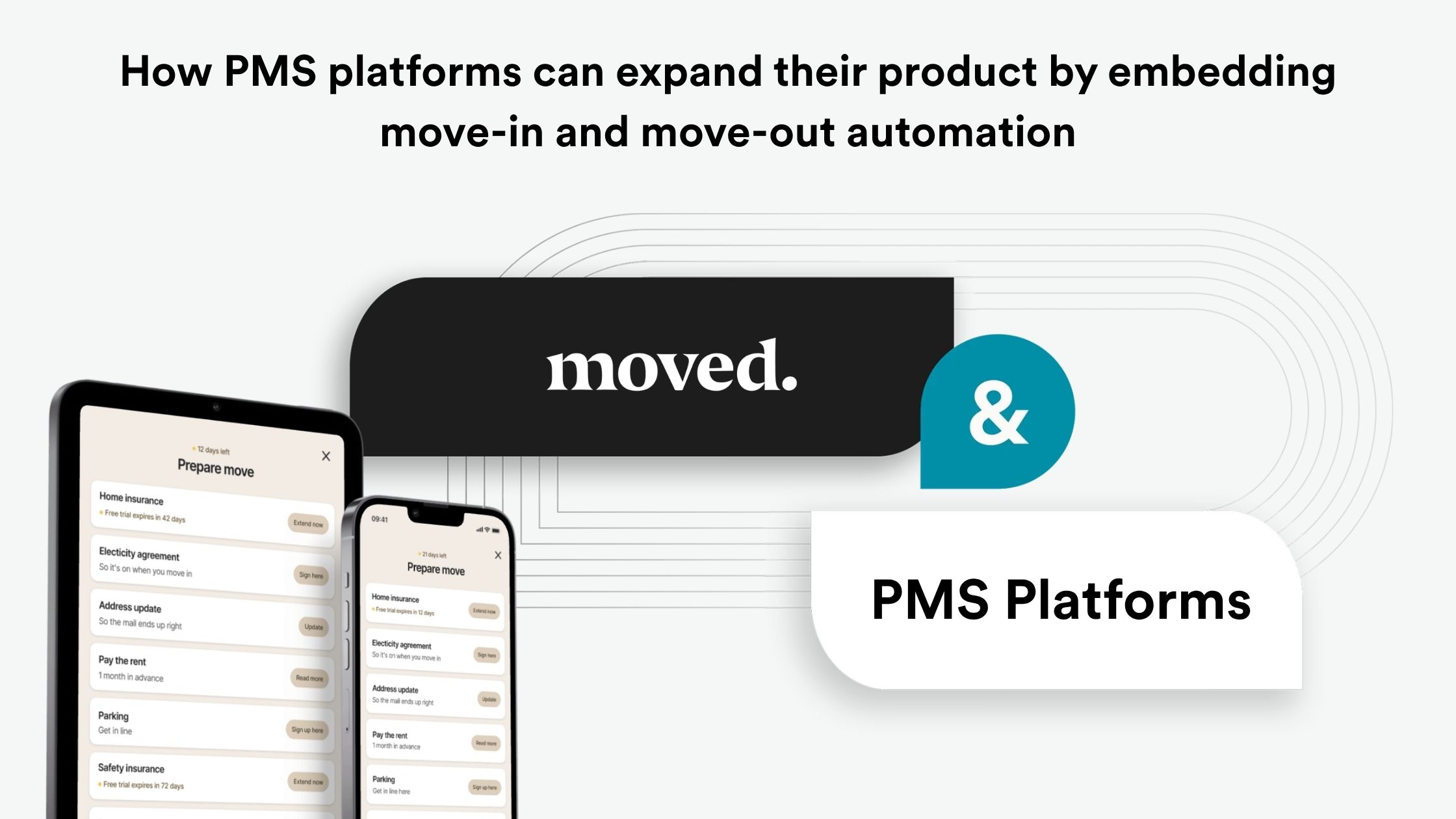
In multifamily, the resident move-in and move-out lifecycle is the single most operationally intensive phase of the tenancy and the single most underutilized revenue moment of the year. Site teams stitch together vendors, certificates, utilities, deposits, keys, and communications across half a dozen tools, while residents — at the exact instant they are spending money on movers, internet, renters insurance, storage, and packing — are pushed off the platform to find those services themselves. The PMS, the system that owns the resident relationship, watches the revenue flow to someone else.
This article is for product and operations leaders at PMS platforms — Yardi, RealPage, Entrata, AppFolio, Buildium, ResMan, Rent Manager — and at the multifamily operators who run on them. It explains, with named examples and sourced numbers, how PMS integration with a move-in and move-out automation layer turns the most chaotic stretch of the resident journey into structured revenue infrastructure — and why platforms that don’t make this shift will keep losing the 4.4% of scheduled monthly charges that ancillary income now represents across the industry.
| WHAT YOU’LL TAKE AWAY: How to convert manual move-in and move-out coordination into event-triggered automation; what PMS integration must look like at the API and workflow layer; what features the resident-facing experience needs; how the embedded marketplace generates ancillary revenue; and why timing — not technology — decides whether the 4.4% benchmark is yours or your competitor’s. |
Why the move-in and move-out lifecycle is the most underutilized revenue moment in multifamily
Industry data shared by Chase Harrington, COO of Entrata, shows that ancillary income averages 4.4% of scheduled monthly charges across multifamily portfolios. The biggest contributors — parking, smart-home, storage, pet rent, internet, valet trash — are increasingly platform-led. The piece most operators still leave on the table is the move-in and move-out window itself: movers, packing, storage, utility setup, internet activation, and renters insurance binding.
That is the most consequential decision window in the entire resident relationship. Residents are buying, not browsing. They have a deadline, an address, and an open credit card. And in most PMS platforms today, the platform does not see any of it. It sees the lease and the rent. The rest leaks to Google.
The result is a structural product gap. PMS platforms are excellent systems of record. They are increasingly competent systems of engagement. They are not yet systems of monetization at the lifecycle moments where residents are actually transacting. Closing that gap is what move-in and move-out automation is for.
How can a PMS platform automate the resident move-in and move-out lifecycle?
From manual coordination to event-triggered orchestration
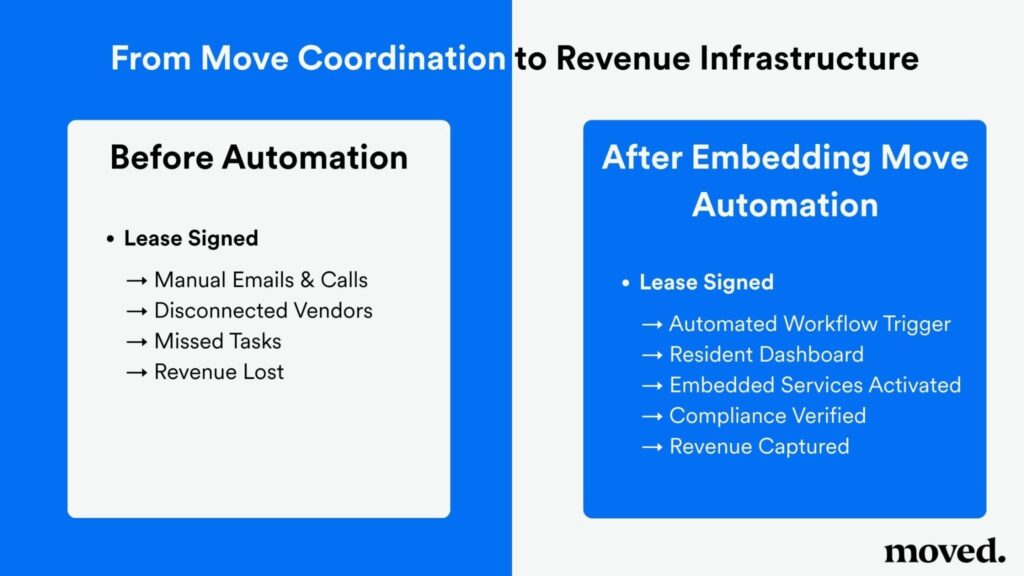
Automation begins by replacing fragmented coordination with a structured, event-driven layer embedded directly into the PMS. When a lease is signed in the system of record, an onboarding workflow is initiated automatically. When a move-out notice is submitted, the offboarding workflow activates. There is no manual handoff between leasing and operations, no email thread between site teams and the resident, and no spreadsheet of vendor codes maintained by hand.
Every step downstream — task assignment, document collection, vendor dispatch, service activation, communication — is sequenced by the platform. The site team’s role shifts from running the process to overseeing the exceptions.
What automation actually includes
- Task orchestration across the move-in and move-out lifecycle, with each task tied to a date, an owner, and a completion state.
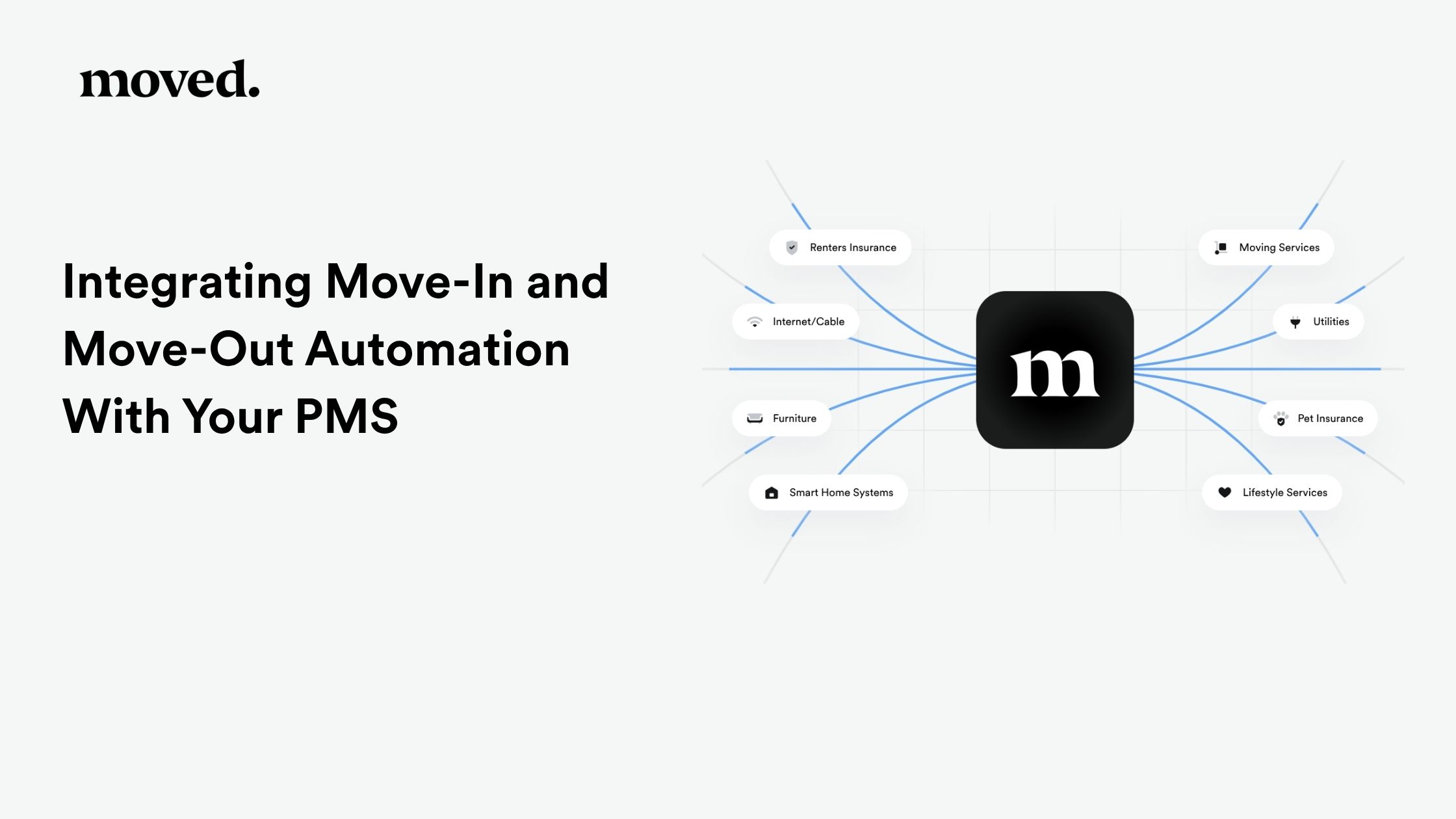
- Embedded services — movers, packing, storage, utilities, internet, renters insurance — surfaced inside the resident workflow when needed.
- Compliance tracking for renters insurance verification, certificate of insurance (COI) collection, pet documentation, and deposit handling.
- Communication workflows — automated reminders, status notifications, and task nudges that close the loop without staff time.
Together, these capabilities convert the move-in and move-out lifecycle from a workflow problem into an execution layer that produces the same outcome every time, across every property in the portfolio.
How does PMS integration enable real-time move-in and move-out workflows?
API-driven synchronization and bidirectional data flow
PMS integration here means a bidirectional API connection between the system of record and the move-in and move-out automation layer. Resident profiles, lease events, unit data, and compliance status sync continuously. Yardi customers connect through the Standard Interface Partnership Program (SIPP) and Yardi Web Services. RealPage exposes its OneSite APIs. Entrata operates through its public API and partner endpoints. AppFolio provides a marketplace path for certified partners through AppFolio Stack.
For the Yardi-specific walkthrough — covering SIPP eligibility, the five-step integration sequence, and how this interacts with Yardi TenantShield — see How PMS platforms like Yardi can integrate resident move-in and move-out automation.
Event triggers across the resident lifecycle
In a fully integrated environment, lease and lifecycle events become the triggers:
- Lease signed → onboarding workflow initiates; resident receives the move-in dashboard.
- Application approved → resident profile is created in the move-in and move-out automation layer.
- Move-out notice submitted → offboarding workflow activates; inspection checklist, deposit accounting, vendor dispatch, and unit-ready alert all sequence automatically.
- Insurance policy expires → compliance workflow re-prompts the resident before the gap appears.
Every action the resident takes inside the workflow is written back to the PMS in real time. The system of record stays the system of record. The move-in and move-out layer is the execution surface, not a parallel database.
What automation does a PMS need to handle insurance verification and utility setup without manual follow-up?
Compliance is the workload most site teams complain about loudest. Renters insurance verification, COI collection, and policy-expiry tracking are the three tasks that consume the most administrative time and produce the most preventable liability. Foxen, Get Covered, Beagle, Yardi TenantShield, Entrata Insurance Verification, and Inhabit’s ePremium have each built credible point solutions for the verification piece.
What the point solutions do not solve is the missed revenue. A resident without a policy is, in that moment, a resident who is shopping for one. If the PMS only enforces compliance — auto-enrolling the non-compliant resident into a master policy and moving on — the platform has captured a defensive outcome but missed the offensive one.
Embedded move-in and move-out automation closes that gap. Insurance verification and renters insurance activation are part of the same workflow. The same is true for utilities — the moment a resident schedules their utility setup, the platform can present the utility provider that has the activation incentive to share. Compliance becomes the floor; revenue activation becomes the ceiling.
| THE FRAME THAT MATTERS: Compliance vendors win on risk reduction. PMS platforms that embed move-in and move-out automation can win on both risk reduction and revenue. A move-in and move-out layer that only handles compliance leaves money on the table — exactly the way the underlying PMS does today. |
How do PMS platforms generate ancillary revenue from move-in and move-out events?
Why the 4.4% benchmark belongs to whichever platform owns the move-in and move-out window
The 4.4% ancillary income figure is a portfolio-level outcome, not a coincidence. The operators hitting it have something in common: a structured, repeatable way to present services at the moment of resident decision. Parking, smart-home, and pet revenue are continuous; movers, packing, storage, internet, and insurance are concentrated almost entirely in the days around a lease change. The PMS that captures those moments captures the bulk of the ancillary opportunity that residents create on their own anyway.
For a deeper read on how operators have structured these revenue streams across the resident lifecycle, see Moved’s multifamily ancillary revenue strategy guide.
Embedded marketplace at the point of need
The mechanism is an embedded marketplace inside the resident move-in and move-out workflow. Residents see services in context — when they schedule the truck, pick the internet provider, and sign the policy. They do not get redirected. They do not start a comparison-shopping session in a separate tab. The platform earns through partner commissions and service activation fees. For the product-strategy view on how to position this against in-house alternatives like Entrata Homebody or Yardi’s Resident Services bundle, see “How PMS platforms can expand their product by embedding move-in and move-out automation.”
How can a multifamily operator reduce manual coordination during move-in and move-out?
From the operator’s seat, the gain is concrete. Site teams stop chasing paperwork because the platform sequences the document collection. Leasing teams are no longer fielding utility setup questions because the resident dashboard answers them. Operations teams have stopped reconciling vendor invoices against move dates because the workflow ties each invoice to a unit, a resident, and a calendar event.
The pattern is the same across portfolios: replace manual coordination with structured execution at every property, the same way every time, and the time and cost of move-in and move-out shrink while the revenue capture of those same events grows.
Why the move-in and move-out window is the highest-intent moment for renters insurance and the internet
Intent, in marketing terms, means the residual cost of saying yes. During move-in and move-out, that cost is at its lowest point in the resident lifecycle. The address is decided. The deadline is real. The credit card is already in motion. The resident is not deciding whether to buy renters insurance — they are deciding which policy to buy. They are not deciding whether to set up internet — they are deciding which provider, and the property’s recommendation is the easiest path.
Miss this window, and the demand does not disappear; it just goes to someone else. Capture this window, and the same demand becomes platform revenue and resident satisfaction. This is the structural reason move-in and move-out automation has become a strategic priority for PMS platforms — not because automation is fashionable, but because the timing window is finite, repeatable, and high value.
Frequently asked questions
How can PMS platforms automate the resident move-in and move-out process?
By embedding an event-driven automation layer that activates when lease events occur in the PMS, a signed lease initiates onboarding, and a submitted notice initiates offboarding. The automation layer orchestrates tasks, embedded services, communications, and compliance, then writes every outcome back to the PMS through the integration API.
How does move-in and move-out automation integrate with PMS platforms like Yardi?
Through bidirectional API integration. For Yardi specifically, this is the Standard Interface Partnership Program (SIPP) plus Voyager Web Services; for RealPage, OneSite APIs; for Entrata, the partner endpoints; for AppFolio, Stack. Each path is bidirectional and event-driven.
What are the key features needed to automate move-in and move-out workflows?
Workflow orchestration, an embedded service marketplace, automated communications, compliance tracking, and a closed-loop sync with the PMS. The marketplace is the feature most platforms underbuild — without it, the automation reduces effort but does not generate revenue.
How do PMS platforms generate revenue from move-in and move-out events?
Through partner commissions on services completed inside the workflow (movers, internet, renters insurance, storage, utilities) and through activation fees tied to successful service activations. The operator captures portfolio-level uplift because every move event flows through the same monetization path.
What does a fully automated resident move-in and move-out process look like?
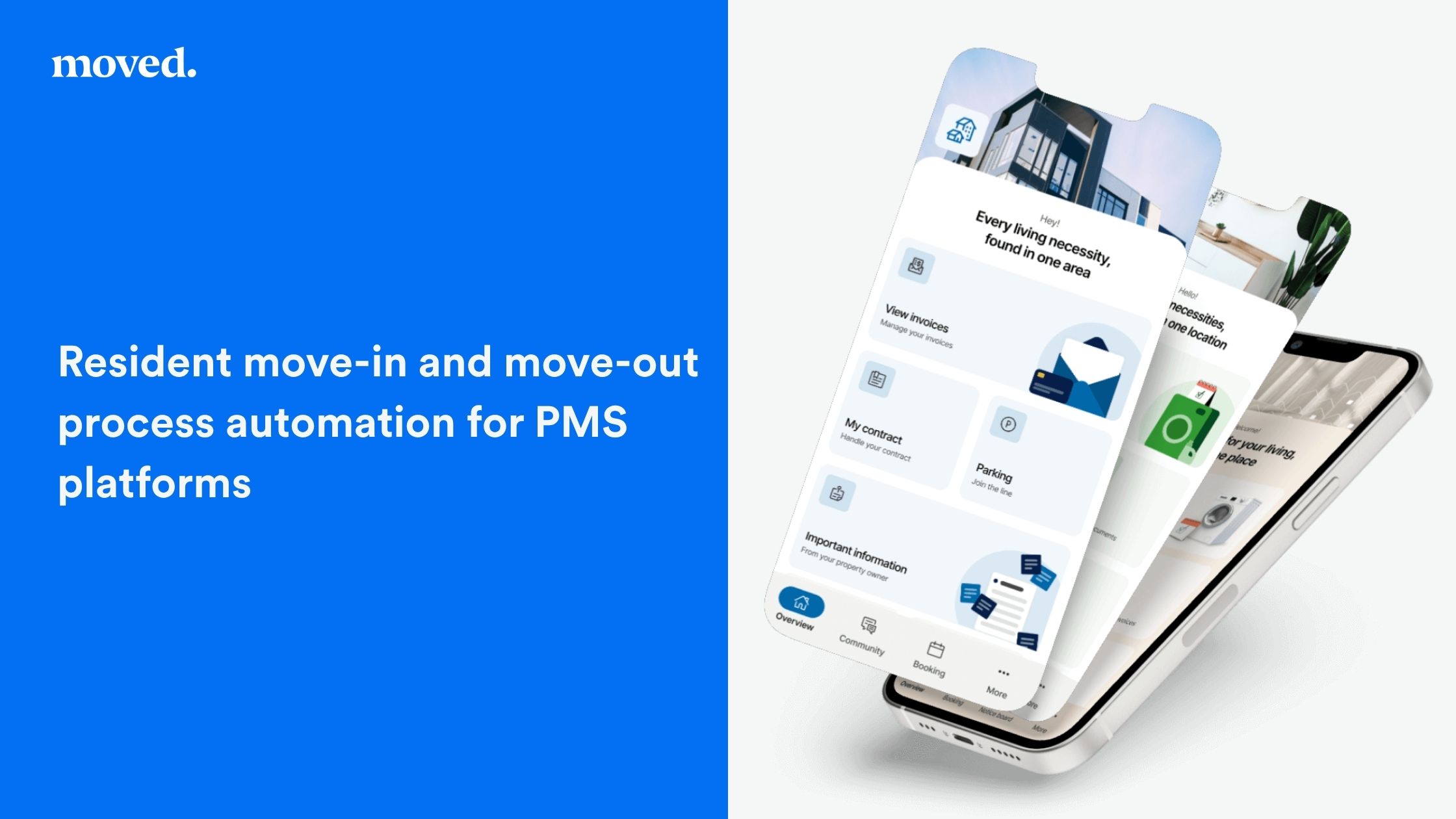
A signed lease triggers a property-branded resident dashboard. The resident completes documentation, schedules services, and binds insurance within that single interface. Site teams see live progress in the PMS without logging in to anything else. Move-out flows the same way in reverse — notice triggers inspection workflow, deposit accounting, vendor dispatch, and unit-ready notification.
Related reading
→ How PMS platforms can expand their product by embedding move-in and move-out automation — the strategic frame for product leaders deciding build vs. partner.
→ How PMS platforms like Yardi can integrate resident move-in and move-out automation — the Yardi-specific integration walkthrough, end to end.
→ Multifamily ancillary revenue strategy guide — the broader operator playbook for capturing ancillary revenue across the lifecycle.
Ready to turn the move-in and move-out window into infrastructure? Book a Moved demo — we’ll walk you through what the embedded layer looks like inside Yardi, RealPage, Entrata, or AppFolio, with a live integration sandbox.