Every resident goes through the same two major moments in their journey: move-in and move-out. No matter the size of the portfolio or the location of the property, these steps are unavoidable. This makes the move-in and move-out processes in property management the only touchpoints that reach 100% of residents.
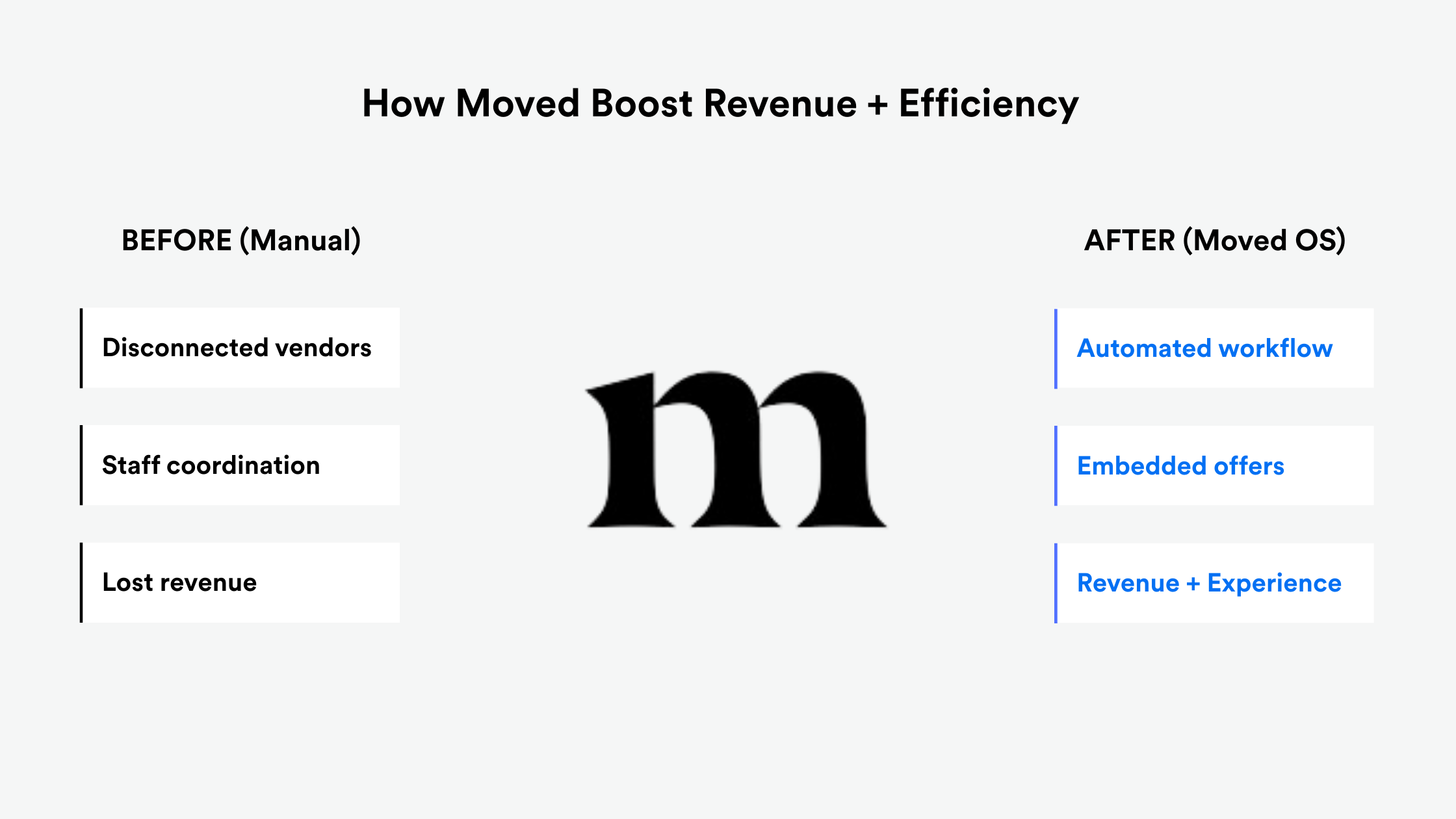
Yet, most property teams still treat these moments as basic paperwork. Forms are sent. Emails are exchanged. Staff members follow up. Residents struggle to complete tasks such as setting up utilities or insurance; support tickets increase. Time is lost.
What often goes unnoticed is that these workflows are more than administrative steps. They can be integrated with existing property management systems to enhance resident satisfaction, team efficiency, and long-term revenue. When managed correctly, they can also support ancillary revenue in property management without creating pressure or frustration for residents.
Modern operators are now rethinking how these processes fit into their overall business strategy. Instead of viewing them as a cost center, they are starting to see them as part of core property management operations that influence experience, income, and portfolio performance. This shift can make property managers feel more confident about efficiently scaling their businesses.
In this guide, we’ll explore specific strategies and tools that help turn move-in and move-out workflows into reliable revenue engines while improving daily operations.
Why Move-In and Move-Out Matter in Property Management Operations
For most residents, their first real interaction with a property team happens during move-in. This is when they receive instructions, complete paperwork, and begin setting up essential services. If this experience is clear and organized, it builds immediate trust. If it is confusing or delayed, frustration starts before the resident even settles in. This early experience plays a major role in onboarding residents in property management and shapes their views of the community going forward.
When move-in instructions are unclear, residents often reach out multiple times for help. They ask about utilities, insurance, internet connections, and access details. Each unanswered question becomes a support ticket. Over time, these small issues turn into larger complaints and negative feedback. What could have been avoided with a better workflow becomes an ongoing problem for the team.
A smooth onboarding process reduces many of these future challenges. When residents know exactly what to do and when to do it, they are more likely to follow rules, pay on time, and communicate proactively. This reduces disputes and the need for staff follow-up.
Move-out is just as important. The way residents are guided through inspections, deposits, and final bills directly affects online reviews and referral potential. A poor offboarding experience can undo years of good service.
Together, move-in and move-out shape daily property management operations. They influence staff workload, resident behavior, and long-term reputation. Well-designed workflows help teams stay organized, reduce pressure, and create more stable communities.
Common Problems in Traditional Move-In and Move-Out Workflows
In many communities, the apartment move-in process in property management still relies on disconnected tools, emails, and manual tracking. While these systems may work for small volumes, they can make leasing agents feel overwhelmed as portfolios grow. Automated, centralized systems can reduce friction and empower staff to manage larger portfolios more effectively.
Some of the most common problems include:
- Multiple forms: Residents are asked to complete separate documents for leasing, utilities, insurance, and building access. This creates confusion and increases the risk of missing information.
- Manual emails: Property teams often rely on individual emails to send instructions and reminders. Important messages get lost, overlooked, or misunderstood.
- Utility confusion: Residents are unsure which providers to contact, when to activate services, or how to confirm setup. This leads to last-minute issues on move-in day.
- Insurance delays: Many residents wait too long to secure renters’ insurance, which can delay keys, access, or move-in approval.
- Internet setup issues: Without clear guidance, residents struggle to schedule installations or choose the right provider, leading to service gaps.
- Repeated support tickets: The same questions are asked again and again, increasing call volume and response time.
- Staff follow-ups: Team members spend hours checking spreadsheets, sending reminders, and tracking incomplete tasks. These repetitive follow-ups can make staff feel undervalued. Implementing streamlined workflows can reduce this burden, helping staff feel more appreciated and focused on higher-value responsibilities.
These challenges are common across many property management companies’ move-in processes. Over time, they create higher stress levels, slower turnarounds, and inconsistent resident experiences.
How Inefficient Workflows Increase Costs and Reduce Efficiency
When move-in and move-out processes are poorly organized, the impact goes far beyond resident frustration. These inefficiencies directly affect budgets, staffing, and long-term performance. Over time, they weaken property management efficiency and slow down leasing operations, making it harder for teams to scale.
Extra Labor Hours
Without a centralized system, staff members spend significant time answering the same questions, tracking paperwork, and following up on incomplete tasks. What should take minutes often turns into hours of manual work. This increases payroll costs and limits the time teams can spend on higher-value responsibilities such as resident engagement and leasing.
Slower Unit Readiness
Delays in utility setup, inspections, and final approvals slow down unit preparation. When move-out tasks are not clearly managed, maintenance and cleaning schedules fall behind. As a result, units remain vacant longer than necessary, reducing available inventory.
Delayed Occupancy
When new residents struggle to complete required steps, move-in dates are pushed back. Missed appointments, incomplete documentation, and unresolved service issues all contribute to delayed occupancy. Each lost day represents missed rental income.
Mistakes That Financial and Compliance Risk
Manual tracking significantly increases the risk of errors. Incorrect records, missing forms, overlooked requests, and incomplete documentation often require correction later. Fixing these mistakes consumes additional time and resources, creating avoidable operational expenses.
More importantly, certain gaps can expose properties to financial and legal risk. A critical example is insurance compliance. If residents are not properly insured at move-in—or if coverage is not verified and documented—the property may face liability exposure in the event of damage or loss. Ensuring renters’ insurance requirements are fulfilled and recorded is not just an administrative step; it is a key risk mitigation function that protects both ownership and residents.
Vendor Coordination Problems
Poor workflows make it difficult to coordinate with utility providers, insurance partners, and internet companies. Missed handoffs and unclear timelines lead to service gaps that affect residents and staff.
Modern teams address these challenges through centralized systems and structured processes. Learn more about how streamlined workflows support stronger performance on our Operations Solutions page.
Why Most Move Processes Do Not Generate Revenue Today
Despite the high level of resident engagement during move-in and move-out, most property teams fail to use these moments to support property management revenue streams. Instead, move workflows are usually treated as a necessary expense rather than a business opportunity.
Treated as a Cost Center
In many organizations, move-in and move-out are viewed only as operational requirements. The focus is placed on completing tasks quickly and minimizing complaints. Since these workflows are seen as overhead, little attention is given to their long-term financial potential.
No Revenue Strategy
Most portfolios lack a clear plan for generating income from required resident services. Utilities, insurance, and internet setup are handled separately, without any structured approach to partnership or revenue sharing. This leaves potential income untapped.
Fear of Upsetting Residents
Property managers often avoid discussing service options because they worry it will feel like selling. As a result, helpful resources are not offered even when residents are actively seeking guidance. This hesitation limits opportunities to earn ancillary income in a resident-friendly way.
No Tracking
Without proper systems, teams cannot see which services residents complete, where they struggle, or which partners perform best. This lack of data makes it impossible to improve or scale revenue efforts.
Disconnected Service Partners
When service providers operate separately from leasing and management systems, coordination suffers. Missed referrals and broken handoffs reduce both efficiency and earnings.
How Move-In and Move-Out Tasks Create Natural Revenue Opportunities
During every move-in and move-out, residents are required to complete a set of essential tasks before they can fully settle into or exit a property. These steps are not optional. They are part of daily living and legal compliance. Because of this, they create one of the strongest opportunities for ancillary revenue in property management—without adding pressure or inconvenience.
Most residents must take care of the following:
- Utilities: Electricity, gas, water, and trash services must be activated or transferred before move-in and properly closed at move-out.
- Internet: Residents need reliable connectivity for work, entertainment, and communication. Delays in setup are often among the first complaints after moving.
- Insurance: Renters’ insurance is often required before keys are released. Many residents wait until the last minute, creating delays and extra follow-up work.
These steps already happen in every move cycle. Residents are actively searching for instructions and support. This is why move workflows offer a natural way to guide them toward trusted service providers.
When property teams streamline these tasks through a single central system, residents are more likely to complete them on time. At the same time, properties can earn revenue from verified referrals and service partnerships. This approach shows how property managers can increase ancillary revenue while improving the resident experience.
Because the services are necessary, there is no need for aggressive promotion. Residents receive help when they need it, and management benefits from reliable ancillary revenue in property management.
From Amenity Fees to Workflow-Based Revenue Models
For many years, ancillary income in residential communities came mainly from add-on charges. Parking fees, pet rent, storage units, and late payment penalties were the primary ways properties generated extra revenue. While these sources still contribute to multifamily ancillary revenue, they offer limited long-term growth.
The Limits of the Old Model
Traditional amenity-based income depends on physical space and resident preferences. Not every resident owns a car or a pet. Storage availability is fixed. Once capacity is reached, revenue stops growing. In addition, residents often view these fees negatively, which can affect satisfaction and retention.
The Shift to Embedded Services
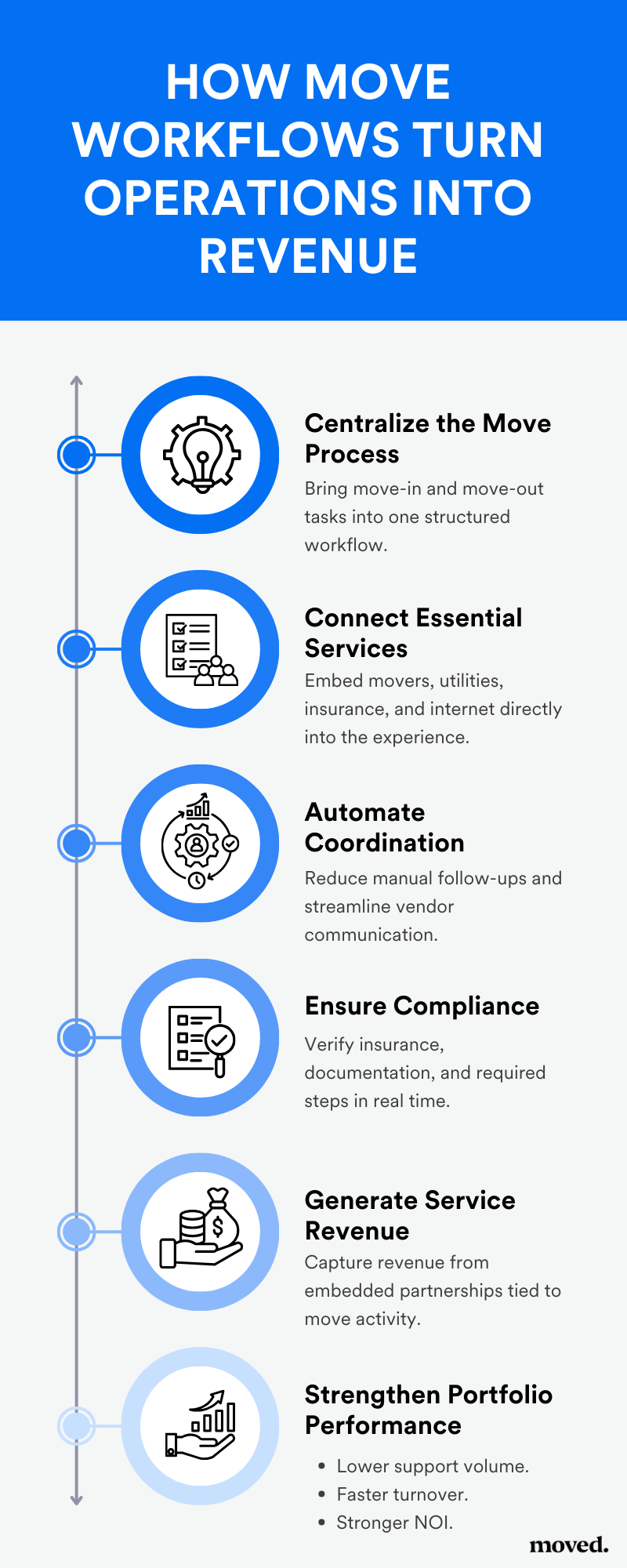
Modern operators are moving toward revenue that is built directly into daily workflows. Instead of charging for optional extras, they earn income by helping residents complete required tasks such as setting up utilities, insurance, and internet. These services are part of the move process, making them easier to adopt and more valuable to residents.
Scalable Across Portfolios
Workflow-based revenue is not limited by physical constraints. Once systems and partnerships are in place, the same model can be applied across hundreds or thousands of units. This makes property management monetization more consistent and easier to forecast.
More Predictable Income
Because move-ins and move-outs occur continuously, embedded services generate steady revenue. Properties can better estimate earnings and plan investments with greater confidence.
How Modern Property Managers Are Redesigning Move Systems
As portfolios grow and resident expectations increase, many operators are moving away from manual coordination and disconnected tools. Instead, they are adopting structured systems designed to automate tenant move-in and move-out processes. This shift is helping teams improve consistency, reduce errors, and strengthen overall performance through practical property management automation.
One Central Platform
Leading property managers now use a single platform to manage all move-related tasks. Leasing documents, service setup, reminders, and status updates are housed in one place. This eliminates confusion and gives both staff and residents a clear view of what needs to be done.
Standard Timelines
Modern systems follow predefined schedules for each stage of move-in and move-out. Residents receive clear deadlines for completing tasks, and teams know when inspections, cleanings, and approvals should occur. This structure helps prevent last-minute delays.
Automated Reminders
Instead of relying on manual follow-ups, automated messages remind residents to complete required steps. These reminders reduce missed deadlines and lower support requests, freeing staff to focus on more strategic work.
Partner Integrations
High-performing portfolios connect utility providers, insurance partners, and internet companies directly into their workflows. This makes referrals seamless and ensures residents can activate services without searching for information themselves.
Real-Time Tracking
Dashboards allow teams to monitor progress in real time. Staff can quickly see which residents have completed setup and which still need assistance, making it easier to intervene early when problems arise.
Compliance Checks
Built-in compliance tools verify that insurance, documentation, and local requirements are met before move-in or move-out is finalized. This reduces risk and protects the property.
Where Moved Fits in the Revenue-Driven Operations Model
As property teams adopt more structured, revenue-focused move workflows, they need systems that are easy to use, scalable, and aligned with real operational needs. The right platform should reduce manual work, support required services, and create measurable value without adding operational complexity.
Moved fits into this model by focusing on the areas that matter most to modern property managers.
Key Ways Moved Supports Revenue-Driven Operations
Centralized Workflow
All move-in and move-out tasks are managed in one place, including service coordination, reminders, compliance checks, and progress tracking. This reduces reliance on scattered tools and improves consistency across properties.
Embedded Essential Services
Moving services, utilities, insurance, and internet setup are integrated directly into the workflow. Residents can complete required tasks more easily, and properties benefit from higher completion rates and structured partner relationships.
Flexible Engagement Model
Moved works with property teams in ways that align with their operational and financial structure. The focus is on delivering measurable business value—whether through revenue generation, operational efficiency, or both. This flexibility makes adoption practical for portfolios of different sizes and strategies.
Revenue-Aligned Structure
Revenue is generated when residents successfully complete essential move-related services. This creates shared incentives between the platform and property teams while keeping the resident experience simple and helpful.
Easy Adoption for Teams and Residents
The system is designed to integrate with existing leasing and management processes. Minimal training is required, and residents receive clear, step-by-step guidance throughout their move journey.
How Moved Compares to Traditional Move Management Tools
| Area | Traditional Tools | Moved’s Approach |
| Workflow Management | Multiple disconnected systems and manual coordination | One centralized platform managing the full move journey |
| Service Setup | Manual referrals, vendor lists, and email follow-ups | Embedded service integrations within the workflow |
| Business Impact | Primarily operational support | Operational support combined with revenue opportunity |
| Revenue Model | Limited or no structured revenue strategy | Revenue aligned with service completion and partner activity |
| Staff Workload | High manual follow-ups and repetitive tasks | Automated guidance, tracking, and reminders |
| Portfolio Scaling | Difficult to standardize across properties | Consistent processes that scale across portfolios |
This structure allows property teams to improve consistency, reduce support volume, and create new income streams without adding operational pressure. Instead of layering more software on top of existing systems, Moved integrates directly into the move process.
What This Unlocks at Portfolio Scale
When move-in and move-out workflows are managed through a centralized, revenue-aligned system, the benefits extend far beyond individual properties. At scale, these improvements directly support stronger portfolio management and long-term business stability.
Lower Support Costs
Clear instructions, automated reminders, and embedded services reduce the number of basic questions residents ask. Fewer calls and emails mean support teams can operate more efficiently, lowering overall service costs and reducing staff burnout.
Faster Turnover
Standardized move-out procedures, timely inspections, and coordinated service shutdowns help prepare units more quickly. Faster readiness allows properties to welcome new residents sooner, minimizing vacancy periods and protecting rental income.
Higher NOI
When operational waste is reduced and ancillary revenue is consistently captured, net operating income improves. Lower expenses combined with new income streams create measurable financial gains across the portfolio.
Consistent Resident Experience
Centralized systems ensure that residents receive the same clear guidance at every location. This consistency builds trust, strengthens brand reputation, and supports higher satisfaction scores.
Better Investor Confidence
Reliable workflows and predictable revenue make forecasting performance easier. Investors and ownership groups gain greater confidence when they see stable systems supporting growth and compliance.
Easier Scaling
With standardized processes in place, expanding into new markets becomes simpler. Teams can replicate proven workflows without rebuilding systems from scratch, improving overall operational efficiency.
Conclusion: Turning First Impressions Into Long-Term Revenue
Move-in and move-out are often treated as routine tasks that must be completed as quickly as possible. In reality, they are some of the most important systems in a property management business. These moments shape how residents view the community, how teams operate, and how revenue is generated over time.
When move workflows are handled through scattered tools and manual processes, they become a source of delays, complaints, and unnecessary costs. When they are structured and centralized, they become reliable business systems that support consistency, efficiency, and growth. The difference is not in working harder, but in working smarter.
The revenue opportunity already exists within every move cycle. Residents must set up essential services, complete documentation, and follow defined steps. Properties that guide these actions through well-designed workflows can support residents while generating sustainable income.
Leaders who invest in systemized processes gain a long-term advantage. They reduce operational friction, improve staff productivity, and strengthen financial performance. Instead of relying on disconnected tools, they build infrastructure that supports scale and stability.
In today’s competitive market, infrastructure always outperforms isolated software tools. Strong systems create better outcomes for residents, teams, and owners.
Learn how centralized move workflows can help your team improve operations and generate new revenue with Moved.
Frequently Asked Questions (FAQs)
1. Why are move-in and move-out workflows important in property management?
Move-in and move-out workflows are important because they shape the resident’s first and last experience with a property. Well-organized processes reduce confusion, lower support requests, improve operational efficiency, and create opportunities for additional revenue through essential services.
2. How can move workflows generate ancillary revenue for property managers?
Move workflows generate ancillary revenue by guiding residents through essential services such as movers, packing, storage, utilities, insurance, and internet setup. When these services are built into the move process, properties can earn partnership revenue without adding sales pressure or extra fees.
3. What are the most common problems in traditional move-in and move-out processes?
Common problems include manual paperwork, unclear instructions, delayed service setup, repeated follow-ups, and disconnected service providers. These issues increase staff workload, slow down occupancy, and reduce resident satisfaction.
4. How does automation improve move-in and move-out operations?
Automation improves move operations by sending reminders, tracking task completion, integrating service partners, and centralizing information. This reduces manual work, prevents errors, and helps teams manage higher volumes more efficiently.
5. How does Moved help property managers improve move workflows and revenue?
Moved provides a centralized platform that guides residents through essential move tasks, connects them with trusted service providers, and supports revenue generation through embedded partnerships. This helps property teams improve consistency, reduce support costs, strengthen compliance, and increase ancillary income.