Every August, student housing operators face one of the most demanding operational periods of the year. Hundreds, or even thousands, of residents move in and out within a very short window, creating pressure across leasing, maintenance, site operations, compliance, and resident communication.
Unlike traditional multifamily communities, student housing turnover follows strict academic calendars. That means teams cannot spread move activity across multiple months. Everything happens at once. For many operators, the challenge is not simply coordinating moves. It is managing large-scale resident transitions without creating operational delays, compliance gaps, or negative resident experiences.
This is why more operators are investing in centralized student housing operations systems that simplify move coordination before peak season begins. Many property managers searching for answers like “how do student housing operators handle bulk move-outs in August” are realizing that manual workflows are difficult to scale during high-volume turn periods.
Modern student housing software helps operators automate scheduling, streamline communication, centralize move tasks, and reduce operational pressure on site teams. Instead of relying on spreadsheets, email chains, and disconnected systems, operators are building structured move workflows that improve visibility across the entire portfolio.
As discussed in How Property Managers Automate the Resident Move-In and Move-Out Process, automation is becoming essential for properties that manage high resident turnover at scale. Many operators are also prioritizing structured onboarding workflows to create smoother resident experiences before move day even begins through solutions like the Ultimate Guide to Resident Onboarding Automation.
For student housing operators, the move cycle is no longer just an operational event. It is now a major part of the resident experience, risk management, and portfolio performance.
Why Student Housing Move Cycles Are More Complex Than Traditional Multifamily
Student housing turnover moves at a completely different pace than traditional apartment communities. In conventional multifamily properties, leases renew throughout the year, giving site teams time to manage resident transitions gradually. Student housing operations do not have that flexibility.
Most student leases begin and end around the academic calendar. That means entire buildings can turn over within days. Teams must coordinate move-outs, unit inspections, cleaning, maintenance, key management, and new resident onboarding almost simultaneously.
For operators managing large portfolios, this creates significant operational pressure. A single delay can quickly affect hundreds of incoming residents. Many property managers searching for the “best software for student housing turn cycles” are trying to solve this exact problem: how to maintain operational control during compressed turnover periods.
The complexity increases further because student housing involves more points of coordination than traditional residential communities. Site teams often manage:
- Parent communication
- Shared roommate move schedules
- Elevator reservations
- Parking logistics
- Loading zones
- Vendor coordination
- Utility verification
- Insurance compliance
- Key pickup scheduling
Without structured workflows, these processes can become difficult to track at scale.
Student housing turnover also increases operational dependency among departments. Leasing teams, maintenance staff, operations managers, and third-party vendors all rely on accurate scheduling and communication. When systems are disconnected, site teams spend valuable time manually coordinating tasks instead of focusing on resident support.
This is why many operators are modernizing their student housing operations with centralized move workflows and automated communication systems. As explained in the Move-In Move-Out Process Property Management Revenue, resident move coordination is no longer viewed solely as an administrative process. It directly impacts operational efficiency, resident satisfaction, and portfolio performance.
Large student communities are also placing greater emphasis on creating consistent move experiences across properties. Platforms designed for Multifamily Operations help operators standardize move workflows, centralize resident tasks, and improve visibility during peak turnover seasons.
For operators managing thousands of student beds, organization during move season is not optional. It is a critical infrastructure for running efficient student housing turnover at scale.
The Biggest Operational Challenges During Student Housing Turnover
High-volume student housing turnover creates operational challenges that can quickly overwhelm site teams when processes are managed manually. During peak move periods, even small communication gaps or scheduling issues can cause delays throughout the property.
One of the biggest challenges is communication overload. Leasing teams often manage hundreds of resident emails, calls, and follow-ups within a very short period. Students and parents need move instructions, scheduling details, parking guidance, and building access information all at once. Without centralized systems, important updates can easily get missed.
This is one reason many operators searching for “how to manage move-in and move-out at the start of the school year” are shifting toward automated communication workflows within modern student housing software platforms.
Another major issue involves compliance and tracking of documentation. Student housing operators must verify renters’ insurance, collect move-related documents, and maintain organized records during large-scale resident transitions. When these tasks are spread across spreadsheets, inboxes, and disconnected systems, operational risk increases significantly.
Many operators now prioritize centralized insurance verification processes to reduce liability exposure and improve operational visibility. As covered in Renters Insurance Verification at Move-In and Move-Out, missing or incomplete insurance documentation can create unnecessary financial and compliance risks during resident onboarding and offboarding.
Vendor coordination also becomes difficult during student housing turnover. Properties often need to manage movers, storage providers, cleaning vendors, internet setup, junk removal, and maintenance teams simultaneously. Without centralized scheduling, teams spend hours manually coordinating vendors and resolving conflicts.
Operational fatigue is another growing concern. Student housing turnover places enormous pressure on leasing and operations staff. Long hours, repetitive tasks, and constant resident communication often lead to burnout during peak season. This is especially challenging for operators managing large portfolios with limited onsite staffing resources.
Many ownership groups and operators are now treating move coordination as a strategic operational function rather than a temporary administrative task. As discussed in Why Asset Managers Own the Move-In and Move-Out Workflow, structured move-in and move-out workflows improve visibility, reduce operational friction, and create more consistent resident experiences across the portfolio.
For modern student housing operations, turnover season is no longer just about moving residents in and out efficiently. It is about protecting operational performance during one of the year’s busiest periods.
How Student Housing Software Helps Operators Manage High-Volume Moves
As student housing turnover becomes more operationally demanding, many property managers are replacing manual coordination methods with centralized student housing software designed for high-volume move activity.
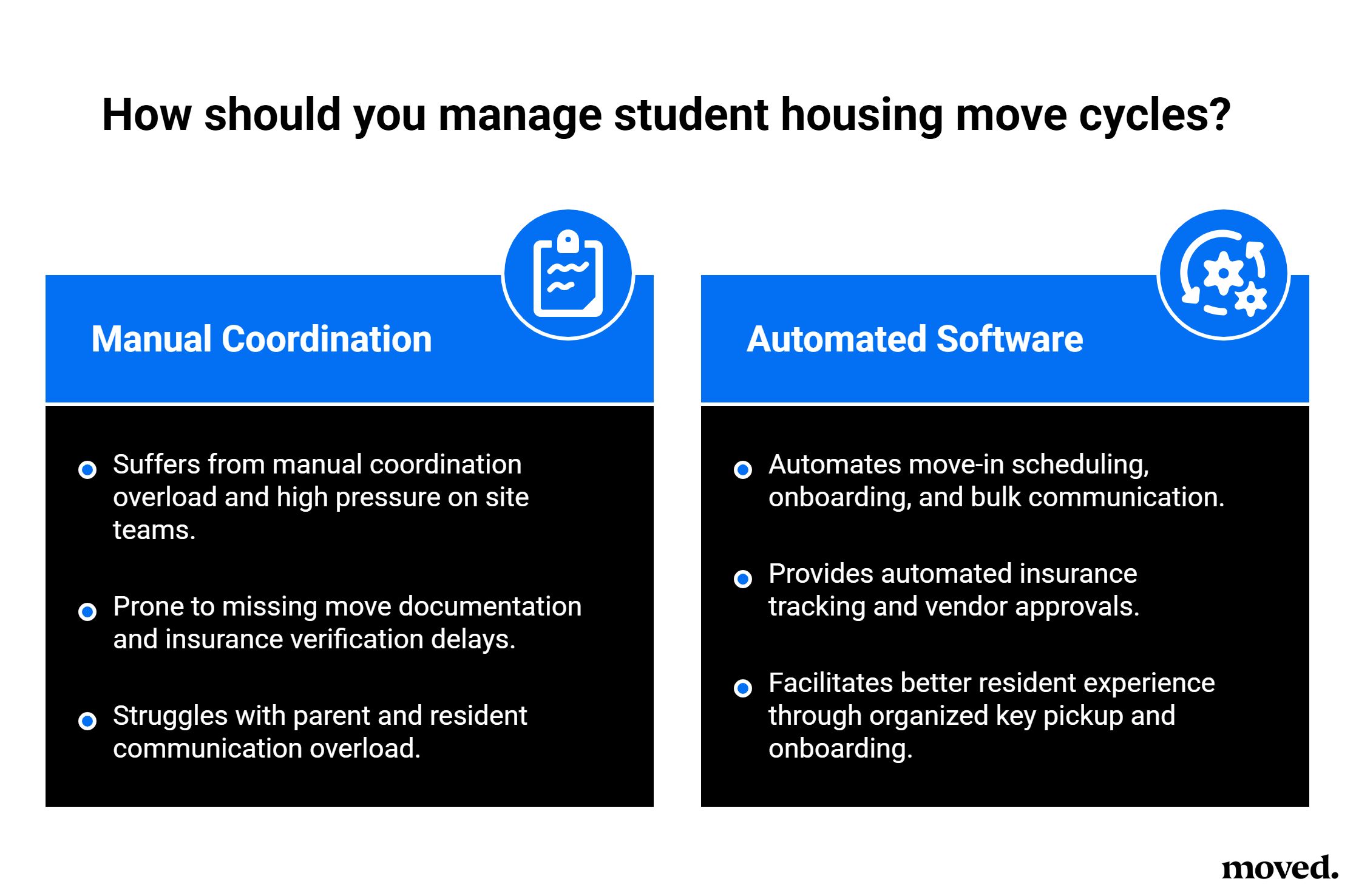
Traditional workflows often rely on spreadsheets, scattered emails, printed checklists, and disconnected communication between departments. These systems may work on a smaller scale, but they become difficult to manage when hundreds of residents move within the same week.
Modern student housing operations require technology that can centralize move coordination, automate repetitive tasks, and improve visibility across the entire property portfolio.
This is why many operators searching for the “best software for student housing turn cycles” are prioritizing platforms that automate both resident onboarding and resident offboarding workflows.
Instead of manually tracking every resident task, modern platforms help operators automate:
- Move-in scheduling
- Move-out coordination
- Resident reminders
- Elevator reservations
- Utility verification
- Key pickup scheduling
- Parking instructions
- Vendor approvals
- Insurance tracking
- Maintenance coordination
Automation reduces the operational burden placed on onsite teams during peak turnover periods while helping residents complete required tasks before arrival day.
Many student housing operators also use centralized dashboards to monitor move activity in real time. This gives site teams better visibility into completed tasks, pending approvals, resident communication, and operational bottlenecks.
For example, instead of manually reviewing insurance documentation across multiple systems, operators can use structured workflows that centralize approvals and reduce compliance gaps. Resident communication also becomes more consistent because automated reminders guide students through the required steps of the move.
As explained in the Residents Platform Overview, centralized resident workflows simplify task completion and improve the overall move experience for residents and property teams.
Another major benefit of modern student housing software is operational consistency across large portfolios. Properties can standardize move processes, approval workflows, and resident communication across multiple communities without relying heavily on manual coordination.
This becomes especially important during August turnover periods when student housing operators manage thousands of move-related interactions simultaneously.
Many operators are also discovering that centralized move workflows can support broader operational goals beyond efficiency. Structured move coordination helps improve resident satisfaction, reduce operational risk, and create additional service opportunities during the moving process.
As highlighted in What Is Ancillary Revenue in Multifamily, move workflows can also support revenue-generating services such as moving assistance, storage, internet setup, renters’ insurance, and utility coordination.
For modern student housing operations, software is no longer viewed as a convenience tool. It has become critical infrastructure for efficiently and consistently managing large-scale resident turnover.
How Automation Reduces Risk During Bulk Move-Outs and Move-Ins
High-volume student housing turnover creates more than operational pressure. It also creates significant risk when move workflows are handled manually.
During peak move periods, site teams manage large volumes of resident information, compliance documents, scheduling approvals, vendor coordination, and communication simultaneously. Without centralized workflows, important tasks can easily be missed.
This is one reason many operators searching for “how do student housing operators handle bulk move-outs in August” are investing in automation to improve operational control during turnover season.
Modern student housing software helps reduce risk by creating structured workflows that standardize move coordination across the property. Instead of relying on manual follow-ups, automated systems track resident progress and centralize move-related approvals in one location.
This improves visibility for onsite teams while reducing operational blind spots.
Automation also helps student housing operations reduce compliance gaps tied to renters’ insurance verification, move documentation, and vendor approvals. When these processes are digitized, operators can more easily confirm that required tasks are completed before residents arrive or vacate units.
Another major advantage is communication consistency. During large-scale move cycles, residents often receive conflicting information when communication happens across multiple channels. Automated workflows help ensure residents receive accurate instructions, reminders, and scheduling updates throughout the move process.
For operators managing multiple student housing communities, centralized automation also creates portfolio-wide consistency. Teams can standardize move procedures across properties while maintaining better reporting and operational oversight.
Many ownership groups now view move automation as part of broader operational risk management. As discussed in How to Increase Multifamily NOI Without Raising Rent, operational efficiency and centralized resident workflows can help reduce unnecessary costs while improving property performance.
Automation also reduces pressure on onsite teams during peak turnover periods. Instead of spending hours manually coordinating repetitive tasks, staff can focus on resolving resident issues, preparing units, and supporting move-day operations.
For student housing turnover, organized workflows are no longer optional. They are essential for reducing operational disruptions, improving visibility into compliance, and maintaining smoother resident transitions at scale.
Resident Experience Matters in Student Housing
In student housing, the move experience often shapes a resident’s first impression of the property. When move-in day feels disorganized, stressful, or confusing, that frustration can affect resident satisfaction long after the move is complete.
Students and parents now expect clear communication, digital convenience, and structured onboarding experiences. Many residents are relocating from other cities or states, so they rely heavily on accurate moving instructions before arrival day.
This is why many operators searching for “how to manage move-in and move-out at the start of the school year” are focusing not only on operational efficiency, but also on resident experience.
Manual processes often create unnecessary friction during student housing turnover. Missed emails, unclear instructions, delayed approvals, and last-minute scheduling changes can quickly increase resident complaints during high-volume move periods.
Modern student housing software simplifies the experience by centralizing communication and guiding residents through required move-in tasks step by step.
Instead of searching through multiple emails or calling onsite teams for updates, residents can complete tasks through one organized workflow that includes:
- Move instructions
- Key pickup details
- Elevator reservations
- Insurance verification
- Parking information
- Utility setup requirements
- Move-out scheduling
Automated reminders also help reduce confusion by keeping residents informed before important deadlines and move appointments.
For student housing operations, this level of organization improves more than convenience. It also reduces pressure on onsite teams by minimizing repetitive resident questions during peak turnover periods.
Resident experience also directly impacts long-term portfolio performance. A smooth onboarding process helps create stronger resident trust early in the lease lifecycle, while a frustrating move experience can negatively affect renewals, online reviews, and referrals.
As explained in How the Move-In and Move-Out Experience Shapes Resident Retention, resident satisfaction during major transition moments often influences long-term perceptions of the property.
Many operators are now treating move coordination as an important part of the resident engagement strategy rather than simply an operational requirement.
For high-volume student housing turnover, organized resident workflows help properties create smoother move experiences while maintaining operational control during the busiest season of the year.
Student Housing Operators Are Turning Move Cycles Into Revenue Opportunities
For many operators, student housing turnover has traditionally been viewed only as an operational challenge. Today, that perspective is changing.
Modern student housing operations are increasingly using move workflows to support additional revenue streams while simplifying the resident experience.
Students moving into a new apartment often need multiple services immediately, including:
- Moving assistance
- Storage solutions
- Internet setup
- Utility activation
- Renters insurance
- Packing supplies
- Shipping support
Without centralized coordination, residents typically search for these services on their own, creating a disconnected experience for both the resident and the property team.
Many operators are now embedding these services directly into their resident onboarding workflows through modern student housing software platforms. This allows properties to simplify service coordination while supporting ancillary revenue opportunities tied to the move process.
Instead of treating move coordination as only an administrative task, operators are turning student housing turnover into a structured operational and financial workflow.
For example, residents can complete insurance verification, schedule moving services, or activate utilities through centralized move platforms before arrival day. This reduces operational friction while helping residents complete important tasks more efficiently.
These workflows also help on-site teams reduce manual coordination, as residents can manage services through a single, organized system rather than repeatedly contacting staff for vendor recommendations or setup guidance.
As discussed in How Property Managers Automate the Resident Move-In and Move-Out Process, centralized move-in and move-out workflows help operators improve operational visibility and create a more organized resident experience during high-volume turnover periods.
Student housing operators are also placing greater emphasis on operational scalability. Structured move workflows help portfolios manage growing resident volume without significantly increasing staffing requirements during peak season.
For ownership groups and property managers, this shift is important because move coordination now impacts more than operational efficiency. It can also influence resident satisfaction, ancillary income opportunities, and long-term portfolio performance.
As more operators modernize student housing operations, move workflows are becoming part of a broader property management strategy rather than a short-term seasonal process.
Best Practices for Managing Student Housing Turn Cycles
Successful student housing turnover begins long before move-in weeks. Operators that manage high-volume move cycles effectively typically rely on structured planning, centralized communication, and automated workflows to reduce operational pressure during peak season.
Many property managers searching for the “best software for student housing turn cycles” are ultimately looking for ways to improve consistency, visibility, and resident coordination at scale.
The following best practices help student housing operations manage large-scale move-in activity more efficiently.
Start move planning early.
Student housing turnover timelines move quickly. Operators should begin preparing move schedules, vendor coordination, staffing plans, and resident communication well before lease transitions begin.
Early planning helps reduce last-minute operational issues during peak move periods.
Centralize resident communication
Residents and parents often receive large amounts of move-related information within a short timeframe. Centralized communication systems help ensure instructions remain organized and consistent.
This reduces confusion while limiting repetitive questions directed to onsite teams.
Automate repetitive workflows
Automation plays a major role in improving the efficiency of student housing turnover. Automated reminders, digital approvals, scheduling workflows, and resident task tracking help reduce manual coordination during high-volume move cycles.
Many operators searching for “how do student housing operators handle bulk move-outs in August” are investing in automation specifically to reduce operational strain on site teams.
Digitize insurance and compliance tracking
Insurance verification and move documentation should be centralized within structured workflows. Digital tracking improves visibility while helping operators reduce compliance gaps during resident onboarding and offboarding.
Coordinate vendors through one system.
Student housing move cycles involve multiple third-party services, including movers, storage providers, internet vendors, and maintenance teams. Centralized scheduling helps reduce operational conflicts and improve coordination across departments.
Standardize processes across the portfolio.
Consistent move procedures create smoother operations across multiple communities. Portfolio-wide workflows help student housing software platforms support scalability while improving reporting and operational oversight.
As explained in Why Asset Managers Own the Move-In and Move-Out Workflow, structured move coordination has become an increasingly important part of operational performance for large residential portfolios.
For modern student housing operations, successful turnover management depends on preparation, visibility, and consistent execution across every stage of the move process.
Conclusion
Student housing turnover is one of the most operationally demanding periods in residential real estate. Managing hundreds of move-ins and move-outs within a compressed academic timeline requires far more than manual coordination and scattered communication.
As student housing operations continue to scale, many operators are modernizing their management of resident onboarding, offboarding, compliance, and vendor coordination during peak turnover seasons.
Property managers searching for answers like “best software for student housing turn cycles” or “how to manage move-in and move-out at the start of the school year” are increasingly prioritizing centralized workflows that improve visibility, reduce operational friction, and create better resident experiences.
Modern student housing software helps operators automate repetitive tasks, streamline communication, centralize move coordination, and reduce compliance risk during high-volume move periods. These workflows also help onsite teams manage resident transitions more efficiently without significantly increasing operational burden.
At the same time, many operators are recognizing that move coordination is no longer just an administrative process. It has become an important operational strategy tied to resident satisfaction, portfolio performance, and ancillary revenue opportunities.
As discussed in Contact Moved, structured resident move workflows can help property teams simplify operations and improve consistency throughout the resident lifecycle.
For student housing operators preparing for future turnover seasons, the key question is no longer whether move processes should be centralized. The question is whether current systems can scale effectively during the busiest weeks of the year.
FAQs
How do student housing operators handle bulk move-outs in August?
They use automated workflows, centralized scheduling, and student housing software to manage large-scale resident transitions efficiently.
What is student housing turnover?
Student housing turnover is the process of managing large numbers of resident move-ins and move-outs during academic lease cycles.
Why is student housing turnover challenging?
Most leases begin and end at the same time, creating high operational pressure within a short timeframe.
What does student housing software help automate?
It helps automate move scheduling, resident communication, insurance verification, key pickup, and vendor coordination.
Why is automation important during move season?
Automation reduces manual work, improves visibility, and helps teams manage high-volume moves more efficiently.
How can operators improve the student move-in experience?
Clear communication, centralized workflows, and automated reminders help create smoother resident onboarding experiences.
How does centralized move coordination help property managers?
It improves operational consistency, reduces delays, and helps teams track move activity in real time.
Can move workflows support additional revenue opportunities?
Yes. Operators can embed services such as movers, storage, internet setup, and renters’ insurance into the move process.
How does student housing software reduce operational risk?
It centralizes documentation, tracks compliance tasks, and improves visibility across resident move workflows.
What should operators look for in student housing software?
Operators should look for automation, centralized communication, compliance tracking, and portfolio-wide workflow management.