
Open almost any multifamily operating statement, and you will find a line called “other income.” Underneath it sits parking, pet rent, storage, amenity fees, late fees, application fees, termination fees, utility partnerships, insurance partnerships, and a long tail of smaller items. One line. A dozen distinct revenue streams. Each with its own economics. That single bundled line is the reason most operators underperform on non-rent revenue.
This article explains why the “other income” framing fails at 10,000+ unit scale, what it hides, and how to restructure the reporting so non-rent revenue becomes something you can actually manage.
The average hides the variance
The “other income” line accounts for a meaningful and growing share of total property revenue at well-run 10,000+ unit operators. The benchmark is useful as a headline. It is useless as a management tool. An average tells you what a typical property earns across all non-rent categories combined. It tells you nothing about which categories at which properties are overperforming, underperforming, or leaking entirely.
Two properties can report identical “other income” per unit while one captures strong parking and pet revenue and misses move-related partnerships entirely, and the other does the reverse. The bundled line makes those two properties look the same when they need opposite interventions.
The structural reason this bundling persists, and the operator argument for breaking it apart, is in the Moved CEO’s RevGen leak map. It is the cleanest reference for understanding where the largest non-rent revenue leaks sit at portfolio scale and why “other income” hides them.
What the bucket actually contains
The “other income” line bundles revenue streams that behave nothing alike:
- **Punitive fees** (late fees, NSF fees, termination fees) that regulators and residents are actively pushing back against
- **Recurring service fees** (parking, pet rent, storage, amenity access) that compound month over month
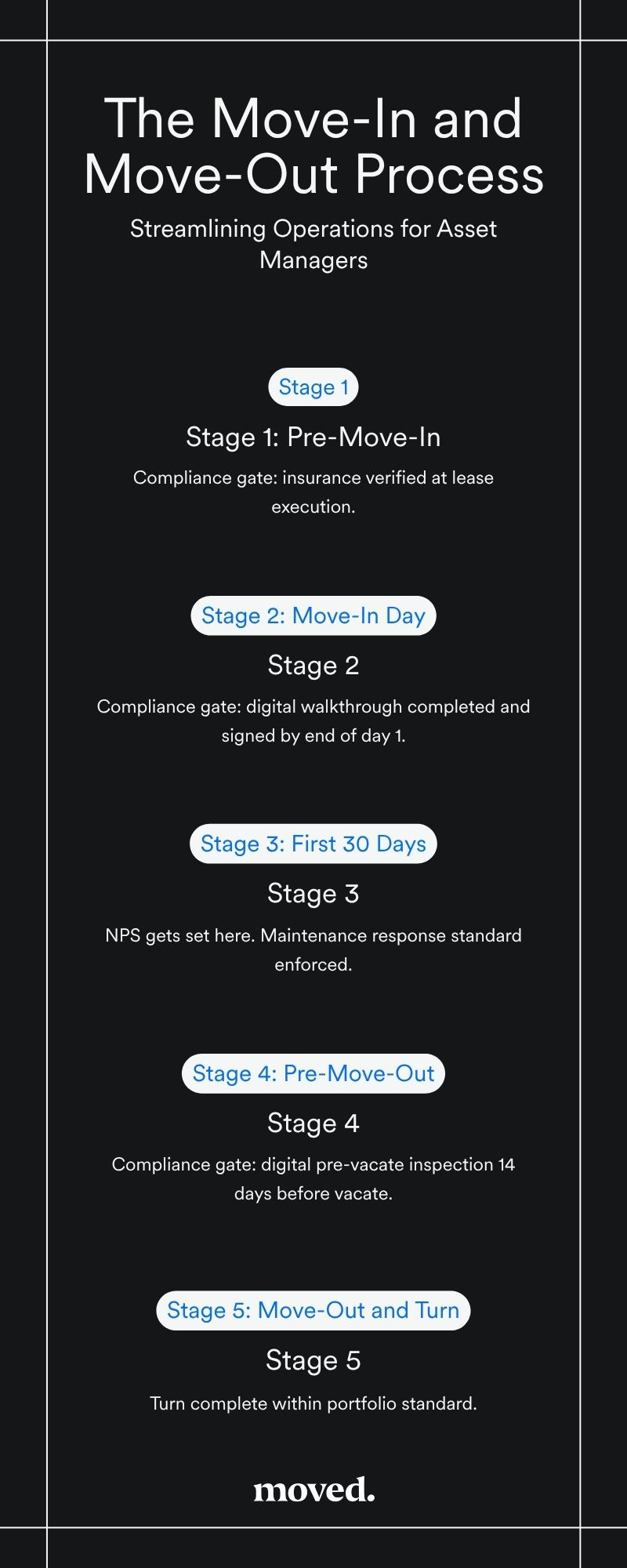
- **One-time partnership revenue** (movers, packing, utility activation, insurance placement) tied to the move-in and move-out window
- **Cost-recovery programs** (utility reimbursement through RUBS or sub-metering) that reduce expense rather than add income
Managing these as a single number is like managing rent, parking, and laundry as a single number. The streams have different margins, resident-satisfaction effects, growth ceilings, and operational requirements. Bundling them guarantees that the high-margin opportunities get the same attention as the low-margin ones, which means the best opportunities go under-resourced.
The reporting fix: break the bucket into a scorecard
At 10,000+ units, non-rent revenue must be reported the same way as rent: broken out, compared across properties, and tracked over time. A workable RevGen scorecard tracks four things per category, per property:
- Non-rent revenue per unit, so that you can compare properties on a like-for-like basis
- Attach rate by category, so you can see what share of residents actually take each service
- Margin by stream, so high-flow-through partnership revenue is not hidden behind low-margin fees
- Resident satisfaction impact, so you can tell value-add revenue from friction that erodes retention
Once non-rent revenue is reported this way, the asset management team can finally answer the questions that the bundled line makes impossible to answer. Which properties are leaving move-related revenue uncaptured? Where is parking underpriced relative to demand? Which fees are dragging on resident satisfaction without adding meaningful margin? Those answers drive interventions. The bundled “other income” line drives nothing.
Where the biggest uncaptured share hides
When operators do break the bucket apart, the largest uncaptured opportunity almost always sits in move-related partnership revenue. The reason is structural. Parking, pet rent, and storage are usually already on the books because they are billed monthly through the property management system. Move-related revenue is different because it lives in a narrow window around move-in and move-out and requires the property to be present at the exact moment the resident is booking movers, setting up utilities, or buying insurance. Without infrastructure at that moment, the revenue defaults to a third party and never appears on any line, bundled or otherwise.
This is the category the “other income” framing hides most completely, because revenue that was never captured does not show up as a miss. It simply does not exist in the reporting. We cover the full mechanism in our piece on how move-in and move-out workflows became a property management revenue engine and the category economics in our guide to multifamily ancillary revenue.
What breaking it out looks like at a 10,000+ unit portfolio
At 10,000+ unit scale, breaking the “other income” line into a category scorecard surfaces the move-related capture rate that the bundled line hides, then translates the gap into a managed RevGen stream that compounds month after month. The Moved CEO has framed the operator math at a per-unit RevGen contribution of $15 per unit per month as the cleanest way to anchor the category at portfolio scale. The full structural argument for how that per-unit number flows into NOI and asset value sits in the RevGen leak map.
The point is not the headline number. The point is that the value was always there. The bundled line just made it invisible. For the full NOI argument, see our breakdown of increasing multifamily NOI without raising rent.
How Moved fits
Moved is a move-in and move-out infrastructure platform that captures the move-related category that the “other income” line hides, then reports it back at the portfolio level by category, attach rate, and margin. It integrates alongside the property management system via API and runs the resident-facing experience for movers, packing, storage, insurance verification, utilities, and connectivity. For the asset management team, that turns the most invisible part of “other income” into a measured, managed RevGen stream.
To see your non-rent revenue broken out the way it should be, book a walkthrough with our team or visit the Moved multifamily overview.
FAQs
What is wrong with the “other income” line? It bundles a dozen distinct revenue streams, each with different margins, growth ceilings, and resident effects, into a single number. That makes category-level optimization impossible, so the highest-margin opportunities receive the same attention as the lowest-margin ones.
How should non-rent revenue be reported instead? As a scorecard broken out by category, with non-rent revenue per unit, attach rate by category, margin by stream, and resident satisfaction impact tracked per property.
Which non-rent category is most often uncaptured? Move-related partnership revenue, because it lives in the move-in and move-out window and requires infrastructure at the exact moment the resident is deciding. Without it, the revenue defaults to a third party and never appears in the reporting at all.
How much is the bucket hiding at 10,000+ units? The Moved CEO frames the per-unit RevGen contribution at $15 per unit per month for operators who break the bucket apart and run the category as a managed stream. The full structural argument for what that compounds into is in the RevGen leak map.
Does breaking out the reporting require new software? It requires a way to capture and measure each category. For the move-related category specifically, that means infrastructure at the moment of the move, which most property management systems do not provide on their own.
The bottom line
“Other income” is an accounting convenience that has become a management liability. At 10,000+ unit scale, bundling a dozen distinct non-rent revenue streams into one line hides the variance that actually matters and conceals the move-related revenue that is most often left uncaptured. Break the bucket into a category-level scorecard, put infrastructure at the move-in and move-out moment, and the revenue that was always there becomes visible and manageable.
For category details, see our guide to ancillary revenue in multifamily, and to break down your own portfolio, reach out to our team.